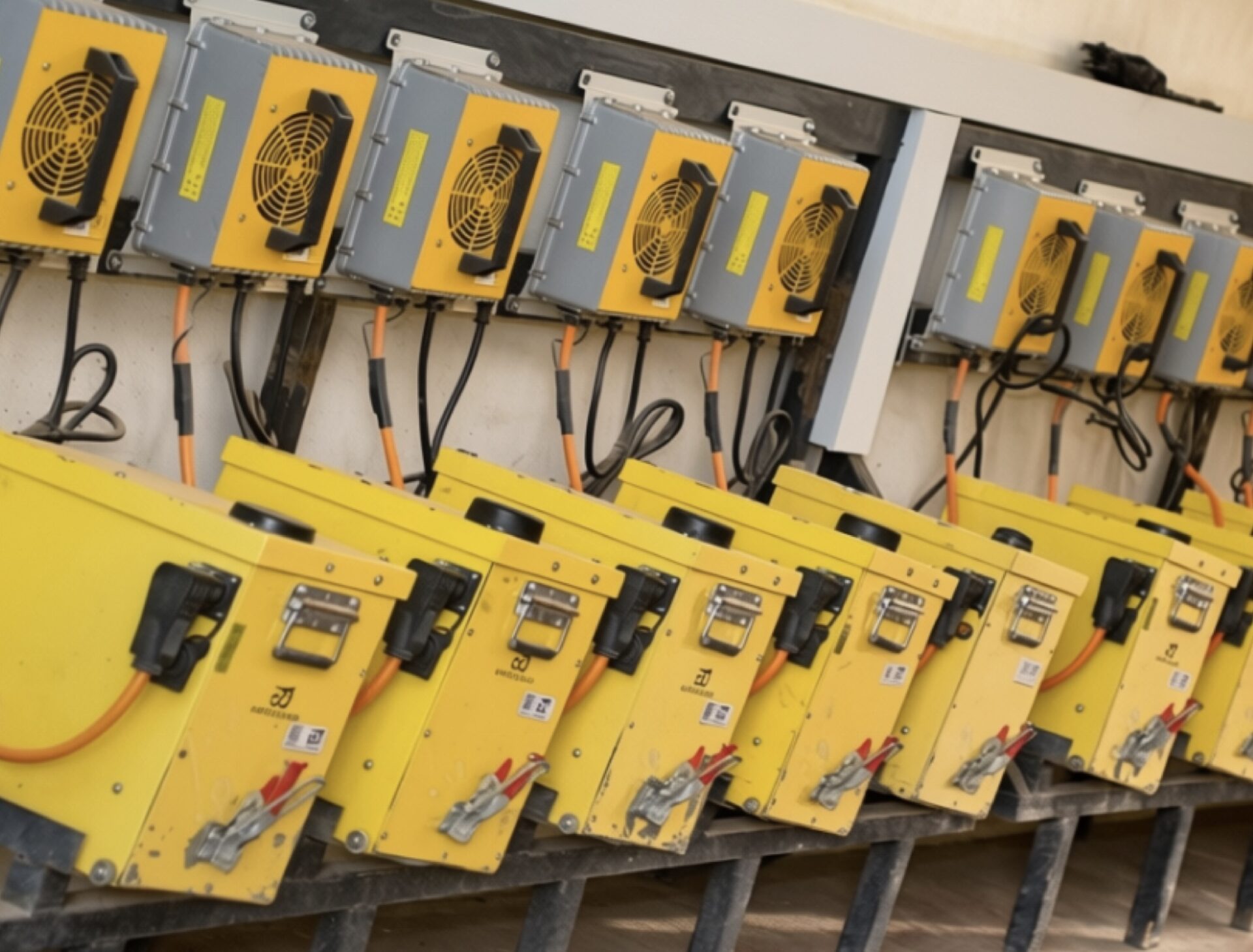
- EV adoption in Africa is rising fast, but charging, battery swapping and grid support are not scaling at the same pace, according to CrossBoundary Energy.
- Commercial transport is already seeing a clear business case from lower operating costs and reduced fuel price risk.
- Policy certainty, bankable regulation and specialised financing will decide where infrastructure investment grows fastest.
Earlier this year, long queues at EV battery swap and charging stations in Nairobi captured a problem that is becoming familiar across Africa. The issue is not whether riders want electric mobility, but whether the infrastructure needed to support it can grow quickly enough to match demand – according to CrossBoundary Energy (CBE)
Africa’s EV transition is being driven less by the vehicles themselves than by the systems around them. That includes charging points, battery swapping networks, grid capacity and the financing structures needed to build them at scale. As adoption rises, those enabling assets are becoming the real bottleneck.
CBE points out that the numbers show how fast the market is moving. Africa imported 44,358 electric vehicles from China in 2025, more than double the 19,386 imported the year before, according to data from China’s Commerce Ministry cited by AP News. The International Energy Agency estimates that electric two wheeler sales in Africa reached 70,000 units in 2025, up from 9,000 in 2024.
For commercial transport operators, the shift to electric already makes strong financial sense. The Africa E Mobility Report 2025 estimates energy costs of about US$0.01 per km for electric two wheelers, compared with US$0.06 per km for internal combustion motorcycles, while electric buses cost about US$0.25 per km versus US$0.48 per km for diesel buses. That cost advantage matters most for high utilisation fleets that must protect margins and manage fuel price volatility.
But the economics of the vehicle are only part of the story says CBE. A rider or fleet operator will not commit fully to electric transport unless charging or swapping is reliable enough to support daily routes and return journeys. In that sense, infrastructure is becoming the deciding factor in whether the transition scales beyond early adopters.
The market is also becoming more specialised. In the early phase, many companies tried to build everything at once, from vehicles and batteries to charging networks and operations. That model helped launch the sector, but it also slowed expansion because growth depended on each company’s own balance sheet.
CBE identifies that more scalable structure is now emerging, with infrastructure providers, vehicle makers and financiers taking on separate roles. CrossBoundary Energy EVx and similar platforms are helping decouple infrastructure deployment from vehicle ownership, allowing operators to scale without carrying the full cost of building networks themselves. This creates clearer investment opportunities across the value chain, from charging and swapping to finance and asset ownership.
Policy will be just as important as capital. Investors need long term certainty on tariffs, taxes, import treatment and regulatory rules before committing to infrastructure with multiyear payback periods. Where charging rules are unclear or subject to sudden policy shifts, projects become harder to finance and slower to scale.
That is why Africa’s mobility transition may look different from those in Europe or North America. With lower private vehicle ownership and a larger commercial transport base, electrification is likely to spread first through motorcycles, buses and other high utilisation fleets. In that environment, the markets that build bankable infrastructure frameworks will be the ones that lead.
Link to CrossBoundary Energy’s original article HERE
Author: Bryan Groenendaal