- Technology group Wärtsilä has secured an order to supply 412 MW of engine-based power for a major hyperscale data centre project in Ohio in the United States, marking the first deployment of its 34SG spark gas engine in a data centre application.
The project comprises 40 units of the Wärtsilä 34SG engines and takes the company’s total engine capacity sold into the U.S. data centre market to more than 1.6 GW.
The new installation is designed to provide primary power for the data centre, enabling the facility to operate independently of the grid and bypass lengthy interconnection delays that continue to affect the U.S. power sector.
Wärtsilä said the 34SG engine offers a combination of high efficiency, proven reliability, low water consumption and strong performance in high ambient temperatures. The modular configuration allows data centre operators to deploy capacity in scalable blocks, supporting expansions to more than 500 MW as demand increases.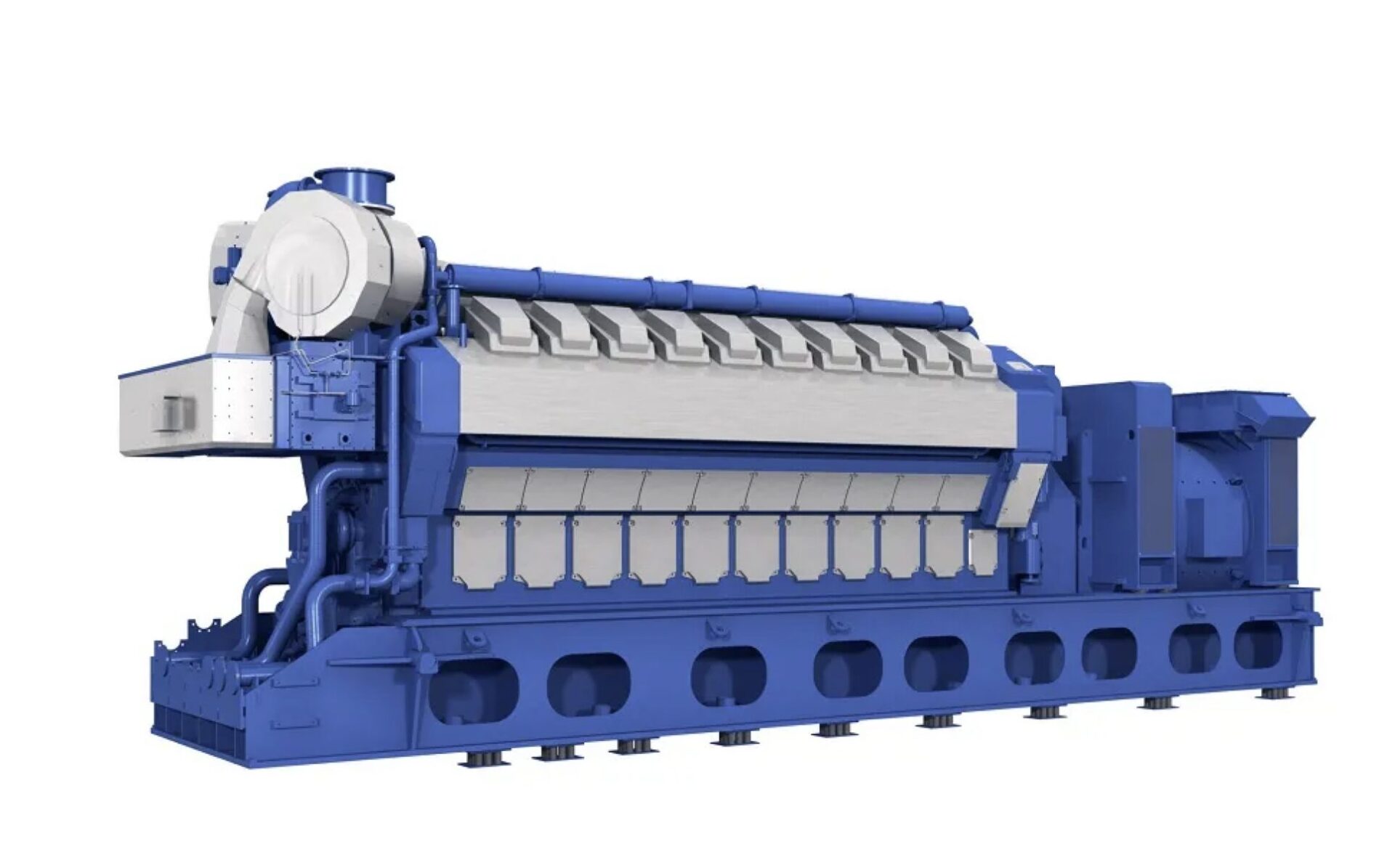
The Wärtsilä 34SG features a wide power output range from 5.6 to 9.8 MW, as it is available in 12V, 16V and 20V cylinder configurations. Wärtsilä engine power plants can be delivered both as EPC and Equipment Delivery contracts. Image credit: Wärtsilä Energy
The company said the solution is well aligned with the requirements of AI driven and high performance computing workloads, where both speed of deployment and operational flexibility are increasingly critical.
Risto Paldanius, Vice President, Americas at Wärtsilä Energy, said the order reflects growing confidence among data centre developers in engine based generation technologies. He noted that operators are increasingly prioritising fast, flexible and reliable power solutions that can be delivered independently of grid timelines, particularly as demand from artificial intelligence and cloud computing accelerates.
Equipment deliveries for the Ohio project are scheduled to support a commercial operation date in early 2028. This marks Wärtsilä’s fourth data centre related order in the United States, further strengthening its position in the rapidly expanding hyperscale infrastructure power market.
Author: Bryan Groenendaal