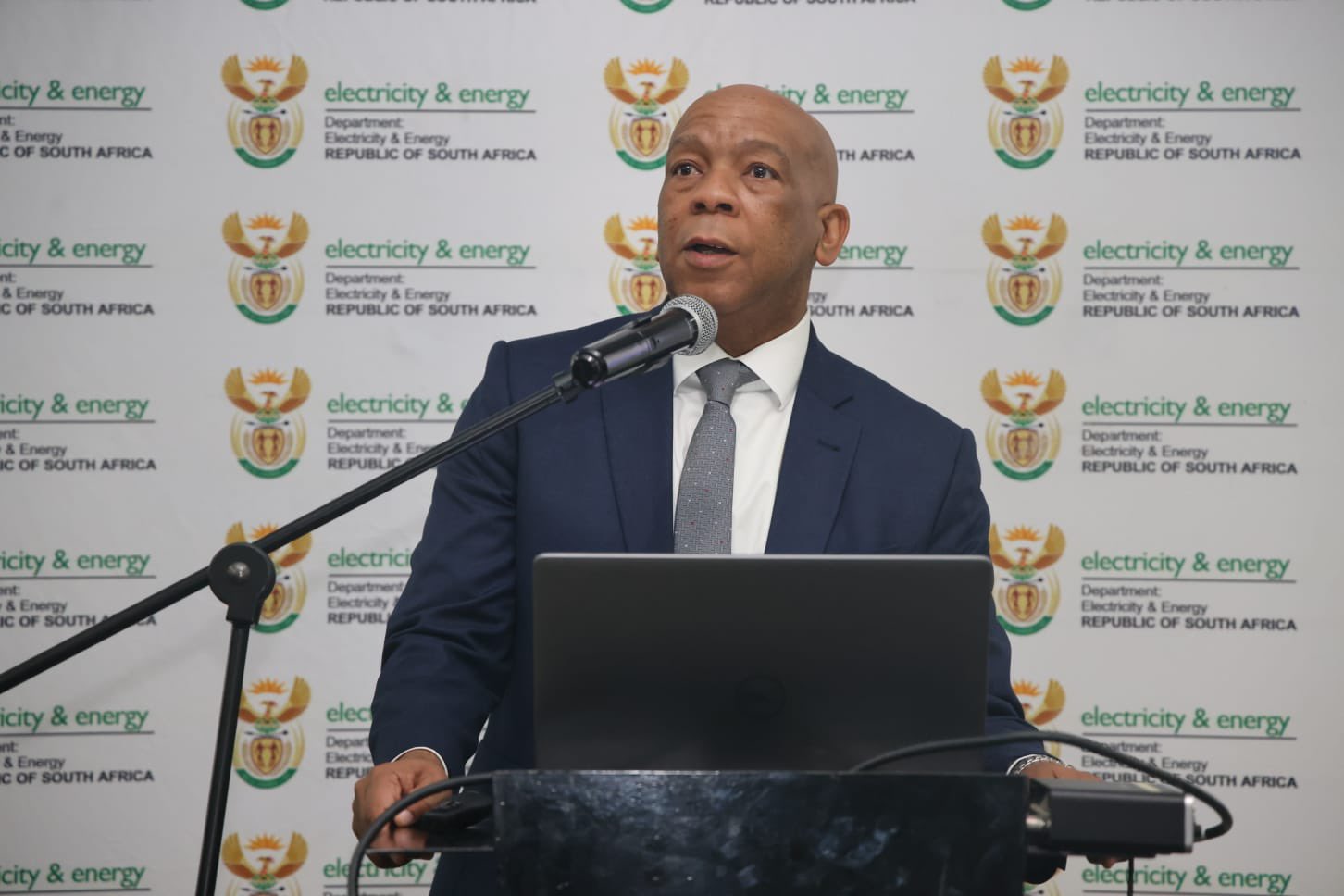
- The Minister of Electricity and Energy, Dr Kgosientsho Ramokgopa, opened the second quarterly SAWEM workshop in Pretoria and said South Africa remains committed to building a transparent, competitive and sustainable electricity market.
- The workshop brought together government, regulators, Eskom, the NTCSA and other market participants to review progress on implementation and improve coordination across the sector.
- The department says the reform process must also strengthen institutional capacity, fix municipal distribution challenges and protect vulnerable households as the market framework evolves.
The Minister of Electricity and Energy, Dr Kgosientsho Ramokgopa, opened the second quarterly South African Wholesale Electricity Market workshop in Pretoria yesterday, underscoring government’s commitment to a transparent, competitive and sustainable power market.
The workshop assembled key players across the electricity value chain, including government, regulators, Eskom, the National Transmission Company South Africa and other market participants, to assess progress and reinforce cooperation on the SAWEM rollout.
Ramokgopa said the market transition will depend on strong partnerships, coordinated action and continued engagement with stakeholders. He also highlighted the need to build institutional capacity, address municipal electricity distribution weaknesses and ensure the reforms deliver benefits to all South Africans, particularly vulnerable households.
The National Transmission Company South Africa (NTCSA) received its Market Operator Licence from NERSA in December 2025, marking a major milestone in the transition. The company has said it is taking a phased approach to protect system stability while finalising the remaining licence conditions and market rules.
SAWEM is part of South Africa’s wider electricity reform programme, which is reshaping the market away from the historic single buyer model towards a more open trading structure. The NTCSA has said the market is now planned for launch in the third quarter of 2026 after the original 1 April 2026 target was moved.
At the centre of the delay is a dispute over the pace of Eskom’s unbundling. A proposal by a presidential task team to bring forward the deadline for separating the transmission business to the end of 2027 has met firm resistance from Eskom leadership. The utility maintains that accelerating the process could undermine its financial position and strain relationships with lenders if transmission assets are transferred too quickly.
Concerns over market concentration are also shaping the rollout. Eskom Generation still accounts for about 90% of installed capacity, raising fears that an unconstrained wholesale market could allow the utility to influence prices by withholding supply or dominating the day ahead market. Industry participants have pointed to ongoing challenges in securing fair grid access for independent producers.
In response, the National Energy Regulator of South Africa is developing vesting contracts that will require legacy power stations to sell electricity through a central purchasing agency at regulated prices. While intended to stabilise the market and prevent price spikes, these arrangements involve complex legal and regulatory processes that have slowed implementation.
Additional delays stem from strict conditions attached to the market operator licence granted to the National Transmission Company South Africa. The regulator has required a detailed and auditable independence roadmap to ensure the transmission system operates without bias toward Eskom generation assets. Finalising these compliance requirements has taken longer than initially expected.
Physical infrastructure constraints remain a critical bottleneck. Eskom has fallen short of its transmission expansion targets and needs over 14000 km of new lines. The shortfall limits the ability to move power across regions, meaning that even where private generation is available, grid capacity may not support delivery to customers.
The combined effect of institutional resistance, regulatory safeguards and infrastructure gaps underscores the complexity of transitioning South Africa’s electricity sector toward a competitive wholesale market. The reform effort is being closely watched because it is expected to influence investment, pricing and grid access across South Africa’s power sector.
Author: Bryan Groenendaal