


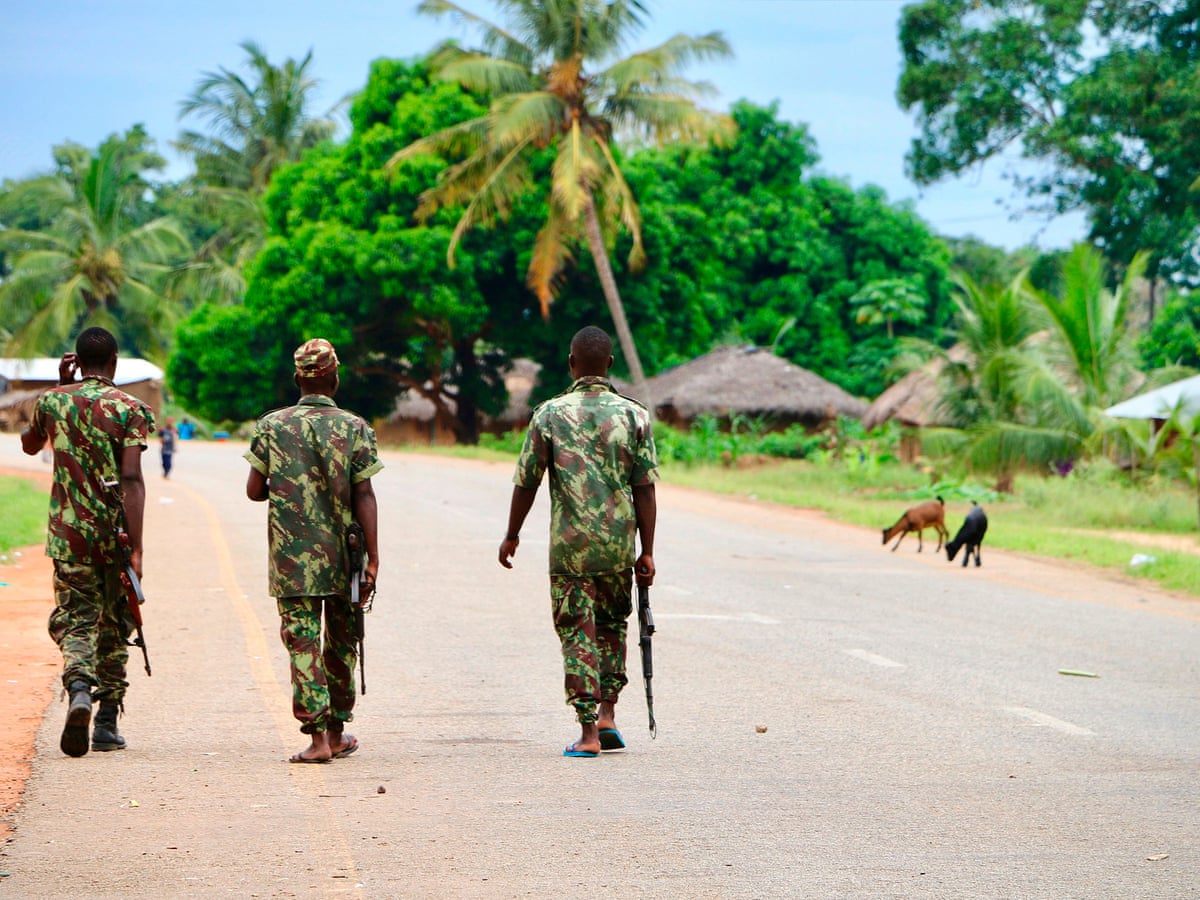
- French prosecutors asked to investigate claims of complicity in war crimes, torture and enforced disappearance at the Mozambique LNG site.
- Complaint comes as TotalEnergies has lifted force majeure on the project amid ongoing conflict and humanitarian crisis.
- Case raises renewed concerns for financiers, investors and energy sector stakeholders operating in high-risk environments.
A criminal complaint has been filed in France against TotalEnergies, accusing the energy major of complicity in war crimes, torture and enforced disappearance linked to security operations at its Mozambique LNG project.
On 17 November 2025, the European Center for Constitutional and Human Rights submitted the complaint to the French National Anti-Terrorism Prosecutor, which also has jurisdiction over international crimes. The filing alleges that TotalEnergies directly financed and materially supported a Joint Task Force composed of Mozambican armed forces that between July and September 2021 detained, tortured and killed dozens of civilians at or near the company’s gas facility in Cabo Delgado.
Related news: Swedish pension fund drops TotalEnergies over human rights concerns in Uganda
The complaint follows a period of escalating insecurity in northern Mozambique. According to the United Nations Office for the Coordination of Humanitarian Affairs, attacks by non-state armed groups have intensified across Cabo Delgado and neighbouring provinces, with violence against civilians reaching its highest level in years. More than 230,000 people were displaced as of October 2025, many of them repeatedly, amid limited access to humanitarian assistance.
The legal action comes after TotalEnergies announced the lifting of the force majeure declared in April 2021 on its Mozambique LNG project. While the company has signalled its intention to restart the development, the final decision remains contingent on approval of a revised budget and an agreement with the Mozambican government to cover an estimated 4.5 billion dollars in additional costs.
At the centre of the complaint is the so-called container massacre, first reported by Politico in September 2024 and later investigated by SourceMaterial and Le Monde. Following an insurgent attack on the town of Palma in March and April 2021, Mozambican soldiers allegedly detained civilians fleeing the violence in metal containers located at the entrance to the TotalEnergies facility. According to witness accounts cited in media reports, detainees were tortured, forcibly disappeared and in some cases executed. The last 26 detainees were released in September 2021.
The Joint Task Force implicated in the allegations was created under a 2020 memorandum between the Mozambican government and TotalEnergies’ local subsidiary to provide dedicated security for the LNG project. Human rights organisations argue that the company was aware of a pattern of abuse by Mozambican forces well before the alleged killings.
Internal documents from TotalEnergies and its security contractor, obtained through freedom of information requests to public financiers, indicate that the company had knowledge of serious violations committed by armed forces operating around the project site as early as May 2020. Despite this, the complaint alleges that TotalEnergies continued to provide logistical and financial support to the Joint Task Force, including housing, food, equipment and soldier bonuses.
Media investigations into the events have already prompted probes by Mozambican authorities as well as reviews by UK Export Finance and the Dutch government. However, no European judicial investigation had been opened until now.
Environmental and civil society groups say the case should serve as a warning to lenders and investors backing large scale energy developments in conflict affected regions. More than 30 public and private financial institutions supported Mozambique LNG in 2020. Critics argue that continued backing is incompatible with both human rights due diligence and responsible finance commitments.
The new complaint is the second criminal case targeting TotalEnergies over its Mozambique LNG operations. In 2023, survivors and relatives of victims of the Palma attacks filed a separate complaint alleging failures to protect subcontractors. In March 2025, French prosecutors opened a preliminary investigation into charges of manslaughter and failure to assist people in danger.
Beyond legal risks, Mozambique LNG also faces mounting criticism over its climate impact. Analysts estimate the project could emit up to 4.5 billion tonnes of carbon dioxide equivalent over its lifetime, positioning it among the world’s largest fossil fuel developments at a time when governments and businesses are under pressure to align with the Paris Agreement.
As of January 2026, the project is funded by a consortium of roughly 30 lenders, including public export credit agencies (ECAs), development finance institutions, and private commercial banks.
In late 2025, the project’s financing structure shifted as UK Export Finance (UKEF) and the Netherlands’ Atradius withdrew their support. The project partners unanimously agreed to replace these contributions with additional equity.
Public & Development Financial Institutions
- Export-Import Bank of the United States (US EXIM): Providing a direct loan of $4.7 billion.
- Japan Bank for International Cooperation (JBIC): Providing a $3 billion loan.
- African Development Bank (AfDB): Providing $400 million in financing.
- SACE (Italy): Italy’s export credit agency.
- Nippon Export and Investment Insurance (NEXI, Japan): Providing credit insurance.
- Export Credit Insurance Corporation of South Africa (ECIC): South Africa’s export credit agency.
- Export-Import Bank of Thailand (Thai EXIM): Providing credit support.
- African Export-Import Bank (Afreximbank): Providing developmental financing.
- Other Public Funders: Development Bank of Southern Africa, Industrial Development Corporation of South Africa, Korea Development Bank, and the Export-Import Bank of Korea (KEXIM).
Private Commercial Banks
Approximately 19 to 20 commercial banks are involved, including:
- Standard Bank (South Africa): Leading with a $485 million loan.
- Société Générale (France): Financial advisor and lender.
- Crédit Agricole (France): Lender and potential financier for LNG tankers.
- Mizuho Bank (Japan):.
- Standard Chartered (UK):.
- JP Morgan Chase (US):.
- MUFG Bank (Japan):.
- Other Private Lenders: Sumitomo Mitsui Banking Corporation (SMBC), ICBC, ABSA Bank, Nedbank, and Rand Merchant Bank.
Project Partners (Equity Funding)
The following partners are providing additional equity to fill the gap left by the UK and Dutch withdrawals:
- TotalEnergies: 26.5% (Operator)
- Mitsui: 20%
- ENH (Mozambique State Energy Company): 15%
- Bharat Petroleum (BPRL): 10%
- Oil India: 10%
- ONGC Videsh: 10%
- PTTEP (Thailand): 8.5%
Legal experts note that European courts are increasingly willing to pursue cases against companies operating in conflict zones. Ongoing proceedings against Lafarge in France and former executives of Sweden’s Lundin Energy highlight growing scrutiny of corporate conduct abroad.
For the African energy sector, the case underscores the expanding intersection between security, human rights, finance and climate considerations in major infrastructure projects.
More information on the case HERE
Author: Bryan Groenendaal


1 Comment
Pingback: Global Peace, Conflict and Security – ol329