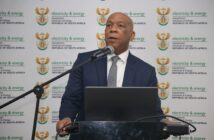
- Ramokgopa confirms the State will retain a central role in planning, pricing and market oversight.
- R6.1 billion departmental budget positioned to unlock more than R2.2 trillion in long term energy infrastructure investment.
South Africa’s private energy sector is being urged to prepare for a slow and carefully managed transition toward a competitive electricity trading environment, following Electricity and Energy Minister Dr Kgosientsho Ramokgopa’s 2026 Budget Vote address, which reinforced the State’s intention to remain firmly at the centre of electricity market reform.
Tabling a R6.1 billion budget allocation for the 2026/27 financial year, Ramokgopa described the Department of Electricity and Energy’s role as a strategic catalyst intended to unlock an estimated R2.2 trillion in future investment across generation, transmission and distribution infrastructure.
However, the Minister’s address also made it increasingly clear that the implementation of the South African Wholesale Electricity Market (SAWEM) will proceed through a measured and tightly sequenced process designed to prioritise system stability, regulatory oversight and national development objectives ahead of rapid market liberalisation.
The highly anticipated launch of SAWEM, initially targeted for April 2026, has been deferred to the third quarter of the year while the National Energy Regulator finalises the market code and related governance frameworks. Ramokgopa confirmed that government would soon publish a “sequenced” implementation roadmap aimed at reducing uncertainty surrounding the transition to a competitive electricity market structure.
“The market will not be built on uncertainty. It will be built on rules, oversight and readiness and public interest,” Ramokgopa stated during his address.
The roadmap is expected to outline regulatory milestones, governance structures, settlement arrangements, pricing alignment mechanisms and the phased transition toward a future Transmission System Operator.
For many private sector participants, the messaging signals that while electricity market reform remains a strategic priority, the pace of implementation will likely be much slower than initially anticipated.
Industry analysts note that government appears determined to avoid destabilising Eskom during the transition period, particularly as the utility remains financially constrained while still carrying responsibility for the majority of South Africa’s generation fleet and transmission infrastructure. Read more
Ramokgopa directly reaffirmed the State’s central role in the future market design, dismissing suggestions that increased competition would reduce government influence in the electricity sector.
“The State will continue to plan, regulate, protect the poor and ensure that system security is not compromised,” he said, adding that market reforms must ultimately serve national development goals.
The comments are likely to reinforce expectations that Eskom’s interests and broader public policy objectives will continue shaping the structure and pace of wholesale market reform for years to come.
Beyond SAWEM, the Department identified aggressive grid expansion and electricity distribution reform as immediate priorities for the current financial year. Ramokgopa confirmed that an electricity distribution industry roadmap would be published alongside revisions to the national electricity pricing policy.
The revised framework is expected to address tariff setting methodologies, wholesale pricing structures, use of system charges, time of use tariffs, municipal cost recovery and subsidy separation mechanisms.
Importantly for investors, government also plans to intensify risk adjusted energy planning through updates to the Integrated Resource Plan, the Gas Master Plan and the Integrated Energy Plan.
The Minister emphasised that future planning assumptions would be stress tested against actual market conditions to create a more responsive and “living” planning framework.
At the same time, the Department intends accelerating preparations for a future nuclear procurement programme while also developing long term strategies around coal fleet repowering, gas infrastructure expansion and green hydrogen development.
Financially, the largest share of the Department’s 2026/27 allocation, approximately R4 billion, will support energy programmes and electrification projects. Nuclear energy regulation receives R1.6 billion, while administration, planning and support for State owned entities account for the balance.
Despite the relatively modest departmental budget, government’s broader ambition is to mobilise trillions of rand in private and public infrastructure investment over the coming decades.
For independent power producers and energy traders, the long-term direction of reform remains positive. However, Ramokgopa’s address strongly suggests that South Africa’s transition toward a fully competitive electricity market will be evolutionary rather than disruptive, with regulation, state oversight and Eskom’s strategic position remaining central to the country’s energy transition pathway.
Author: Bryan Groenendaal