- Environment Minister Willie Aucamp to proceed with appeals against offshore exploration approvals to avoid regulatory delays.
- Civil society groups challenge expanded appeal by the State and Shell in Block 5 6 7 drilling dispute.
- Western Cape High Court previously set aside environmental authorisation citing serious legal flaws in assessment process.
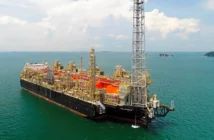
South Africa’s Minister of Forestry Fisheries and the Environment Willie Aucamp has confirmed that government will proceed with determining multiple appeals lodged against environmental authorisations for offshore oil and gas exploration projects along the country’s west and south coasts.
The Minister said the decision is intended to prevent further delays in regulatory decision making while maintaining government’s constitutional obligations to both environmental protection and economic development.
Aucamp explained that numerous appeals were submitted following the granting of environmental authorisations under the National Environmental Management Act 1998 for offshore activities including seismic surveys and exploration drilling. These appeals were lodged in terms of section 43 of the Act.
According to the Department of Forestry Fisheries and the Environment the appeals had previously been deferred pending the outcome of related court proceedings. The Minister said he reviewed the legality and implications of this deferral in light of the statutory framework governing environmental appeals including the National Appeal Regulations and the Promotion of Administrative Justice Act 2000.
He concluded that continuing to delay the appeals would not be procedurally fair and could create what he described as decision paralysis within the environmental governance system.
Allowing the matters to remain suspended pending lengthy litigation may stall critical decision making processes within the regulatory system, the Minister said.
To ensure an independent review an appeal panel will be appointed in terms of the National Appeal Regulations. The panel will assess the matters raised and provide recommendations to the Minister before a final decision is taken.
Aucamp emphasised that the appeals process remains a key safeguard within South Africa’s environmental governance framework as it allows environmental decisions to be scrutinised while ensuring that the rights and legitimate expectations of affected stakeholders are considered.
The Department said it will provide further updates as the appeal process progresses.
Block 5 6 7 dispute
At the same time the legal dispute surrounding offshore exploration in Block 5 6 7 has entered a new phase as civil society organisations intensify their opposition to expanded oil and gas development.
Environmental organisations The Green Connection and Natural Justice confirmed that they have filed an answering affidavit in the Supreme Court of Appeal opposing attempts by the State and Shell to broaden the scope of their appeal in the matter. The case relates to proposed offshore oil exploration about 60 km from Cape Point.
Neville van Rooy outreach ambassador for The Green Connection said the dispute extends beyond administrative procedure and raises wider issues of governance climate responsibility and the constitutional rights of coastal communities that rely on marine resources for their livelihoods.
Civil society groups first raised objections in 2022 to the environmental impact assessment prepared by TEEPSA for offshore drilling of up to five wells. Concerns focused on potential impacts on small scale fishers marine ecosystems and climate risks.
Despite these objections the Department of Mineral Resources and Energy granted environmental authorisation in 2023. More than 20 appeals were subsequently lodged by affected communities environmental organisations and subject matter experts. These appeals were later dismissed by the then environment minister.
The Green Connection and Natural Justice then initiated a High Court review in 2024 challenging the decision.
Although TotalEnergies later signalled its intention to withdraw from Blocks 11B 12B and 5 6 7 the litigation continued. In 2025 the Western Cape High Court set aside the environmental authorisation after finding that the environmental assessment process contained significant legal and procedural deficiencies.
The court granted limited leave to appeal on two of the five grounds presented in the case which relate to climate risk and transboundary environmental harm. Shell which subsequently took over the application from TEEPSA together with the State is now seeking to expand the appeal to include additional issues.
Civil society organisations argue that the High Court judgment already identified serious shortcomings in the approval process including inadequate assessment of socio economic impacts and insufficient consideration of coastal protection requirements under the Integrated Coastal Management Act.
They also point to the late disclosure of key oil spill and blowout contingency plans which they say prevented communities from meaningfully assessing potential environmental risks.
For small scale fishing communities along the West Coast through to KwaZulu Natal the potential impacts are significant. Stakeholders warn that offshore oil and gas exploration could affect marine ecosystems fish catch rates and the livelihoods of communities that depend on fishing for income food security and cultural heritage.
Civil society groups argue that damage to marine ecosystems cannot be addressed through financial compensation alone.
The dispute also intersects with South Africa’s broader climate commitments. The country is Africa’s largest carbon emitter and contributes roughly 1% of global CO2 emissions.
Environmental organisations argue that expanding offshore oil and gas exploration could undermine climate objectives while diverting investment away from renewable energy and community based energy solutions. They also highlight that methane emissions associated with fossil fuel production can be up to 86 times more potent than CO2 over a 20 year period.
The Supreme Court of Appeal will now decide whether the State and Shell can broaden the scope of their appeal to include additional grounds related to socio economic impacts coastal protection and emergency response planning.
For many stakeholders the Block 5 6 7 dispute has evolved into a national test case for environmental governance transparency and the application of precautionary principles in South Africa’s energy transition. At stake are issues ranging from constitutional rights and marine biodiversity to food security and the long term sustainability of the country’s coastal economy.
Author: Bryan Groenendaal