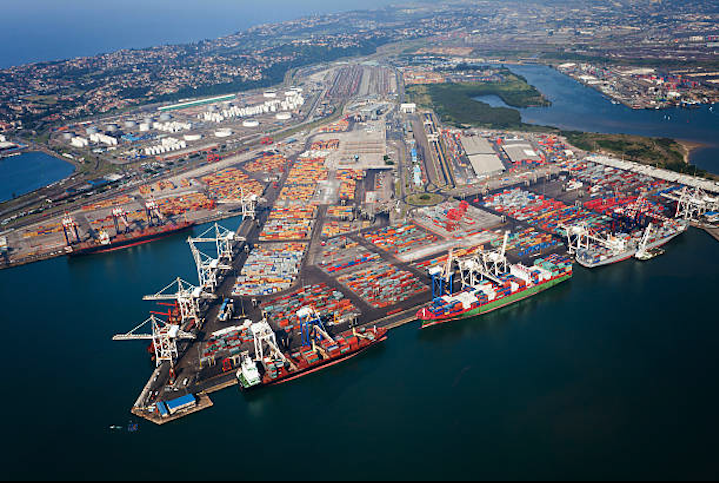
- High Court review questions legality of long term port terminal allocations.
- Government pushes reform to expand access and unlock black participation.
- Outcome seen as critical for investor confidence and fuel supply security.
A legal challenge over long term fuel storage rights at the Port of Durban is set to test South Africa’s approach to energy sector reform, as an energy firm seeks to overturn a government directive that reshapes access to critical infrastructure.
Capricorn Petrochemicals has filed review proceedings in the Gauteng High Court in Pretoria against Transport Minister Barbara Creecy, targeting her 2025 Section 79 directive granting 25 year operating rights at the Island View Precinct. The facility handles about 75% of South Africa’s petroleum imports, with annual volumes of roughly 13 billion litres of crude oil and 19 billion litres of refined products.
The directive authorises major operators including Sasol Oil, Engen, Astron Energy, TotalEnergies, Bidvest Tank Terminals and the Central Energy Fund to operate liquid bulk and chemical terminals under new long term agreements.
Government argues that the move addresses years of uncertainty, where expired leases were extended on short term arrangements of one to two years, limiting investment in strategic infrastructure. The introduction of 25 year leases is intended to provide certainty, support capital investment and strengthen fuel supply security.
A key feature of the policy is mandatory third party access. Operators are required to allocate a portion of storage capacity to the Central Energy Fund, which will act as an aggregator to enable smaller and black owned companies to participate in fuel importation and distribution. The model is designed to lower barriers to entry in a sector historically dominated by global oil majors.
The dispute comes amid structural shifts in South Africa’s downstream market. The closure of refining assets such as SAPREF and Engen’s Durban refinery has left the country heavily reliant on imported fuels, increasing the strategic importance of storage terminals as critical supply chain nodes.
Industry data indicates strong demand for access, with more than 170 applications submitted by new entrants seeking storage capacity. At the same time, established international players including BP, Shell and Vitol continue to hold significant control over existing infrastructure.
Capricorn Petrochemicals argues the directive is unconstitutional, unlawful and invalid. The company contends that the allocation of strategic port assets should have followed a competitive tender process under Section 56 of the National Ports Act, rather than being issued through ministerial instruction.
According to court filings, the use of Section 79 powers exceeded legal limits intended for exceptional national interests and bypassed constitutional procurement requirements of fairness, transparency and competitiveness. The applicant further claims there was no public consultation and that only incumbent operators were involved in the process.
Capricorn warns that the directive effectively entrenches existing stakeholders, many operating under legacy arrangements, while limiting opportunities for new entrants and undermining transformation objectives.
The company is seeking an expedited hearing, arguing that once the long term agreements are finalised, reversing them would be impractical.
Author: Bryan Groenendaal