- The UK and African Development Bank extend one billion dollar climate linked guarantee to secure municipal funding.
- Germany more than doubles its financial commitment as concerns persist over Eskom funding terms.
- Strong private sector appetite emerges despite slow rollout of Just Energy Transition finance.
Germany and the United Kingdom have reaffirmed their support for South Africa’s Just Energy Transition as Eskom signals it may pursue alternative funding routes amid concerns over the cost and accessibility of pledged finance.
The UK, together with the African Development Bank, has extended a one billion dollar climate linked debt guarantee to South Africa, safeguarding a four hundred million dollar municipal funding deal that was at risk of expiring at the end of last year. The guarantee forms part of the ten billion dollar Just Energy Transition Partnership agreed between South Africa and a group of developed economies in late 2021.
The extension comes as South Africa negotiates with the African Development Bank over a four hundred million dollar loan to fund municipal energy and water services. The loan will be guaranteed by the UK and is intended to support the Municipal Utility Reform Project, alongside the development of additional low carbon infrastructure.
According to the British High Commission, the guarantee has been extended to enable the South African government to deliver priority municipal reforms and advance climate aligned infrastructure projects during 2026.
Despite its status as a flagship climate finance model that has since been replicated in countries such as Vietnam and Indonesia, the Just Energy Transition Partnership in South Africa has drawn criticism for the slow pace of disbursement. To date, approximately 3.8 billion dollars of the pledged ten billion dollars has been deployed.
National Treasury has previously indicated that negotiations over the guarantee extension were still under way. Once finalised, the municipal loan will be directed towards reducing water and electricity losses and upgrading infrastructure in four municipalities in Mpumalanga, a province that hosts the bulk of South Africa’s coal mining and coal fired power generation capacity.
While municipalities have historically delivered services with limited private sector participation, the programme is expected to encourage greater involvement from private companies in both water and electricity provision.
Energy financing remained a key topic at the World Economic Forum in Davos, where Electricity and Energy Minister Dr Kgosientsho Ramokgopa reiterated that the terms attached to the 13 billion dollars pledged under the Just Energy Transition were not sufficiently attractive for Eskom. He noted that restrictive requirements were making it difficult to access the funds, prompting the utility to consider commercial banks and bond markets as alternative sources of capital for its transition and infrastructure plans.
Although the United States withdrew from the partnership in early 2025, total pledged funding remains above US$13 billion.
Germany’s special envoy for the Just Energy Transition Partnership with South Africa, Rainer Baake, said Germany’s commitment was demonstrated by its decision to increase its financial contribution to 2.68 billion euros, up from the original 986 million euros pledged in 2021. He confirmed that more than 1.4 billion euros has already been disbursed under the programme, which is scheduled to run until 2027.
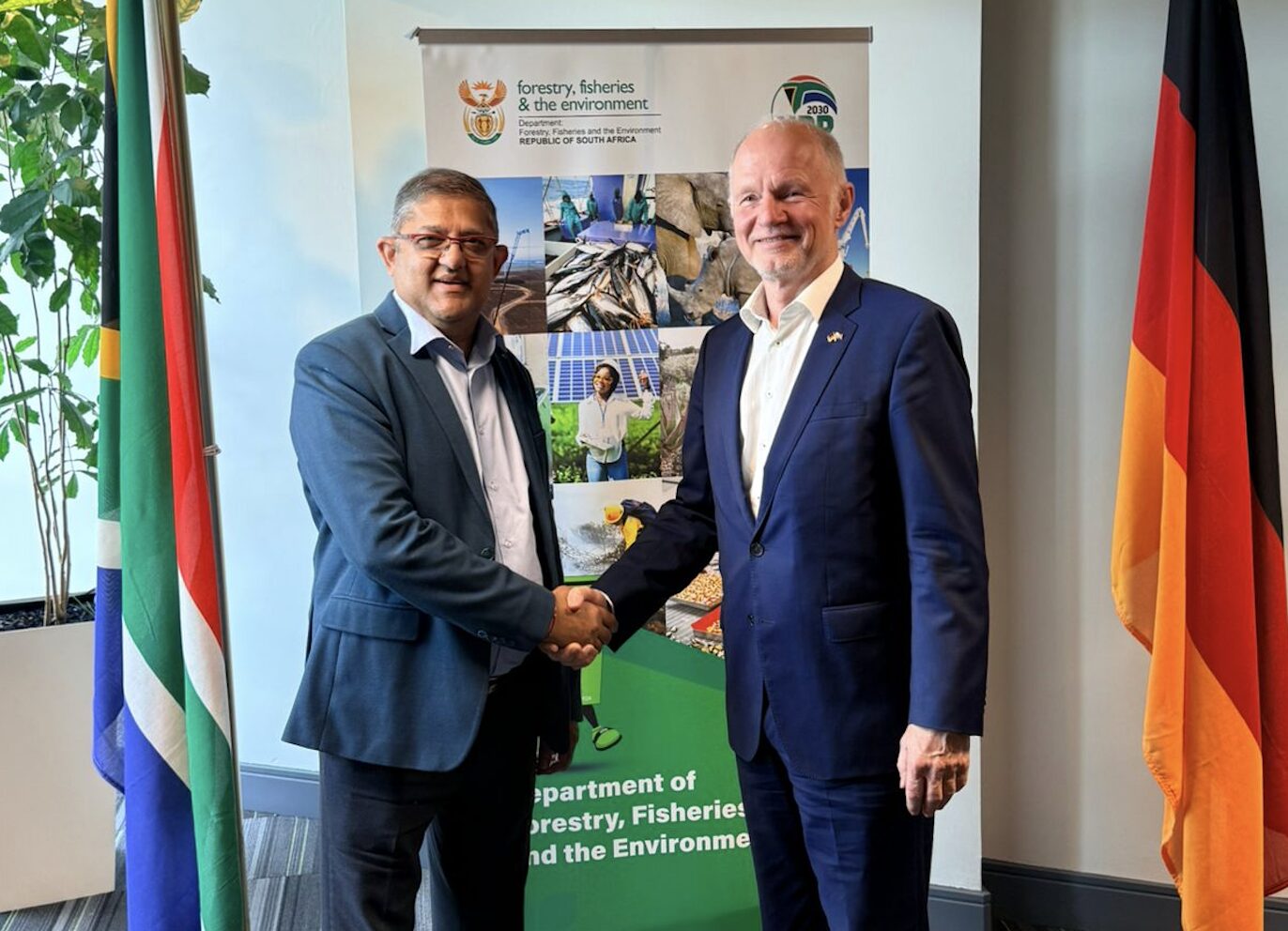
Speaking in Pretoria at the conclusion of an official visit, Baake said the increased allocation reflected strong demand for grant funding and concessional finance aligned with South Africa’s Just Energy Transition Investment Plan. During more than 40 meetings with private sector stakeholders and government officials, he observed significant appetite for funding, particularly in the renewable energy sector.
While declining to comment directly on concerns raised by Minister Ramokgopa regarding the cost of debt, Baake highlighted that policy loans provided through Germany’s development bank KfW were priced well below prevailing market rates. Three such loans, totalling 1.3 billion euros, have already been disbursed to National Treasury following the implementation of agreed energy sector reforms.
He cited examples including a 300-million-euro loan approved in November 2022 with a 20 year maturity and an initial interest rate of 3 percent, compared with market rates of nearly 9 percent at the time. Subsequent loans approved in 2023 and 2025 also compared favourably with South Africa’s sovereign bond issuances. A further 150-million-euro concessional loan was approved for the City of Cape Town in December 2024 to support electricity infrastructure.
Additional concessional loans amounting to 1.07 billion euros have been approved for electricity, green hydrogen, skills development and municipal support, alongside grant funding of 125.6 million euros.
Baake praised recent reforms aimed at opening the electricity sector to private investment and competition, highlighting the planned introduction of a wholesale electricity market later this year as a critical step towards future retail competition. Drawing on Germany’s own experience, Baake expressed confidence that South Africa could avoid earlier reform mistakes by ensuring non-discriminatory access to the grid and clear separation between generation and transmission.
Author: Bryan Groenendaal