- President Cyril Ramaphosa directs establishment of fully independent state owned Transmission System Operator.
- Energy Availability Factor rises to 65.04 percent year to date as diesel spend drops by R4.88 billion.
- Strong reserve margin expected ahead of Monday evening peak.
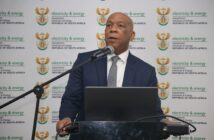
In his State of the Nation Address delivered on 12 February 2026, Cyril Ramaphosa confirmed that government will establish a fully independent state owned Transmission System Operator with ownership and control of transmission assets and responsibility for operating the electricity market.
The President indicated that the new entity will be fully separated from Eskom. In response, Eskom confirmed that it will support the task team established to deliver the Transmission System Operator and facilitate the transition. The announcement marks a significant structural reform in South Africa’s electricity sector and advances efforts to strengthen market transparency, enhance competition and improve long term energy security.
Eskom reports that the national power system remains stable, supported by improved plant performance and continued implementation of the Generation Recovery Plan. For the financial year to date, from 1 April 2025 to 12 February 2026, the Energy Availability Factor has increased to 65.04 percent. The generation fleet has achieved or exceeded the 70 percent mark on 66 occasions during this period, reflecting ongoing gains in fleet reliability and system stability.
Between 6 and 12 February 2026, average unplanned outages measured 11 397 megawatts, compared with 10 965 megawatts in the same period last year. While this represents a marginal increase of 432 megawatts, the Unplanned Capacity Loss Factor stood at 23.29 percent, a slight reduction compared with 22.89 percent recorded in the corresponding period last year.
Planned maintenance activity has increased in line with Eskom’s reliability improvement strategy. The Planned Capacity Loss Factor averaged 15.79 percent over the same period, up from 10.89 percent in the previous financial year. The higher maintenance levels support improved long term plant performance and operational stability.
Diesel use declines sharply
Improved Energy Availability Factor performance has significantly reduced reliance on diesel fired generation, allowing greater use of primary energy sources and delivering material cost savings.
Diesel usage over the past week was minimal and largely associated with test runs at the Ankerlig and Gourikwa power stations. Year to date diesel expenditure is R4.88 billion lower than during the same period last year and remains below budget. Eskom reports that 3 181 megawatts of capacity is currently in cold reserve due to excess supply.
The reduction in diesel consumption reflects strengthening system resilience and improved operational discipline across the generation fleet.
Healthy reserve margin
To further support supply stability, Eskom will bring 2 429 megawatts of generation capacity online ahead of the evening peak on Monday 16 February 2026. Evening peak demand is forecast at 23 542 megawatts, with available capacity projected at 27 350 megawatts. The resulting reserve margin provides additional assurance of supply security as South Africa advances structural reform of the transmission sector and continues to stabilise generation performance.
Author: Bryan Groenendaal