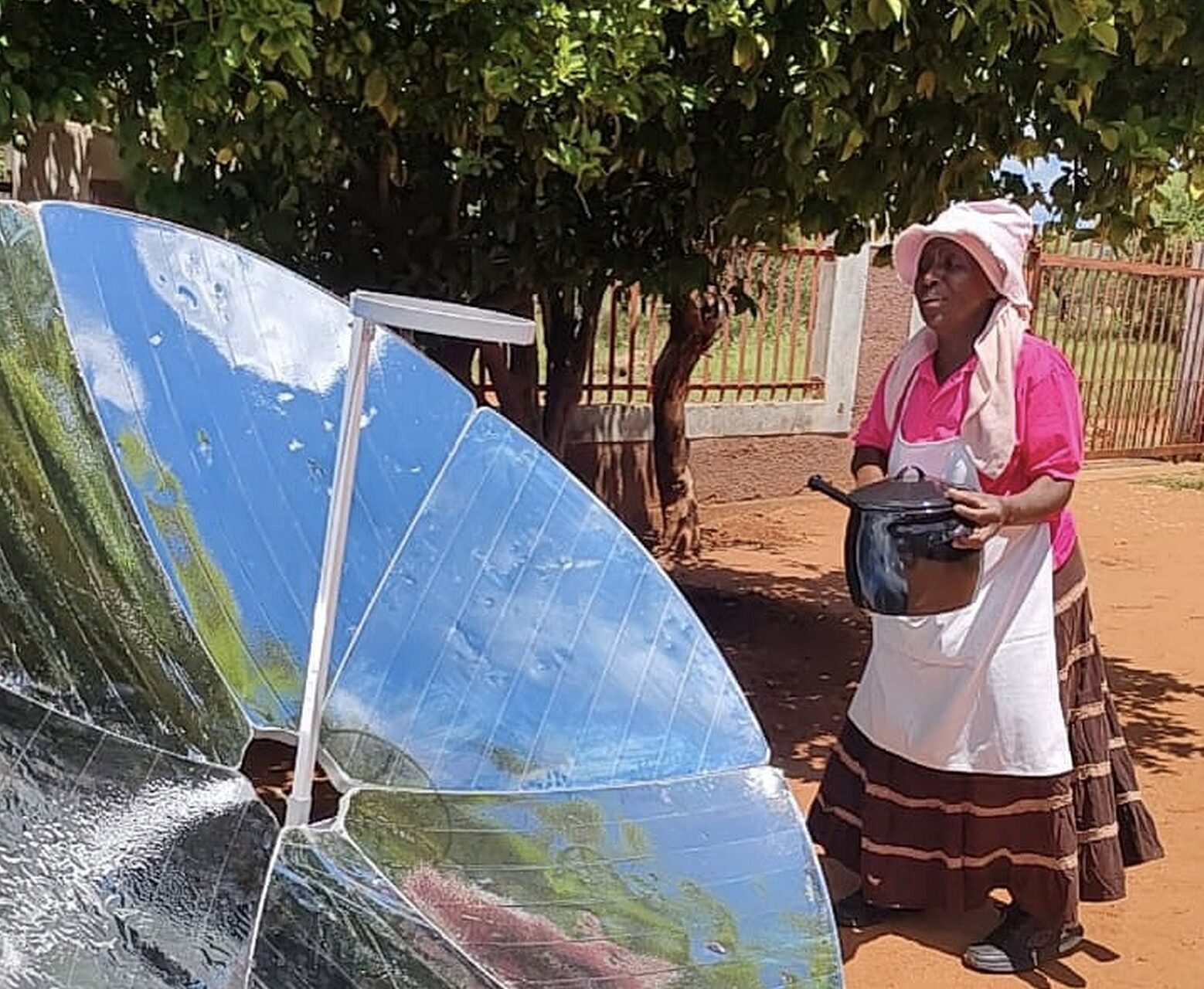
- Twenty rural households receive solar cookers and hands on training in Mothlasedi and Shongoane Bangalong.
- Women placed at the centre of community led clean energy solutions.
- Initiative forms part of a broader commitment to a fair and inclusive low carbon transition.
Earthlife Africa Johannesburg has expanded its community based renewable energy programme in Limpopo with the rollout of solar cookers to rural households in Lephalale, reinforcing its commitment to a just and inclusive energy transition.
On 3 and 4 February, the environmental justice organisation distributed solar cookers to twenty households in Mothlasedi and Shongoane Bangalong villages. The rollout included practical training in the assembly, use and maintenance of the units, ensuring that beneficiary households are equipped to operate the technology independently.
The initiative is being implemented in partnership with local community organisations Ithuteng Community Organisation and Bopanang Women’s Organisation, strengthening grassroots participation and local ownership.
Women at the centre of clean energy access
According to Makoma Lekalakala, Director of Earthlife Africa Johannesburg, the programme addresses both energy poverty and gender inequality in rural communities.
She notes that in many rural areas women carry the primary responsibility for sourcing cooking fuel. Reliance on firewood contributes to environmental degradation and indoor air pollution, while exposing women and girls to significant safety risks, including gender based violence.
“This solar innovation reduces the need to spend time collecting firewood and limits exposure to associated risks,” Lekalakala says. “The project is about community justice and access to clean energy. It demonstrates what is possible when communities are placed at the centre.”
Women from the two villages gathered from early morning to assemble their own solar cookers collectively, a process Lekalakala describes as central to the programme’s philosophy.
“The process is as important as the technology itself. This is what a just transition looks like. It is community led, collaborative and rooted in dignity,” she adds.
Scaling community driven renewable solutions
The Lephalale rollout builds on an earlier distribution drive launched in October 2025 in Tshikuwi Village in Venda, where the first batch of solar cookers was distributed under the auspices of the Mulambwane Women’s League.
Thabo Sibeko, Senior Programmes Officer at Earthlife Africa Johannesburg, says the initiative demonstrates the practical value of decentralised renewable energy in sun rich provinces such as Limpopo.
“This is what we mean by a just transition. Limpopo is blessed with abundant sun. Communities should be benefiting from technologies that provide safe and affordable access to this free resource,” Sibeko says.
He adds that solar cooking reduces household electricity costs, lowers carbon emissions and improves health and safety outcomes, offering a tangible response to both climate change and social inequality.
Communities call for wider rollout
Residents in both villages say the impact of the intervention will be immediate.
Emmy Modise from Shongoane Bangalong Village says solar cookers will reduce electricity expenses and protect residents from the dangers associated with collecting firewood.
“Electricity has been far too expensive for us, and solar energy is a much needed solution,” she says, urging government to expand similar programmes to other underserved communities.
Phillimon Ngwako, also from Shongoane Bangalong, highlights the benefits for elderly women in particular. “This initiative will help our grandparents, especially women, by saving them from having to collect wood. These solar cookers are life changing for our community,” he says.
Mme Motebele from Mothlasedi Village echoes the sentiment, noting that the technology will reduce reliance on wood fuel and the risks faced when gathering it.
For James Molatoa, also from Mothlasedi, solar energy aligns with the community’s long term development goals. “It will save time and energy for those of us who are growing older,” he says.
As South Africa advances its energy transition agenda, initiatives such as this underscore the role of community driven renewable solutions in delivering measurable social, environmental and economic benefits at household level.
Author: Bryan Groenendaal