- Researchers at National Laboratory of the Rockies are mapping battery failure mechanisms to reduce risks linked to thermal runaway and emerging high energy chemistries.
- New open access safety databases and AI based modelling are improving prediction of battery behaviour across design, manufacturing, and operational stages.
- Collaboration with industry and regulators is strengthening emergency response frameworks for electric vehicle and grid battery incidents.
Battery failures in energy storage systems can escalate rapidly when heat builds up, materials degrade, and gases ignite in a cascading reaction known as thermal runaway. While such events remain rare due to safeguards embedded in material engineering and battery management systems, researchers warn that increasing energy density across next generation technologies requires deeper understanding of failure pathways and improved safety design approaches.
At the National Laboratory of the Rockies, scientists are conducting detailed investigations into battery behaviour across the full lifecycle, from material selection to field performance and emergency response. The work is supported through collaboration with industry specialists and public sector partners to improve safety outcomes across emerging battery chemistries and system designs.
A key element of this effort is a comprehensive safety evaluation framework that begins at material level analysis. Researchers study microstructural, thermal, electrical, mechanical, and electrochemical properties to determine how different cell designs behave under stress and how failures may develop.
These findings feed into an open access Battery Safety Database developed by the laboratory in partnership with University of Texas at Austin and Exponent Inc under a programme supported by Advanced Research Projects Agency Energy. The database captures safety characteristics across multiple battery types and is intended to support manufacturers and innovators working on next generation storage solutions.
To generate the underlying data, researchers deliberately subject batteries to extreme conditions including mechanical penetration, thermal stress, and internal short circuits in controlled environments. These experiments are designed to trigger failure so that root causes can be identified and translated into safer designs.
Scientists at the laboratory emphasise that understanding must span multiple scales, from atomic level defects that influence voltage and capacity to particle cracking driven by mechanical stress, electrode composition effects on ion movement, and thermal behaviour within full cell systems. Linking these layers helps researchers move beyond observing failure to explaining why it occurs.
Advanced imaging and analytical techniques are central to this work, including high resolution three dimensional scanning that allows researchers to observe internal structural changes during operation and failure. Data generated from these experiments is combined with physics informed AI based models that improve prediction of complex events such as thermal runaway.
Research published in collaboration with Nature Communications has demonstrated how machine learning tools can help anticipate battery behaviour when supported by large experimental datasets. Laboratory scientists note that the effectiveness of AI based modelling depends heavily on the availability of high quality empirical data, reinforcing the importance of sustained experimental research programmes.
Beyond laboratory analysis, the research programme is also focused on real world applications, particularly electric vehicle safety and grid scale storage. Although electric vehicle battery failures are rare and occur at rates comparable to or lower than internal combustion engine incidents, they present unique challenges for first responders due to the difficulty of extinguishing fires and the potential for re ignition.
Events such as the flooding of electric vehicles during Hurricane Ian in 2022 highlighted gaps in incident response knowledge and prompted closer cooperation between National Highway Traffic Safety Administration and national laboratories, including National Laboratory of the Rockies. This collaboration is focused on improving guidance, diagnostic tools, and operational protocols for emergency teams dealing with battery related incidents.
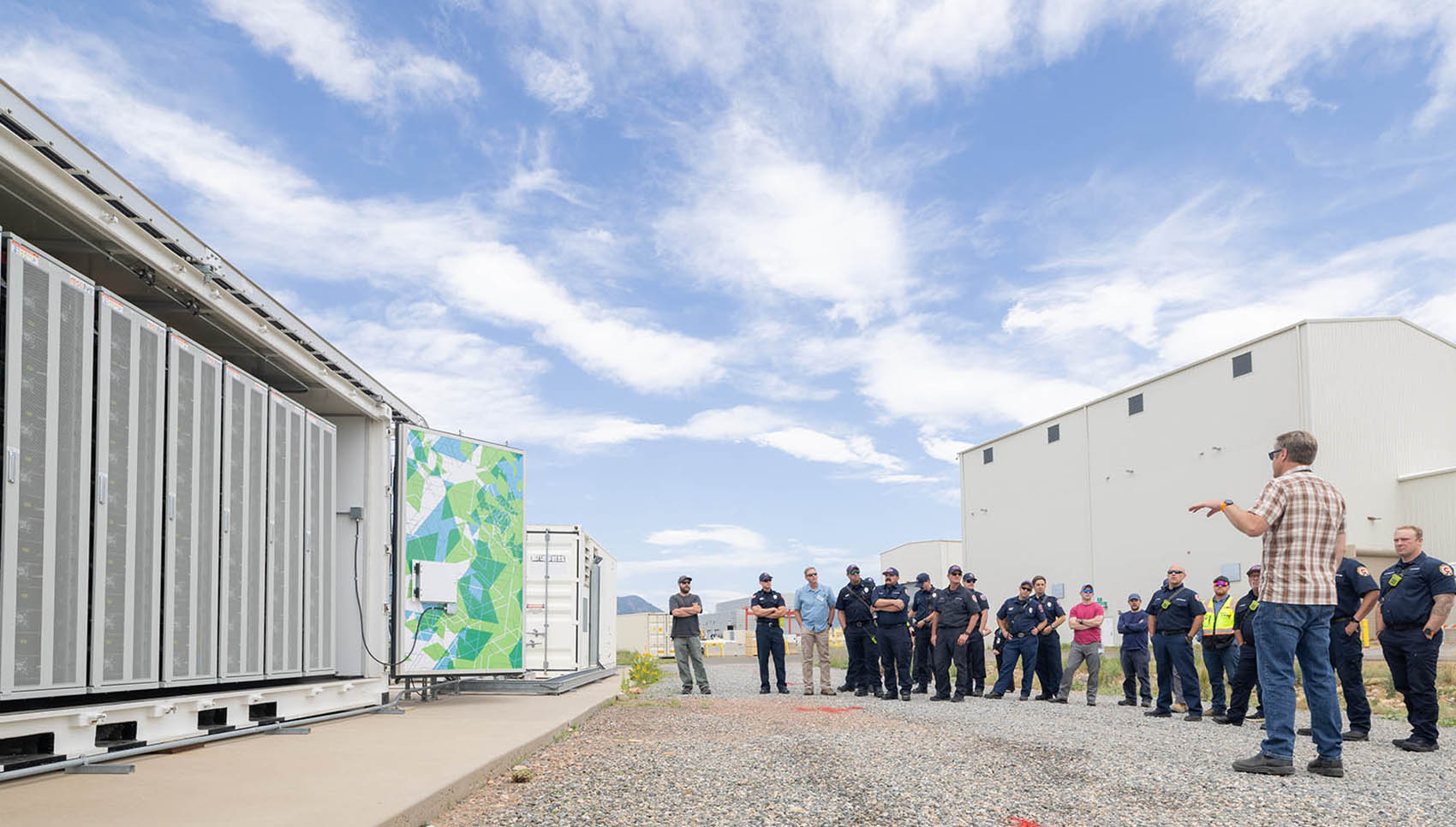
Researchers are also evaluating technologies that could help responders assess battery state of safety in real time and safely discharge energy from damaged systems to reduce risks during recovery and transport. Alongside this, updated guidance materials and structured knowledge sharing frameworks are being developed to strengthen preparedness across emergency services.
Attention is also turning to next generation battery chemistries, including sodium ion, potassium ion, and solid state lithium metal systems. These technologies promise higher energy density and lower cost but introduce new and less understood safety risks that require rigorous testing before commercial deployment.
A major programme under the Advanced Research Projects Agency Energy has recently expanded into next generation targets aiming for storage systems capable of reaching 1,000 watt-hours per kilogram and 1,000 watt-hours per liter at system level. Researchers caution that such high energy systems will require significantly enhanced safety oversight due to the scale of energy being managed.
As global demand for energy storage accelerates, driven by electrification, industrial applications, and data intensive computing infrastructure, battery systems are becoming critical components of modern energy networks. Researchers at the National Laboratory of the Rockies argue that sustained safety research, combined with shared data and industry collaboration, will be essential to ensure that innovation in energy storage is matched by equally strong safety performance across the sector.