- Reuters reports that Germany’s Union Investment has dropped TotalEnergies from its sustainability funds and called for an independent human rights audit following fresh allegations of abuses at the $15 billion East African Crude Oil Pipeline Project in East Africa.
French oil giant Total and the China National Offshore Oil Corporation are building a massive crude oil pipeline right through the heart of Africa – displacing communities, endangering wildlife and tipping the world closer to full-blown climate catastrophe.
The StopEACOP campaign has also coordinating an escalated global action to urge China to rule out financial support for the East African Crude Oil Pipeline and the associated oil field projects (the EACOP projects). China is the main off-taker for the crude oil. The campaign specifically targets the China Export & Credit Insurance Corporation (SINOSURE), the state-owned Chinese insurance company, the Export-Import Bank of China (China Exim Bank), one of China’s policy banks, and the Industrial and Commercial Bank of China (ICBC), China’s largest commercial bank and one of the financial advisors for the EACOP project.
Standard Bank in South Africa has also come under fire for providing finance for the project. Read more
Local opposition and human rights abuses
11 pipeline critics have been arrested in Uganda and Tanzania after expressing their concerns about the project. In addition, one of the community leaders from the Kingfisher region in Uganda was abducted by the Uganda Peoples’ Defense Forces, bringing condemnation from the UN Special Rapporteur on Human Rights Defenders.
Environmental and human rights groups have persistently highlighted the potential hazards of the controversial EACOP, including severe impacts on wildlife habitats, the displacement of communities, and the exacerbation of climate change through increased greenhouse gas emissions. Many field investigation reports, including a recent Human Rights Watch report, have also documented and denounced the inadequate compensation and significant disruption experienced by residents displaced by the pipeline’s construction.
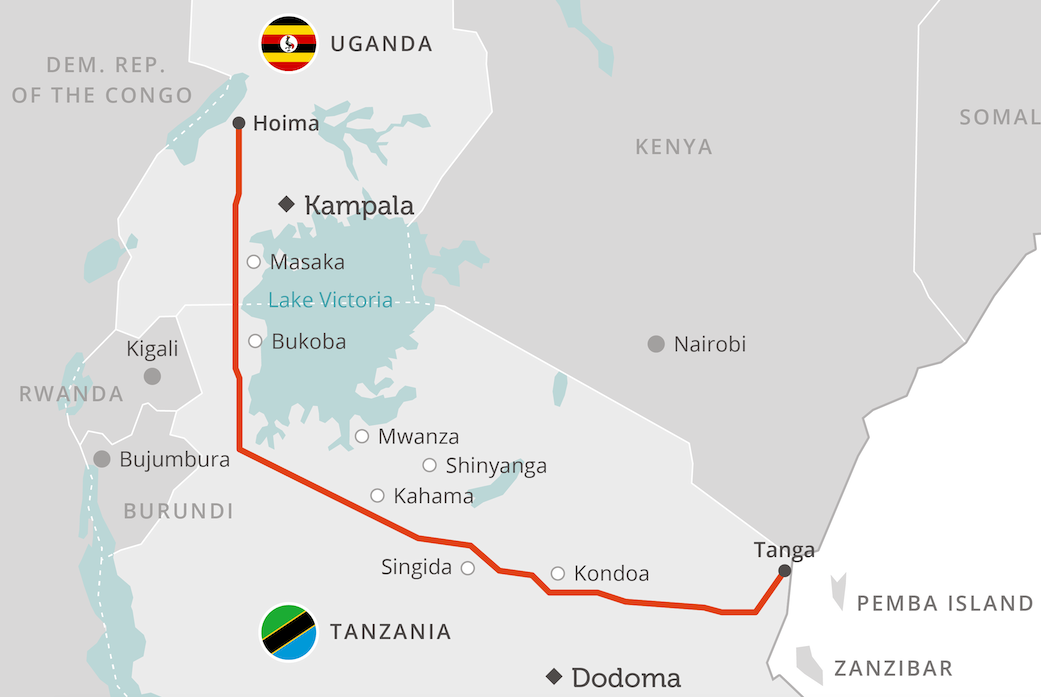
East African Crude Oil Pipeline map. Image credit: EACOP
Author: Bryan Groenendaal