Opinion
- Clear confirmation of an independent transmission operator and progress on market reform.
- Fiscal tools and credit guarantees aim to attract private investment and enforce municipal discipline.
- Delivery delays, legal disputes, and opaque tariff pricing threaten investor confidence.
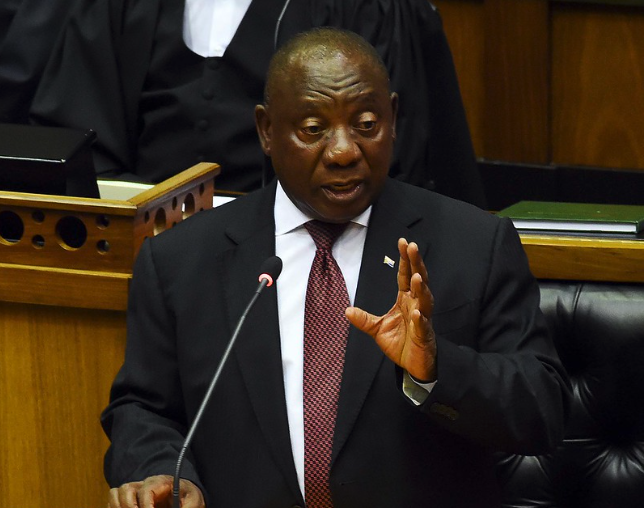
President Cyril Ramaphosa’s 12 February 2026 State of the Nation Address removed any remaining ambiguity about South Africa’s electricity reform. He confirmed that a fully independent, state-owned Transmission System Operator will own and manage the national grid and operate the electricity market. This decision ends years of debate about whether transmission assets would remain under Eskom Holdings.
For investors, this is not just administrative detail. Transmission independence is the structural foundation of competition, transparency, and efficient capital deployment. Without it, generation reform remains incomplete, and private investors remain exposed to conflicts of interest in grid access and dispatch.
The President’s stance reflects growing pressure from organised business, including Business Unity South Africa and Business Leadership South Africa, which have argued that transmission independence is essential to avoid reverting to a single-buyer monopoly. Corporate South Africa is now an active participant in energy reform — as a financier, off-taker, and direct risk carrier.
The final phase of Eskom’s restructuring is being managed by a task team under the National Energy Crisis Committee, mandated to finalise the unbundling of generation, transmission, and distribution within three months. The reform narrative has shifted from crisis management to structural implementation.
With load shedding officially ended, government now aims to eliminate load reduction by 2027. The challenge has moved from generation adequacy to network reliability. Transformer overloading, illegal connections, and municipal infrastructure failures are emerging as the new frontiers of system risk.
The launch of the South African Wholesale Electricity Market marks the most significant trading reform since 1994, shifting from a single-buyer model to bilateral trading and eventually real-time market operations. Aligning with European and North American frameworks, this approach enhances liquidity and transparency — key metrics for investor confidence.
Finance Minister Enoch Godongwana’s 2026 Budget further embeds transmission expansion within fiscal strategy. A new Credit Guarantee Vehicle, developed with the World Bank, will reduce risk for large-scale grid investments and crowd in institutional capital, potentially lowering overall project costs.
Regulatory measures under Operation Vulindlela have already unlocked more than 23,900 MW of new generation capacity, largely renewable and privately financed. The government remains committed to achieving over 40% renewable supply by 2030. Carbon pricing has been increased to R308 per tonne, and a 150% tax deduction for new energy vehicle investments from March 2026 ties the energy transition to industrial expansion.
Eskom push back
Despite these advances, operational and legal frictions are undermining confidence. Eskom’s loss in a High Court dispute with Sibanye Stillwater over a 50 MW solar project highlighted persistent resistance within legacy structures. Investors view such cases as evidence of a gap between policy intent and operational behaviour.
Eskom’s proposed 62 c per kWh tariff for ferrochrome smelters further raises questions about consistency with market reform. This framework, if approved by the energy regulator NERSA, represents a steep discount compared to Eskom’s average tariff of approximately 220.92 c per kWh. The stated aim is to stabilise export industries and protect jobs, yet it deepens fiscal exposure at a time when Eskom carries R372bn debt and relies on nearly R496bn in state support. Municipal arrears have reached R103.5bn, rising 27% year on year.
The utility argues that such concessions are ring-fenced and non-subsidised, but in a state-dependent balance sheet, revenue foregone at scale ultimately impacts public finance. Meanwhile, industrial users are increasingly exploring alternative supply models through wheeling and power purchase agreements with independent producers, weakening Eskom’s revenue position even further.
The risk of policy reversal is clear. A pricing model that favours specific industries undermines the very market liberalisation reform is meant to achieve. Competitive markets thrive on transparent pricing and open access, not negotiated exceptions.
On 24 July 2025, Eskom initiated proceedings in the High Court to review and set aside the National Energy Regulator of South Africa’s (NERSA) decision to grant electricity trading licences to Green Electron Market, CBI Electric Apollo, GreenCo Power Services, Discovery Green and NOA Group Trading. The parties have subsequently agreed to suspend legal proceedings to allow for the development of new electricity trading rules in South Africa. The stay does not amount to a withdrawal of the case but is a procedural pause pending the finalisation of the applicable regulatory framework governing electricity trading.
IPP instability
Further instability within the independent power producer space adds to investor unease. The dispute between Sibanye Stillwater and Red Rocket over the 108 MW Witberg Wind Farm, a R3.4bn project backed by major lenders, underscores the importance of contract discipline and delivery capacity. Similarly, the High Court ruling on bank guarantees under Bid Window 5 of the REIPPPP has highlighted the financial exposure tied to bid compliance.
Municipal debt a worry
Municipal finance remains a structural fault line. Defaulting municipalities owe Eskom more than R102bn, undermining both liquidity and reinvestment. The government’s R27.7bn reform of metro trading services and the introduction of performance-linked infrastructure grants aim to restore fiscal accountability. The success of these measures will directly shape reliability at the distribution level.
In a sign of market liberalisation, JSE-listed Blu Label Unlimited has announced that its subsidiary, BluEnergy Trading, secured a multi-year energy trading licence from NERSA. This approval allows BluEnergy to connect municipalities, independent producers, and large users, enabling direct and more cost-effective renewable energy supply.
For investors, the direction of travel is now unmistakable. Transmission independence has been confirmed, wholesale market reform is progressing, and fiscal tools are being aligned with a lower-carbon economy. International partners have pledged about R250bn through the Just Energy Transition framework, adding to South Africa’s financial capacity for reform.
The challenge now lies in execution. Grid build-out must accelerate, municipal reform must restore payment discipline, and Eskom must adapt to competition rather than resist it. South Africa’s energy transition has moved beyond policy design to a test of delivery integrity. Those who can navigate legal complexity and counterparty risk stand to benefit; those who cannot may find that reform on paper does not guarantee performance in practice.
Author: Bryan Groenendaal