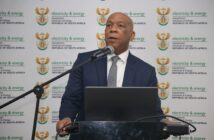
- Dr Kgosientsho Ramokgopa, South Africa’s Minister of Electricity and Energy delivered his budget vote address to parliament yesterday.
Here are the main takeaways:
Generation
Six (6) poor performing plants (Tutuka, Majuba, Kusile, Kendal, Matla, Duvha) had been prioritized for capacity recovery over a two-year period. Thus far, 4955 MW has been recovered from the targeted 6000 MW. The system demonstrated resilience as some parts of the country were hit by cold fronts in the recent weeks.
Eskom profit
For the first time in several years, Eskom has posted a mid-year projected profit for the current financial year, signalling early signs of operational and financial recovery. This improvement has been attributed to a combination of stabilised plant performance, enhanced revenue collection, cost containment measures, and improved energy availability, which collectively reduced reliance on expensive diesel-fuelled generation.
Transmission
The Department has initiated a comprehensive programme to modernise and expand the national grid. Anchored by the Transmission Development Plan, which outlines over 14,000 kilometres of new lines to be developed by 2032, we have introduced new regulations to facilitate the entry of private capital into grid infrastructure through the Independent Transmission Projects Procurement Programme. These reforms are designed to unlock investment while retaining state oversight and ownership of the grid, enabling an exponential expansion of the network.
In parallel, the Department is working with Eskom and the National Transmission Company of South Africa to prioritise the strengthening of corridors with high renewable generation potential. This includes the strategic build-out of transmission infrastructure in areas such as the Upington corridor in the Northern Cape and the Tsitsikamma region in the Eastern Cape
Energy poverty
More than 1.6 million households, many of them in informal settlements, rural villages and rapidly growing urban edges still experience energy poverty. Electricity must also be affordable, reliable and safe.
To address this, the Department has launched a Universal Access Strategy that moves beyond a grid-only approach. We are integrating micro/off grid technologies, repurposing the current Integrated National Electrification Programme grant system, and working closely with provinces and municipalities, including organised local government, through SALGA to unblock planning and execution capability constraints. In provinces such as Limpopo, Eastern Cape and KwaZulu-Natal, where the backlog is most acute, these interventions will be scaled up with urgency.
Over the Medium-Term Expenditure Framework (MTEF) period, just over R13 billion has been allocated to the Integrated National Electrification Programme. This allocation represents a vital baseline for a repurposing of the Grant, and commitment to eradicating energy poverty and achieving universal access by 2030. However, the scale of the challenge, exceeds the current fiscal envelope.
To address this, the Department is pursuing a blended financing model that leverages the R13 billion as a de-risking instrument to crowd in developmental capital and concessional finance. Working in close partnership with Development Finance Institutions and National Treasury, the Department is developing an infrastructure finance facility that will enable the front-loading of capital requirements through debt market instruments. The aim is to mobilise off-balance sheet financing while preserving affordability and fiscal discipline.
Distribution Agency Agreements
Eskom’s ability to collect revenue for the services provided continues to decline, as indicated in the municipal arrear debt growth, with the cumulative municipal debt now stands at just under R100bn, having grown at around R3Bn a quarter over the past year.
The Distribution Agency Agreement (DAA) is being put in place to realize benefits for the sustainability of the entire Distribution Industry. The DAA entails assisting municipalities with their reticulation and distribution of electricity business; revenue collection and retail services. The DAA have the dual potential to support municipalities to provide sustainable local services whilst also contributing to the sustainability of Eskom, through enhanced revenue collection.
Some of the benefits realised at municipalities where these agreements have been put in place include, municipality payment levels having increased from 10% to 30% after meter audits and replacements, Municipalities being assisted to resolve payment disputes with their customers, municipalities have been able to settle their current accounts with Eskom in full and an improved turnaround time for restoration and responding to faults thereby leading to improved customer services, and skills development and training across all areas of the utility leading to improved financial and technical sustainably.
Gas
Honourable Members, South Africa faces a looming gas shortage, with significant implications for industrial provinces such as Gauteng and KwaZulu-Natal. In response, the Department is finalising the Gas Master Plan, which will serve as the long-term policy and investment framework for the sector. The Plan outlines the strategic actions required to secure new sources of gas supply, expand import capacity and enable infrastructure development across the gas value chain.
As part of its immediate response, the Department has initiated work to secure new Liquefied Natural Gas (LNG) supply contracts. It is also supporting the development of import terminals and regasification infrastructure at Richards Bay, in collaboration with relevant sector Departments.
Nuclear
South Africa’s nuclear programme is undergoing a strategic repositioning, not only to maintain base load supply, but to catalyse high-value industrial development. In July 2024, the National Nuclear Regulator granted a 20-year licence extension for Koeberg Unit 1, with Unit 2 expected to follow this year. These decisions affirm the robustness of our regulatory systems and the continued relevance of nuclear energy in our long-term energy mix.
Local supply chain
The Department, working in close partnership with the Department of Trade, Industry and Competition, has finalised the localisation framework under the South African Renewable Energy Masterplan, and is now gearing for implementation of the SAREM implementation plan.
This policy will require Independent Power Producers, Original Equipment Manufacturers and financiers to embed local economic participation in every project.
Author: Bryan Groenendaal