


- It is alleged that permissions granted by the South African Revenue Service (SARS) and the Department of Trade, Industry and Competition (DTIC), allow solar and wind engineering, procurement and construction companies (EPC’s) and independent power producers (IPP’s), to import goods duty free under ‘staged consignments.’
The ’staged consignment’ method provides a blanket code for an entire project (although it is equipment related in the policy), enabling duty-free importation of all items, including critical components and even general construction materials. The premise of the stage consignment is that goods imported cannot be sourced locally.
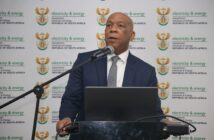
South Africa’s Deputy Minister of Electricity and Energy, Samantha Graham-Maré, recently praised the country’s recently adopted Renewable Energy Masterplan (SAREM).
“The advent of the South African Renewable Energy Masterplan (SAREM) places us on a path where skills development within the renewable energy sector becomes tantamount. One of SAREM’s goals is to ensure that 25 000 jobs are created within the sector by 2030. This requires industrialisation, training, and empowerment to happen simultaneously and efficiently. There should be no ambiguity about our goal to create an enabling environment where young people and women can access skills development and employment opportunities in the ever-growing renewable energy sector,” said Graham-Maré
However, the ‘staged consignment’ concession introduced by SARS removes the incentive for local production and job creation by allowing subsidised duty-free imports.
Link to SARS Staged Consignment – External Policy document HERE
The consequences of the ‘staged consignment’ concession are far-reaching and damaging to the country’s economy and development goals:
- Massive Revenue Losses for SARS: An estimated a loss of nearly R20 billion in tax collection from renewable energy project imports, which should have been subject to appropriate duties. Over the last year alone, revenue loss is estimated at around R17 billion, with a direct tax collection loss of around R4.2 billion.
- Job losses.
- Loss of critical manufacturing expertise and investment.
- Circumvention of Trade Protections: This loophole allows for the duty-free import of even basic materials like steel, undermining local industries and review processes such as the Renewable Review, Steel Review, Fastener Review, Steel Wire Review, and Copper Cable Review.
Staged consignments often come with foreign labour
The core problem is that if SARS approves a staged consignment as a blanket approval for a full project, it creates a significant loophole for labour, as special expertise accompanying these consignments often leads to the employment of non-South African workers to do the installation. As a result, South Africa is increasingly seeing foreign EPCs managing our local projects at rates domestic companies cannot compete with, and foreign OEMs are increasingly using imported labour to do this specialised work.
No compliance oversight
The approval process for these consignments appears to be happening without adequate industry involvement or correct post implementation of SARS who apparently, don’t have the manpower. The IPP Office under the Ministry of Electricity and Energy does not verify local content and labour specified by winning bidders in the REIPPPP, during and after construction.
SARS and the Ministry of Electricity and Energy did not respond to a request for comment on the matter.
SARS is responsible for ‘staged consignment’ approvals, with DTIC having been involved in the consent process. If the allegations of the stage consignment loophole is true, then without immediate intervention, SAREM is set to fail.
Author: Bryan Groenendaal


2 Comments
This is disgraceful and SARS has been made aware of this loophole on more than one occasion but as you mention in your article, SARS don’t have the manpower to oversee these projects. Or the inclination? How will we ever grow this country if this kind of thing continues to happen. It’s total nonsense that these goods cannot be sourced locally.
Hi Bryan.
I have raised this issue previously. Currently we are looking at a further 1.2 Gigawatt now being sourced 100% from offshore.
Even the Mining Charter and there commitment to Local content has no real impact.
America prevented the import of all steel structures used in Renewable projects, so South Africa is easy
Pickings.
Cheers.