- Government targets infrastructure investment and private sector participation to stabilise water systems.
- Reforms to ring fence revenue and strengthen municipal accountability.
- Anti-corruption measures and new delivery model aim to restore reliable supply.
President Cyril Ramaphosa has unveiled a National Water Action Plan aimed at addressing South Africa’s worsening water supply crisis and ensuring reliable access to quality water across the country.
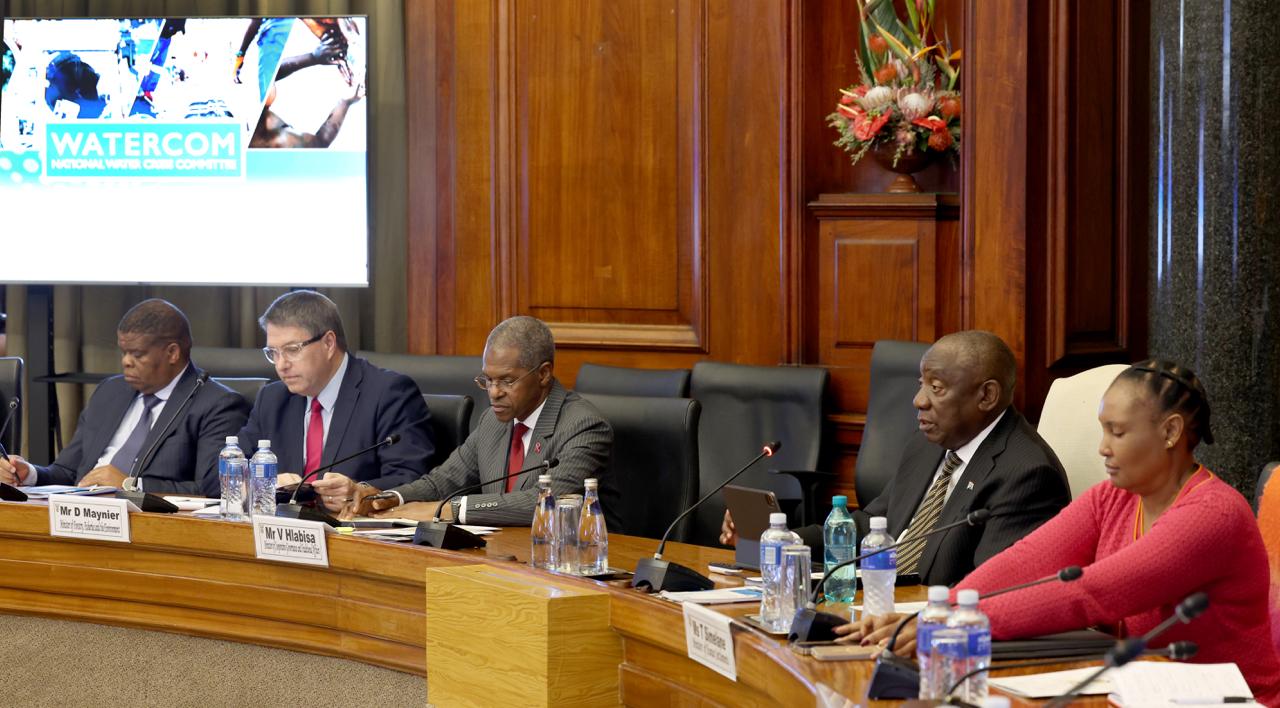
The plan was released following a meeting of the National Water Crisis Committee at the Union Buildings in Pretoria. It sets out short-, medium- and long-term interventions to address persistent water supply challenges affecting municipalities, communities and businesses.
Key measures include increased investment in water infrastructure, with a strong focus on private sector participation, alongside legal and regulatory reforms to improve municipal service delivery. The plan also prioritises action against corruption and criminal activity in the water sector.
The National Water Crisis Committee, chaired by President Ramaphosa, was established after the 2026 State of the Nation Address in response to intensifying water supply disruptions. The committee brings together national departments, public agencies and the South African Local Government Association.
According to the Presidency, the plan follows extensive consultation across all spheres of government and with key stakeholders. Dedicated teams have been appointed to drive implementation, accelerate delivery and support long term sector reform.
A central element of the plan is the restructuring of how water services are managed and financed. This includes ring fencing water revenues to ensure funds collected for water services are used for infrastructure maintenance, upgrades and skills development.
The government identified weaknesses in the current delivery model as a major contributor to the crisis, noting that water revenues are often diverted to other municipal functions. This has resulted in underinvestment in infrastructure and limited capacity to recruit skilled personnel.
Fragmented accountability has also been highlighted as a challenge, with municipal water departments responsible for technical operations but lacking full control over billing, revenue collection and asset protection.
The plan also aims to expand investment in bulk water supply and distribution systems while strengthening coordination between institutions.
President Ramaphosa said the approach mirrors the government’s response to the energy crisis, where reforms in the power sector helped stabilise supply.
He said the same level of focus and coordination would now be applied to resolving water challenges, describing the plan as a clear and practical framework to achieve water security.
The National Water Crisis Committee is expected to meet regularly to oversee implementation and ensure accountability across government entities.
Author: Bryan Groenendaal