- R12.3bn allocated to 70 bulk water projects and 341 municipal water services initiatives across South Africa.
- Government intensifies intervention in 107 underperforming municipalities following worsening Blue Drop and Green Drop assessment results.
- Municipal debt to water boards surpasses R27bn as authorities tighten enforcement measures against non-paying municipalities.
South Africa’s Department of Water and Sanitation (DWS) has allocated R12.3bn in infrastructure grants to fund major water projects and municipal water services upgrades across all nine provinces as government moves to stabilise deteriorating municipal systems and improve water security.
Presenting the department’s Budget Vote in Parliament, Water and Sanitation Minister Pemmy Majodina said the funding will be distributed through the Regional Bulk Infrastructure Grant (RBIG) and the Water Services Infrastructure Grant (WSIG).
According to the minister, RBIG funding will support 70 bulk infrastructure projects nationwide, while WSIG will finance 341 water services projects, including 175 expected to be completed during the current financial year.
Majodina said the grants are also intended to unlock additional investment through partnerships with private sector players and development finance institutions.
The department plans to expand the use of water boards and implementing agents such as the Development Bank of Southern Africa to accelerate delivery in municipalities struggling to execute projects.
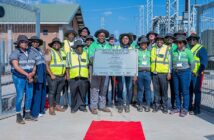
Among the flagship projects completed during the 2025/26 financial year are the R759m Klipdrift Water Treatment Works in Hammanskraal, now operating at its full capacity of 50 megalitres per day, Phase 1 of the R4.8bn Giyani Water Project, which has connected 24 of 55 villages, the R736m Babanana Bulk Water Pipeline in Limpopo, Phase 3 of the R1.5bn Maphumulo Bulk Water Scheme in KwaZulu Natal, and the R351m Moretele South Bulk Water Supply Scheme in North West province.
Projects scheduled for completion during the 2026/27 financial year include four bulk water schemes valued at R2.24bn in Chris Hani District Municipality, the R2bn Loskop Regional Bulk Water Supply Scheme in Mpumalanga, the R1.1bn George Water Supply Project in the Western Cape, and several schemes in North West province with a combined value exceeding R2.3bn.
The infrastructure investment comes despite growing fiscal pressure, with the department’s overall budget declining from R23.4bn in 2025/26 to R22bn in the current budget cycle.
Majodina acknowledged that although South Africa has significantly expanded access to water and sanitation services since 1994, the reliability and quality of municipal water services have deteriorated sharply in recent years.
The department is intensifying intervention measures in 107 municipalities identified as the country’s worst performers following the 2023 Blue Drop and 2025 Green Drop assessments. The latest findings show that wastewater systems classified as critical increased from 39% in 2022 to 47% in 2025, highlighting worsening conditions in municipal wastewater management.
The minister also raised concerns over escalating municipal debt owed to water boards. As of 31 March 2026, municipalities owed more than R27bn to water boards, including R23bn in overdue payments, reflecting a deterioration from mid 2025 levels.
Water boards have responded with stricter credit control measures, including throttling water supply to defaulting municipalities and attaching municipal bank accounts in severe cases.
Majodina said the National Treasury has already withheld equitable share allocations from 62 municipalities due to persistent non-payment.
The department has also engaged with premiers, mayors and provincial Cooperative Governance and Traditional Affairs departments to improve payment compliance and restore financial sustainability across the water sector.
Echoing concerns previously raised by South African President Cyril Ramaphosa during the 2026 State of the Nation Address, Majodina said many communities now have access to water infrastructure but continue to face unreliable supply, poor water quality and sewage spillages.
She said the National Water Action Plan aims to address the structural causes of the municipal water crisis through reforms designed to strengthen operational management, improve financial sustainability and ensure municipalities are staffed with appropriately skilled personnel.
Author: Bryan Groenendaal