- Residents and stakeholders warn proposed 5200 MW plant threatens livelihoods, biodiversity and heritage.
- Concerns raised over safety, infrastructure strain and long term economic costs.
- Critics question need for large scale nuclear investment amid shift to renewable energy.
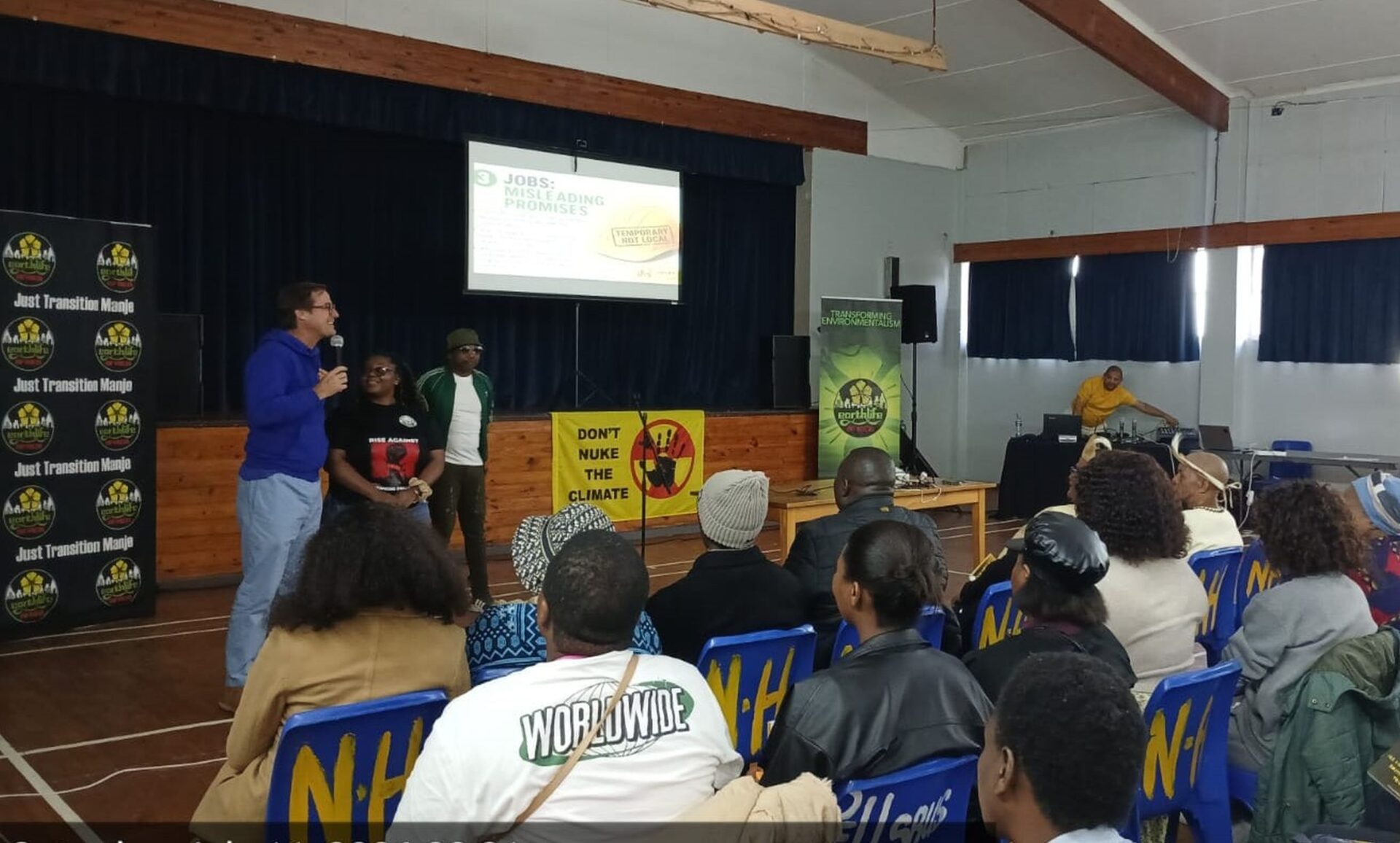
Communities from across the Kouga region gathered in Jeffreys Bay on 11 July to oppose Eskom’s proposed 5200 MW nuclear power station at Thyspunt, raising concerns about environmental damage, economic risks and public safety.
The Speak Out event, hosted by Earthlife Africa Johannesburg, brought together residents, small scale fishers, environmental groups, heritage advocates and community leaders. Participants delivered a unified message that the development could harm local industries, place pressure on public services and impose significant financial costs on South Africans.
Makoma Lekalakala, Director of Earthlife Africa Johannesburg, said opposition to the project has been building for nearly two decades. She noted that fishers, conservationists and community representatives share concerns about protecting livelihoods, cultural heritage and the environment. According to Lekalakala, Thyspunt is not a suitable location for a nuclear facility.
Speakers highlighted the ecological importance of Thyspunt, which supports biodiversity, Khoisan heritage and a coastal economy driven by fishing, tourism and agriculture. Concerns were raised that construction activities, including dredging and marine dumping, could damage chokka breeding grounds, disrupt ocean systems and impact internationally recognised surf locations.
Local fisher Phenius Nkatshuka warned that disruptions to marine ecosystems could directly affect food security and income for coastal communities. He said previous coastal developments have already demonstrated how sensitive fish stocks are to environmental disturbance.
Residents also challenged claims that the project would deliver sustainable employment. While construction jobs may be created, speakers argued these would be temporary, while long term damage to existing industries could be permanent. Additional concerns focused on the potential influx of workers and the resulting strain on housing, healthcare, water supply and municipal services.
Safety and emergency planning emerged as key issues. Community members questioned whether evacuation would be feasible in the event of a nuclear incident, citing limited road access and congestion along key routes such as the N2.
Lydia Peterson of the Southern African Faith Communities Environment Institute said communities are being asked to accept significant risks without clear answers on safety, affordability and waste management. She argued that the proposed site presents unacceptable risks given its location and scale.
Environmental organisations also questioned the strategic rationale for the project. They pointed out that global energy systems are increasingly shifting towards renewable and decentralised solutions, while large scale nuclear projects require high capital investment and long development timelines.
Gary Koekemoer of the Wildlife and Environment Society of South Africa said the project does not meet the criteria for sustainable development. He stressed that Thyspunt contains irreplaceable natural and cultural assets that cannot be restored once damaged.
Economic concerns were also prominent, with estimates suggesting the project could cost hundreds of billions of rand. Speakers warned this could lead to increased public debt and higher electricity tariffs.
Ntombizodidi Mapapu from the Southern African Faith Communities Environment Institute said the scale of investment raises questions about national priorities, suggesting funds could instead support critical social infrastructure such as schools, healthcare and housing.
Residents further warned that years of construction activity and heavy transport movements would place immediate pressure on local infrastructure, even before electricity generation begins. Concerns were raised about the region’s ability to accommodate such a large industrial project.
Calls were made for meaningful public participation, with community members insisting that those directly affected must have a decisive role in the planning process. Speakers emphasised the importance of transparency and accessibility in decision making.
Cynthia Wildscutt, a local resident, said communities are considering long term impacts on future generations, particularly the protection of natural resources and sustainable livelihoods.
Earthlife Africa Johannesburg said the event demonstrated broad based opposition to the proposed development, driven by concerns over safety, affordability, environmental protection and democratic governance.
Lekalakala concluded that communities are calling for an energy pathway that protects people and preserves the unique environmental and cultural value of Thyspunt, adding that decisions of this scale should not proceed without community consent.
Author: Bryan Groenendaal