- US$40 million agreement targets accelerated rollout of off grid solar systems for households and small businesses.
- Initiative supports Mission 300 goal of connecting 300 million Africans to electricity by 2030.
- Blended finance model aims to mobilise private capital for decentralised energy expansion across underserved markets.
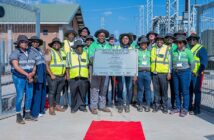
The International Finance Corporation and EDF Power Solutions have signed a US$40 million financing agreement aimed at accelerating the deployment of off grid solar systems across Africa, as development finance institutions intensify efforts to close the continent’s persistent electricity access gap.
Announced by Ethiopis Tafara, the agreement combines direct financing from the International Finance Corporation with capital contributions from private investors to support pay as you go solar solutions designed for households and small businesses in underserved markets. The model allows consumers to acquire solar home systems through instalment based payments, providing an alternative energy access pathway in areas where national grid infrastructure remains limited or economically unviable.
The investment forms part of the broader Mission 300 initiative led by the World Bank and the African Development Bank, which aims to connect 300 million Africans to electricity by 2030. The programme is increasingly positioning decentralised renewable energy systems as a central pillar of electrification efforts across the continent.
Development finance institutions are placing greater emphasis on off grid solar, mini grid infrastructure and independent power producers as practical solutions to Africa’s electrification challenges. Traditional grid expansion has struggled to keep pace with rapid population growth, urbanisation and rising energy demand across many African economies.
According to the African Development Bank, nearly 600 million people in Africa still lacked access to electricity in 2025, making the continent the region with the largest energy access deficit globally. Limited electricity access continues to constrain industrial growth, healthcare delivery, education outcomes and digital connectivity, particularly in rural areas where unreliable or non existent infrastructure has increased reliance on diesel generators and biomass fuels.
The financing agreement reflects growing investor confidence in decentralised energy markets, which are increasingly viewed as commercially viable segments capable of helping close Africa’s infrastructure financing gap. Several large scale electrification programmes are currently underway, including the African Development Bank New Deal on Energy for Africa, the ECOWAS Regional Off Grid Electricity Access Project covering 19 countries and Mission 300.
A progress update released in November 2025 indicated that Mission 300 had mobilised more than US$8.5 billion in financing commitments and established national energy compacts in 17 African countries to support policy reform and investment frameworks for expanded energy access.
The IFC EDF Power Solutions deal also highlights the growing importance of blended finance structures in African infrastructure development. By combining public capital with private sector investment, development institutions aim to reduce risk exposure in frontier energy markets that have historically struggled to attract large scale commercial funding.
Analysts note that blended finance is becoming increasingly important as many African governments face tighter fiscal conditions and rising debt burdens, which limit their capacity for public led infrastructure investment.
The latest transaction aligns with a broader International Finance Corporation strategy focused on scaling clean energy investment across Africa. Earlier this week, the institution also announced plans to invest up to US$40 million in equity financing into the Facility for Energy Inclusion, a pan African clean energy fund managed by Cygnum Capital.
That investment is expected to raise the fund’s total assets under management to approximately US$750 million. The Facility for Energy Inclusion supports decentralised renewable energy projects across Africa, including mini grid systems, solar home solutions and small independent power producers.
The expansion of off grid renewable energy is also closely aligned with climate and sustainability objectives, as African countries seek to expand electricity access while limiting growth in carbon intensive generation. Although the continent contributes a relatively small share of global greenhouse gas emissions, it faces some of the most severe climate vulnerabilities while requiring significant energy expansion to support industrialisation and economic development.
For many policymakers, decentralised solar systems are increasingly viewed not only as climate aligned solutions but also as instruments of economic inclusion. They support small business activity, improve rural productivity and expand financial access through digital payment systems integrated into pay as you go energy models.
Industry observers caution that off grid systems alone will not fully resolve Africa’s electricity deficit, but they are expected to remain a critical component of the continent’s broader energy transition, particularly in remote and underserved regions where grid extension remains prohibitively expensive.
The long-term success of initiatives such as Mission 300 will therefore depend on financing availability as well as the ability of governments to strengthen regulatory frameworks, improve currency stability and sustain private sector participation in energy infrastructure development.
Author: Bryan Groenendaal