- Fully independent state owned transmission entity to own and operate South Africa national grid.
- Government targets more than 40 percent renewable energy share by 2030.
- Private transmission projects and R250 billion Just Energy Transition funding to drive infrastructure expansion.
President Cyril Ramaphosa used his 12 February 2026 State of the Nation Address to reaffirm government commitment to modernising South Africa energy system, finalising Eskom restructuring and accelerating grid expansion to secure long term energy stability.
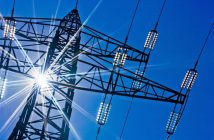
In what is widely seen as a decisive intervention, the President confirmed that South Africa will establish a fully independent, state owned Transmission System Operator that will own and control the country transmission assets and operate the electricity market. The move settles recent policy uncertainty over whether these assets would remain under Eskom Holdings.
The announcement follows strong advocacy from organised business, including Business Unity South Africa and Business Leadership South Africa, both of which called for an independent national transmission company as a cornerstone of electricity market reform.
Final phase of Eskom restructuring
Government has established a dedicated task team under the National Energy Crisis Committee to oversee the phased implementation of Eskom restructuring. The task team is mandated to resolve outstanding issues and report directly to the President within three months.
The unbundling of Eskom into separate generation, transmission and distribution entities is regarded as one of the final structural reforms required to entrench competition and prevent a return to supply instability.
“We are establishing a level playing field for competition, so that we are never again exposed to the risk of relying on a single supplier to meet our energy needs,” Ramaphosa said.
With nationwide load shedding officially brought to an end, government is now targeting the eradication of load reduction by 2027. This will require coordinated provincial interventions to address transformer overloading, illegal connections and infrastructure failures.
System reform
Ramaphosa framed the next phase as a transition from crisis management to long term system reform.
“Having put load shedding behind us, we must now transform our energy system to ensure long term energy security,” he said.
Government has set a target for more than 40 percent of South Africa energy supply to come from renewable sources by 2030. Regulatory reforms have already unlocked a significant pipeline of private sector investment in wind and solar generation.
To support this expansion, the first round of independent transmission projects will be launched this year, opening the grid to private capital participation. The initiative is expected to accelerate grid build out, reduce connection backlogs and crowd in institutional investment.
Through the Infrastructure Fund and updated public private partnership regulations, government aims to reduce project risk and fast track delivery across energy, water, transport and digital infrastructure.
Industrial development
The President positioned the energy transition as a central pillar of industrial development and job creation. From March 2026, government will introduce a 150 percent tax deduction for investment in new energy vehicles, alongside support measures for local battery manufacturing.
International pledges under South Africa Just Energy Transition Investment Plan now total approximately R250 billion. These funds are earmarked for large scale infrastructure, manufacturing expansion and supply chain development.
Ramaphosa also highlighted South Africa critical minerals endowment and growing international support for expanded local benefits, positioning the country as a future supplier of green industrial products ranging from fertiliser and jet fuel to steel and chemicals.
For the energy sector, SONA 2026 signals policy certainty on transmission reform, a firm renewable energy trajectory and a renewed push to mobilise private capital into grid infrastructure, marking a decisive shift from emergency response to structural transformation.
Link to the full state of the nation address HERE
Author: Bryan Groenendaal