- Climate action must reinforce energy security, economic growth and job creation.
- Presidential Climate Commission positioned as central platform for consensus and delivery.
- Just Energy Transition Partnership must shift from pledges to implementation.
President Cyril Ramaphosa has called for an accelerated and inclusive just energy transition, warning that climate change poses an existential threat to South Africa’s economic growth, infrastructure resilience and social stability.
Addressing a special session of the Presidential Climate Commission, Ramaphosa said South Africa must act in concert with the global community to prevent global warming from exceeding 1.5°C above pre industrial levels. He stressed that emissions reductions must proceed at a pace and scale aligned to national circumstances, while development and infrastructure are climate proofed and disaster resilience strengthened.
South Africa is already experiencing the escalating impacts of climate change, with risks expected to intensify significantly towards the end of the decade. According to the President, these impacts threaten to undermine efforts to tackle poverty, inequality and unemployment, making climate action inseparable from economic and social development.
The President reiterated that vulnerable groups, including women, children, people with disabilities and low income households, must be protected during the transition. At the same time, workers and communities dependent on carbon intensive sectors such as coal mining require clear pathways to alternative livelihoods.
Established in December 2020, the Presidential Climate Commission marked a structural shift in South Africa’s climate governance framework. As an independent multi stakeholder advisory body, it was tasked with guiding a transition that is evidence based, inclusive and socially legitimate.
Ramaphosa noted that over its first five years the Commission has become a key platform for consensus building, bringing together government, business, labour, civil society and academia. Its work has helped align stakeholders around priorities such as the phase-down of coal, scaled investment in renewable energy and the safeguarding of livelihoods.
He described the just transition as an opportunity to rebuild trust with affected communities while addressing practical challenges linked to jobs, local economic diversification, skills development and social support mechanisms.
The President emphasised that energy security and climate action must be mutually reinforcing. A stable and diversified electricity system is essential to unlock investment, support industrialisation and stimulate job creation, particularly as South Africa advances green industrial development.
He urged that the Just Energy Transition Partnership move decisively from commitment to delivery. This includes accelerating renewable energy deployment, expanding and strengthening transmission infrastructure, enabling energy storage solutions and creating greater space for private sector participation.
South Africa’s pathway to achieving its Nationally Determined Contribution targets must support inclusive growth. Ramaphosa further called for a greater share of climate finance to be directed towards adaptation, to safeguard development gains and build resilience against worsening climate shocks.
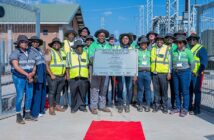
The redevelopment of communities such as Komati in Mpumalanga, following the decommissioning of the coal fired power station, was cited as an urgent priority. The President said coordinated planning and economic recovery initiatives are essential to ensure no community is left behind.
For the transition to be truly just, Ramaphosa said it must be redistributive, restorative and procedurally fair. Citizens must be empowered as active economic participants in a transformed, inclusive and more equal economy.
He called on all spheres of government to work closely with the Commission and integrate climate action across energy, finance, trade and labour policy. Through coordinated leadership and shared accountability, South Africa can advance decarbonisation while protecting livelihoods and unlocking new economic opportunities, he concluded.
Author: Bryan Groenendaal