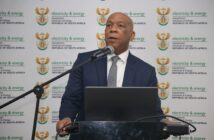
- Keith Featherstone representing Eskom, and the Koeberg Nuclear Power plant specifically, plus the Ministry of Energy and Electricity, Dr Dr Kgosientsho Ramokgopa presented to Parliament’s Portfolio Committee on Electricity and Energy earlier this month.
- They were updating the committee on the status of the nuclear new build programme and the R20 billion extension of the Koeberg nuclear power station’s lifespan.
- They assured that the Koeberg life extension programme was on track despite facing delays and being R5 billion over budget.
A week later on 11 September, Unit 1 at Koeberg was shut down after one of the isolation/block valves failed its three-monthly routine test. The plants second unit, Unit 2, is also down on planned maintenance. What is worrying is that Eskom only reported the emergency shut down five days after the event occurred. At the time of publishing this article, both Units remain down.
Related news: Koeberg Unit 1 shut down after isolation/block valves failure

Koeberg Nuclear Power Plant is located approximately 30 kilometers north of Cape Town, South Africa, and provides around 5 per cent of the country’s electricity, playing a vital role in reducing reliance on coal. It is the only commercially operating nuclear power station on the African continent. Koeberg is equipped with two pressurized water reactors with a combined capacity of 1934 MW(e), making it a key component of South Africa’s energy infrastructure. Image credit: Jim Sher – Flickr
Koeberg
Featherstone confirmed to the committee that the R20 billion budget had been overshot by R5 billion which is largely due to the severe delay in the steam generator replacement.
He added that Koeberg has not passed evacuation drills and with the National Nuclear Regulator they identified areas that could be improved. He assured that the objectives of the exercises were to continuously improve their emergency drills to ensure they could be implemented as smoothly and effectively as possible.
When questioned about socioeconomic studies, Featherstone said that the life extension programme has concentrated on the technical aspects of Koeberg and not the economic impact.
Koeberg Units one and two started commercial operation in 1984 and 1985, respectively. Koeberg’s Unit 1 received a license to continue operating until 2044 in July this year from the country’s National Nuclear Regulator, and Eskom is planning to extend operation of Unit 2 until 2045. The NNR Board granted approval for Koeberg Unit 1 in early July with conditions but to date has not publicly stated the conditions.

The real gnarly radioactive waste is in the spent fuel pool located underneath the Koeberg Power Station. Image credit: NNR
Serous concerns were raised over the ageing containment buildings which have degraded over the last 40 years. Read more
Featherstone said there was an absence of containment dome data for Unit 2 and it was therefore relying on the data from Unit 1 to make assumptions about Unit 2. He acknowledged that this would impact on their ability to licence Unit 2 for a further 20 years.
Regarding the crack in the containment buildings at Unit 2, Featherstone said that it is a concrete settling crack, in an area that doesn’t take any stress of the containment building.
International Atomic Energy Agency recently conducted a review of the life extension programme at Koeberg. The team – comprising two experts from the Czech Republic and Slovenia, and two IAEA staff, noted that the plant needs to continue its work to ensure that:
- The plant programmes supporting Long Term Operation are fully implemented for the LTO period.
- The containment monitoring system is fully refurbished and remains fully functional during the LTO period.
Civil Society Concern
Civil society groups are up in arms with an appeal submitted by the Southern African Faith Communities’ Environment Institute (SAFCEI) against the National Nuclear Regulator’s (NNR) decision to extend the operational life of the Unit at KNPS by an additional 20 years.
SAFCEI contends that the extension of life decision is fatally flawed, citing the NNR’s failure to perform its oversight role properly with regard to significant safety risks, and Eskom’s egregious delays in performing maintenance that is critical to safety.
Author: Bryan Groenendaal