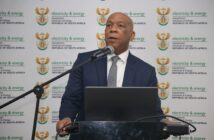
- South Africa’s Finance Minister, Enoch Godongwana delivered the national budget speech in Cape Town yesterday.
- Godongwana announced that public infrastructure spending over the next three years will exceed the R1 trillion mark.
- This spending will focus on maintaining and repairing existing infrastructure, building new infrastructure, and acquiring equipment and machinery.
- It will focus on three sectors: transport and logistics; energy and water and sanitation.
Main speech takeaways
Of the R402 billion for transport and logistics, R93.1 billion is for the South African National Roads Agency (SANRAL) to keep the 24,000-kilometer national road network in active maintenance and rehabilitation.
R53.1 billion is for the maintenance and refurbishment of provincial roads.
These investments will maintain our extensive road network in good condition allowing easy access and movement of freight and people within the country and beyond.
R66.3 billion is allocated to PRASA, out of which R18.2 billion is for the rolling stock fleet renewal programme and R12.3 billion is provisionally allocated for the renewal of the signaling system.
The spending will sustain progress in rebuilding the infrastructure to provide affordable commuter rail services.
This will enable PRASA to increase passenger trips from 60 million in 2024/25 to 186 million by the end of the MTEF period.
Access to safe, reliable and affordable commuter service is critical for low-income earners who spend more than 50 per cent of their income on transport.
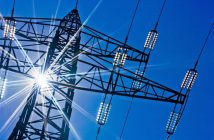
The energy sector will invest R219.2 billion on strengthening the electricity supply network, from generation to transmission and distribution.
This includes investments in renewable energy projects which continue to contribute to stabilising the power supply resulting in reduced load shedding.
Efforts to connect more renewable energy projects to the grid and expand the transmission network through a multi-line transmission package remain on track.
The water and sanitation sector will spend R156.3 billion on expanding our water resource and service infrastructure including dams, bulk infrastructure to service mines, factories and farms.
Honourable members, maintenance is important to prolong the life of our infrastructure assets, in addition to ensuring that infrastructure services are reliable and not unnecessarily interrupted.
This is the reason our budgets emphasise this aspect in addition to building new infrastructure.
To further support infrastructure delivery and improve spending efficiency, the National Treasury continues to implement reforms that will facilitate greater private sector participation in public infrastructure.
Public-private partnerships
The new regulations for public-private partnerships (PPPs) were gazetted earlier this year and will take effect next month.
These will reduce the procedural complexity of undertaking PPPs, increasing the deal flow and allowing government to leverage its limited resources to fast-track infrastructure provision.
The National Treasury has developed enabling guidelines and frameworks to support the new regulations.
Specifically, the unsolicited proposals framework will create clear rules for managing proposals from the private sector. And the framework for fiscal commitments and contingent liabilities will strengthen fiscal risk governance.
These guidelines and frameworks will be published in the next few weeks.
The recently established private sector participation unit of the Department of Transport and Transnet are making progress in engaging the market on PSP projects.
The PSPs will resolve and improve some of the critical logistic bottlenecks in the rail and port networks. In March, a request for information was issued for the ore, chrome, coal and manganese lines.
In April, a request for qualification was issued for the establishment of an independent rolling stock leasing company.
Budget facility for infrastructure
Madam Speaker, the Budget Facility for Infrastructure (BFI) has been effective in supporting quality investments.
It does so by reviewing proposals for feasibility, viability and cost effectiveness. To date, R52.9 billion in additional funding has been unlocked through this process.
To scale up the success, the BFI has been reconfigured to accept proposals quarterly rather than annually.
Alternative financing arrangements
In this regard, I am pleased to confirm that the process of issuing our first infrastructure bond in 2025/26 remains intact.
We are also exploring alternative financing instruments to allow pension funds, commercial banks, development banks and international financial institutions to participate in financing our infrastructure plans.
These reforms, Madam Speaker, are how we plan to leverage infrastructure investment to ease supply side constraints to the economy and improve access to social services the people get.
Author: Bryan Groenendaal