


- Global solar panel waste expected to exceed 60 million tonnes by 2050, driving urgency for effective recycling solutions.
- Advanced mechanical, thermal, chemical, and hybrid recycling methods can recover up to 99.9999% of silicon and 95% of silver.
The rapid expansion of solar energy has brought a new challenge: managing end-of-life photovoltaic modules. With global PV capacity projected to surpass 4.5 TW by 2050, cumulative waste from obsolete modules could exceed 60 million tonnes, raising environmental concerns over hazardous materials such as lead and tin oxides. Recycling is emerging as a key solution, offering both ecological and economic benefits while reducing reliance on virgin raw materials.
A new study titled ‘Recycling Silicon PV Modules: Advances, Economic Feasibility, and Policy for a Circular Solar Economy,’ reveals that mechanical recycling currently dominates the market, recovering 80%–90% of glass and aluminum from crystalline silicon modules. However, this approach struggles with silver and high-purity silicon losses. Thermal processes, including pyrolysis and incineration, deliver silicon purities up to 99.9999% and recover more than 90% of silver, though they require high temperatures and significant energy input. Chemical dissolution achieves the highest material selectivity, with silver recovery exceeding 95%, but its reliance on toxic solvents and lengthy reaction cycles limits large-scale adoption. Hybrid approaches combining mechanical pretreatment with thermal or chemical methods have shown recovery rates exceeding EU WEEE Directive targets, making them a promising pathway for industrial recycling.
Economic assessments indicate potential revenue of US$11–12 per module, largely driven by recovered silver and glass, although profitability remains sensitive to logistics and commodity price volatility. Policymakers are stepping in to support the industry, with extended producer responsibility schemes in the EU, mandatory recycling laws in Washington State, and emerging circular economy regulations in China providing governance frameworks to scale recycling operations.
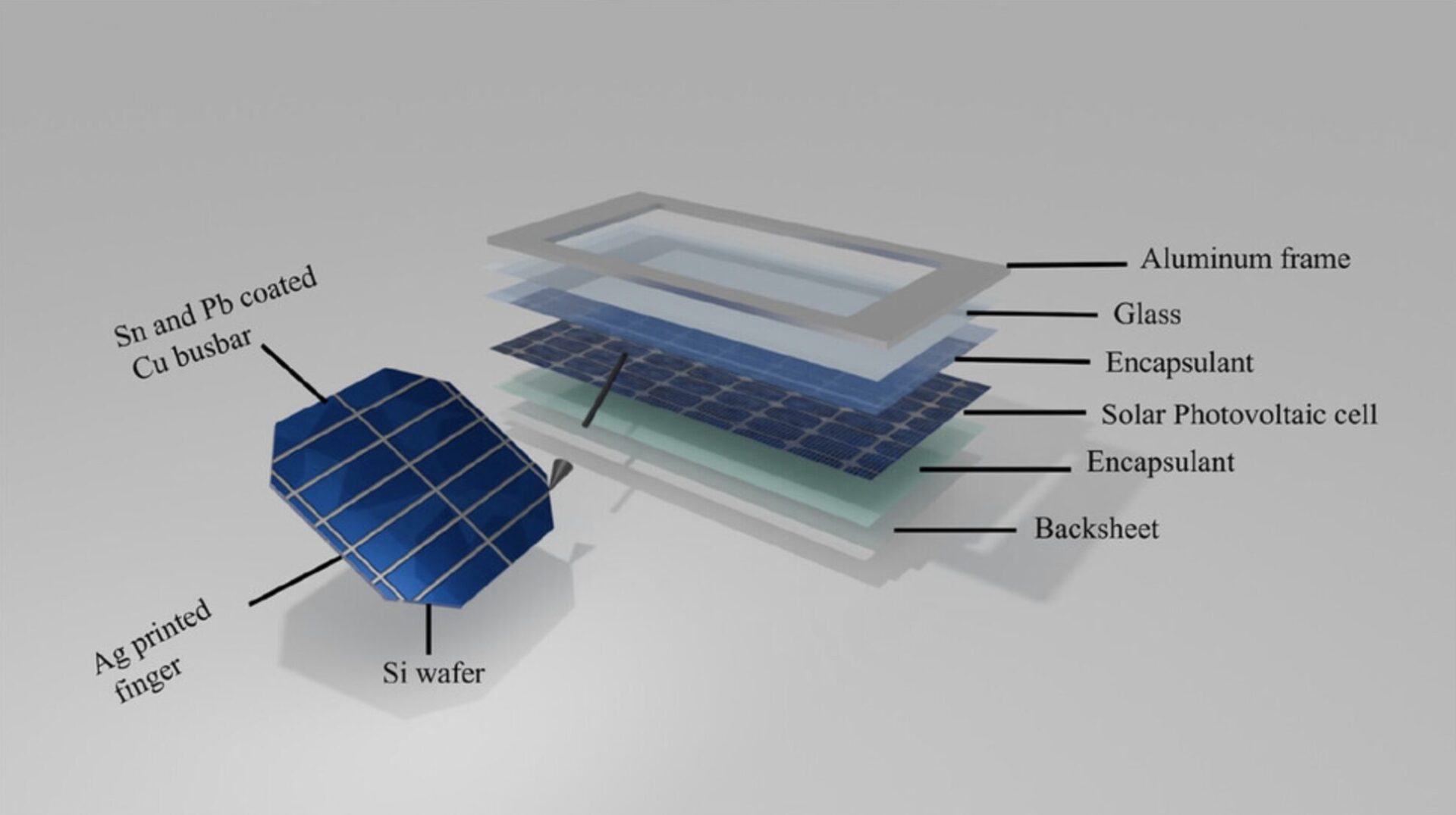
Technological innovation is critical for the next generation of PV recycling. Non-destructive methods, combined with advanced mechanical and chemical techniques, help maintain material integrity and reduce environmental impact. Low-temperature, high-pressure pulse crushing and optimised hydro-metallurgical processing show promise in improving the recovery of high-value materials like silicon, silver, and aluminium while lowering energy use. Design-for-recycling principles and new encapsulant materials are also expected to simplify dismantling and enhance sustainability.
Integrating policy incentives such as carbon taxes and emissions trading can further drive adoption by aligning economic performance with environmental responsibility. Experts argue that combining technological advancements, supportive regulations, and smart design practices will be essential for establishing a scalable, circular solar economy, turning module recycling into a cornerstone of sustainable energy systems worldwide.
Link to the full paper HERE
Author: Bryan Groenendaal





1 Comment
A veery in-depth review! Silicon recovery rates of up to 99.9999% using thermal methods are truly an incredible technical achievement for 2026. As a student of technology, I think the challenge now is how to reduce energy costs so that it can be industrially scaled. Thanks for the info, Bryan!