- Global consumers and businesses lost between US$104.2 billion and US$111.6 billion in one month due to fossil fuel price spikes.
- Oil price increases accounted for roughly US$75 billion while gas added over US$36 billion to the total.
- Analysts warn the true economic impact is significantly higher due to wider inflation and supply chain effects.
One month after the outbreak of the Iran war, new analysis by 350.org shows that more than US$100 billion has been transferred from households and businesses to oil and gas companies as global energy prices surged.
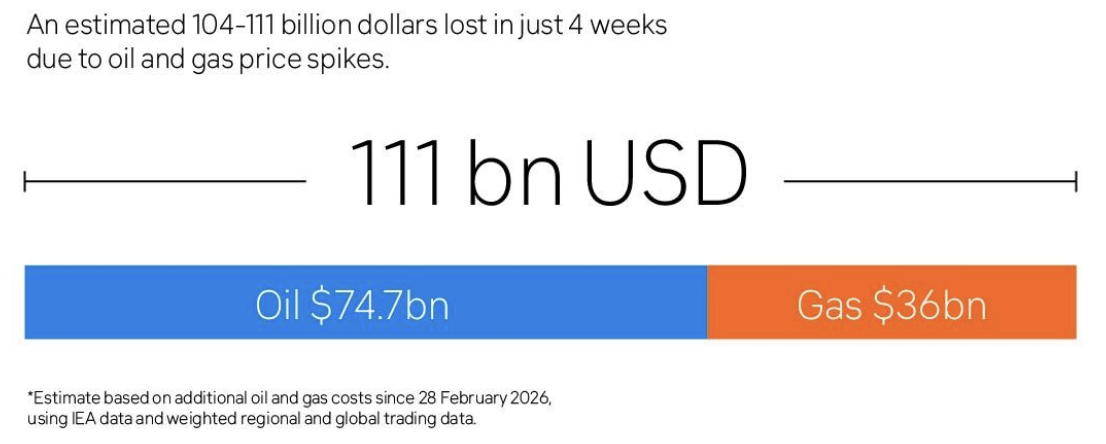
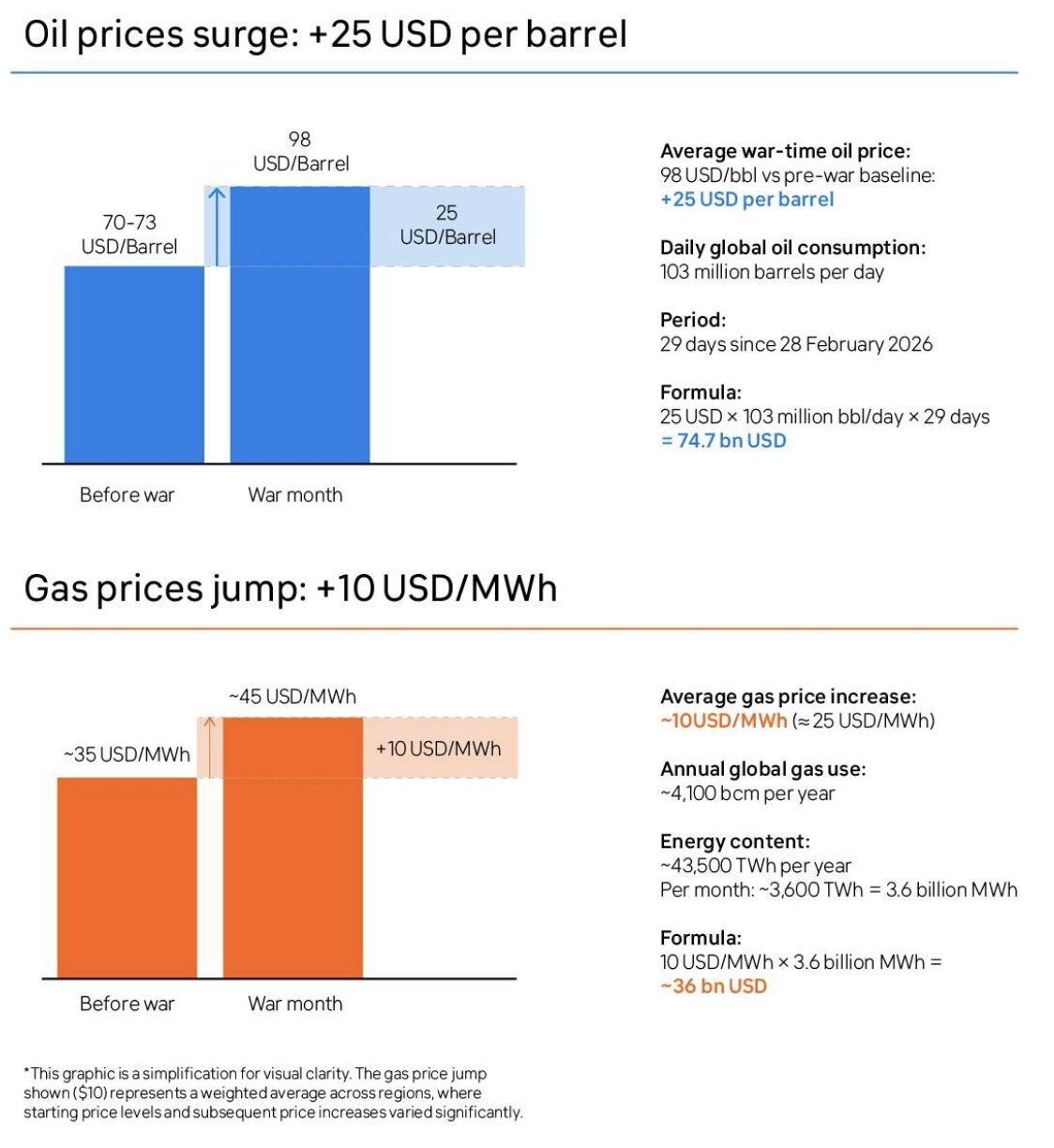
The report estimates that rising fossil fuel prices have cost the global economy between US$104.2 billion and US$111.6 billion in just four weeks. Oil price increases contributed approximately US$74.7 billion to US$75.4 billion, while natural gas added a further US$36.2 billion.
Campaigners say the findings highlight the structural risks associated with fossil fuel dependence, particularly during periods of geopolitical instability. The economic shock has already triggered layoffs in manufacturing hubs such as Bangladesh, fuel rationing in Kenya and heightened recession risks in the United States.
The methodology combines global consumption data with weighted average price increases for oil and gas over the first month of the conflict. Adjustments were made to account for uncertainty factors including reduced demand, contractual pricing and rationing measures.
However, the organisation notes that the figures exclude broader economic consequences such as rising fertiliser and food prices, declining industrial output and employment losses, as well as inflationary pressures linked to volatile energy markets. As a result, the total economic damage is expected to be significantly higher.
According to the analysis, the US$111 billion lost to fossil fuel price increases could alternatively finance enough solar capacity to supply around 40 million households in high consumption markets or up to 150 million households in lower consumption regions. The figure is also broadly equivalent to current annual international climate finance flows under frameworks such as the Paris Agreement.
Anne Jellema, Chief Executive of 350.org, said the crisis underscores the disproportionate burden placed on ordinary consumers during fossil fuel driven price shocks.
She stated that while communities face severe economic strain, fossil fuel companies are capturing significant financial gains, reinforcing calls for the introduction of windfall taxes.
The organisation warned that without urgent policy intervention, the economic impacts will intensify, particularly for low income households and vulnerable economies.
Governments are expected to convene in Colombia next month to discuss pathways to phase out oil, gas and coal. 350.org is urging policymakers to adopt binding targets to accelerate the transition to renewable energy and reduce exposure to fossil fuel volatility.
The group is also calling for windfall taxes on fossil fuel profits, with revenues directed toward protecting consumers and scaling up access to decentralised renewable solutions such as rooftop and community solar, as well as electric vehicles.
It emphasises that increased investment in renewables remains the most effective strategy to stabilise energy prices, enhance energy security and build resilience against future geopolitical and market shocks.
Author: Bryan Groenendaal