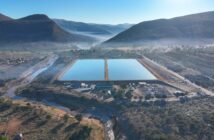
- JinkoSolar recently supplied its Tiger Neo modules for TMEIC’s rooftop solar installation at the Nagasaki Innovation Center in Japan.
A Toshiba-Mitsubishi joint venture deployed these high-efficiency panels on its TMEIC facility, underscoring confidence in JinkoSolar’s technology. This collaboration aligns with JinkoSolar’s sustained leadership in Japan, where it has ranked #1 in solar PV shipments for seven consecutive years. The success of its Tiger Neo TOPCon modules propelled JinkoSolar to dominate 26% of Japan’s total PV market in 2024, with an even stronger position in the DG segment where rooftop projects like TMEIC’s are pivotal.
Put aside the high power and efficiency as well as high bifacility, TOPCon’s excel in low irradiance performance stands it out in rooftop applications.The low irradiance performance of photovoltaic modules is directly related to the energy generation efficiency and stability of solar power systems, significantly impacting their power output capabilities. Although TOPCon’s high bifaciality may not be fully utilized in monofacial settings, its excellent low irradiance performance can be adequately leveraged.
For example, empirical data from a field test conducted by TÜV Nord in Kagoshima,
Japan, reveals that in the early morning hours of 7-8 AM, TOPCon outperformed n-type BC by 6.9%, while in the evening from 6-7 PM, the relative gain reached as high as 8.3%-8.4%. Given that in Japan 90% typical rooftops and regions experience low irradiance conditions, TOPCon’s performance advantage in low irradiance scenarios is significant. TOPCon technology demonstrates superior low irradiance performance compared to XBC, largely due to their structural characteristics.
Optimized Leakage Current Path Distribution: These paths are primarily located around the perimeter of the cell rather than in the grid line areas, significantly minimizing leakage routes and effectively controlling leakage current. In contrast, cells utilizing other technologies often have a higher number of grid lines on the back electrodes, which increases the leakage pathways. This exacerbates leakage issues under low irradiance conditions, making TOPCon a more effective performer in this aspect.
Good Parallel Resistance Characteristics: The parallel resistance (Rsh) of a solar cell is closely linked to its low irradiance performance; a higher Rsh indicates better performance under these conditions. The structural design of TOPCon allows for relatively larger parallel resistance, reducing current losses even in low irradiance scenarios and maintaining robust energy generation capabilities. For instance, during reverse bias voltage testing, the leakage current of TOPCon cells is significantly lower than that of several other structural types, laying a solid foundation for their impressive performance under low light conditions.
Passivation Layer Reduces Carrier Recombination Losses: The passivation layer in TOPCon technology effectively minimizes carrier recombination losses. In low irradiance scenarios, the generation of charge carriers is relatively limited; if recombination losses are high, it severely
impacts the cell’s performance. TOPCon’s passivation layer mitigates these losses, maintaining good cell performance even in low-light environments and enhancing the energy conversion efficiency of the cells.
TOPCon has been widely considered and proven that excels in terms of low light performance theoretically and pragmatically in real world condition. The arrival of Tiger Neo III has captured the hearts of DG customers through its exceptional enhancement in power to 650-670Wp, solidifying its rapid market dominance and establishing its mainstream position for the next five years. Looking ahead to the layered solar era in next 5-10 years, TOPCon is better suited as the base cell for tandem solar cells due to its structural advantages compared to XBC. The TOPCon + perovskite tandem solar cell technology will exhibit strong vitality, continuously leading the photovoltaic industry’s development and providing greater value to customers.