- Eskom continues to reliably meet South Africa’s electricity demand.
From 1 to 16 October 2025, the Unplanned Capacity Loss Factor (UCLF)—which measures the percentage of generation capacity lost due to unplanned outages—stood at 23.66%, reflecting a 2.94% improvement compared to 26.6% during the same period last year. The Planned Capacity Loss Factor (PCLF), which accounts for planned maintenance, increased to 13.24%, up from 12.43% recorded a year ago.
From 1 to 16 October 2025, the EAF stands at 62.76%, an improvement from 60.56% recorded during the same period last year. However, the slight week-on-week dip is due to increased planned maintenance, aligned with Eskom’s maintenance schedule and ongoing efforts to improve plant reliability and operational consistency.
During the period between 10 to 16 October 2025, Eskom recorded an average of 12 294MW in unplanned outages—an improvement from 13 773MW during the same period last year. This year-on-year reduction of 1 478MW in breakdowns reflects the growing reliability and resilience of the generation fleet.
From 1 April to 16 October 2025, diesel expenditure remained consistently below budget, reflecting reduced reliance on the diesel-powered Open-Cycle Gas Turbine (OCGT) fleet, with the year-to-date load factor further decreasing to 6.27%. This trend highlights ongoing efficiency improvements, a significant reduction in dependence on diesel generation, and a sustained shift toward more cost-effective primary generation sources.
The country has gone 154 consecutive days without loadshedding, with only 26 hours recorded between 1 April and 16 October 2025.
To further strengthen grid stability, Eskom plans to return a total of 3 890MW of generation capacity to service ahead of the evening peak on Monday, 20 October 2025, and throughout the coming week.
Eskom published the Summer Outlook on 5 September 2025, covering the period 1 September 2025 to 31 March 2026, which forecasts no loadshedding due to the structural progress in plant performance as a result of the ongoing implementation of the Generation Recovery Plan.
Key Performance Highlights:
- Year-to-date, UCLF stands at 25.55%. This reflects a week-on-week improvement of approximately 0.01% and remains 0.04% lower than the 25.59% recorded during the same period last year.
- Year-to-date, planned maintenance has averaged 5 333MW, accounting for 11.37% of total generation capacity. This reflects a slight increase from the previous week and a 0.39% rise compared to the same period last year.
- The year-to-date EAF is at 62.6%, and slightly below the 62.93% recorded during the same period last year.
- From 1 April to 16 October 2025, Eskom generated 1022.35GWh from OCGT plants, with diesel expenditure totalling R6.066 billion—an increase from last year’s 943.51GWh. In the past week, diesel spending was R83.6 million at a load factor of 2.32%, which is lower than the same period last year (where spending was R263 million at a 7.69% load factor), highlighting sustained efficiency improvements and a significant reduction in reliance on diesel generation this year.
- The year-to-date load factor for OCGTs has decreased to 6.27%, reflecting a 0.14% decrease compared to the previous week. This figure remains higher than the 5.79% recorded during the same period last year.

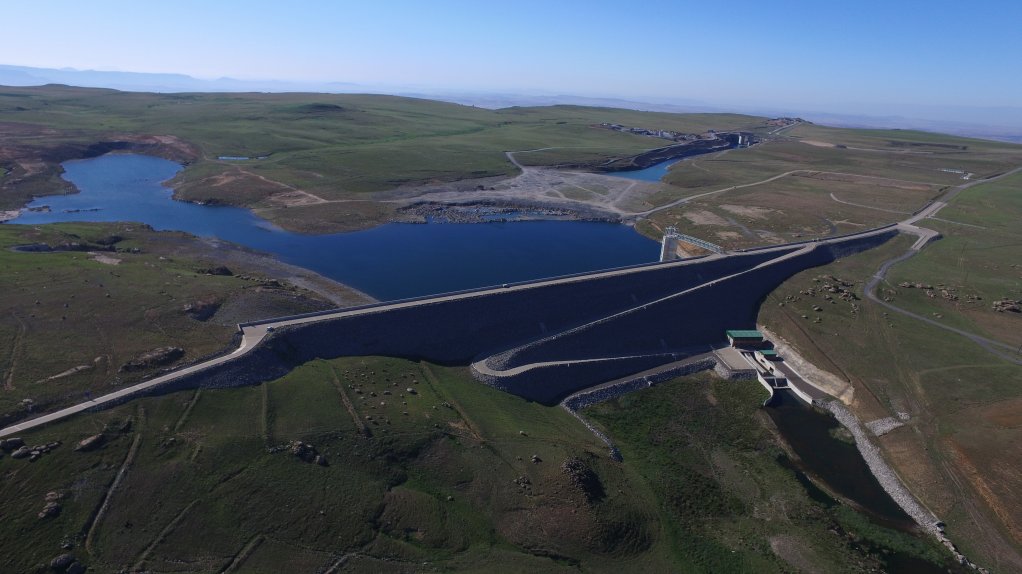
Eskom peaking power stations. Image credit: Eskom
Eskom peaking power stations
Eskom operates 14 peaking power stations with a combined capacity of 5894MW. Eskom’s peaking power stations provide quick bursts of electricity to meet sudden increases in demand, supplementing the steady supply from base-load stations like coal and nuclear power. These stations, including gas turbines and pumped-storage hydro, operate during peak periods, such as the morning and evening, to stabilize the national grid:
- Four gas turbine stations (2409MW)
- Three pumped storage schemes (2724MW)
- Two hydroelectric stations (600MW)
- One wind energy station (100MW)
- Four non-dispatchable mini-hydro stations (61MW)
These stations can react quickly to changes in demand and provide power to supplement the base-load stations, which are coal and nuclear. Peaking stations operate during peak periods or when the system is constrained, meaning demand is higher than what the base-load can supply at that time.
Author: Bryan Groenendaal