- First major climate case in France seeks court order compelling emissions cuts and reduced fossil fuel production.
- Prosecutors intervene in support of TotalEnergies, challenging application of duty of vigilance law to climate change.
- Ruling could reshape corporate climate accountability and impact projects such as the East African Crude Oil Pipeline.
Proceedings have begun at the Paris Court of Justice in what is being described as France’s first major climate trial against an oil and gas multinational. The case targets TotalEnergies and is widely viewed as a pivotal test of corporate climate accountability under French law.
Filed in 2020 by advocacy organisations including Notre Affaire à Tous, Sherpa and France Nature Environnement, alongside the City of Paris, the lawsuit calls on the courts to require TotalEnergies to significantly cut greenhouse gas emissions and reduce hydrocarbon production. The plaintiffs argue that the company’s current transition strategy is incompatible with global climate goals and France’s legal obligations.
In a controversial move, French prosecutors have reportedly intervened in support of TotalEnergies, arguing that the country’s duty of vigilance framework should not extend to climate change related harms. Campaigners have criticised this stance, saying it narrows the interpretation of a law designed to hold large corporations accountable for environmental and human rights impacts linked to their operations.
TotalEnergies remains one of the world’s largest historical emitters and continues to plan production growth of around 3% per year. The company has indicated that the majority of its capital expenditure will remain focused on fossil fuels until at least 2030, despite the scientific consensus that no new oil and gas expansion is compatible with limiting global warming to 1.5°C.
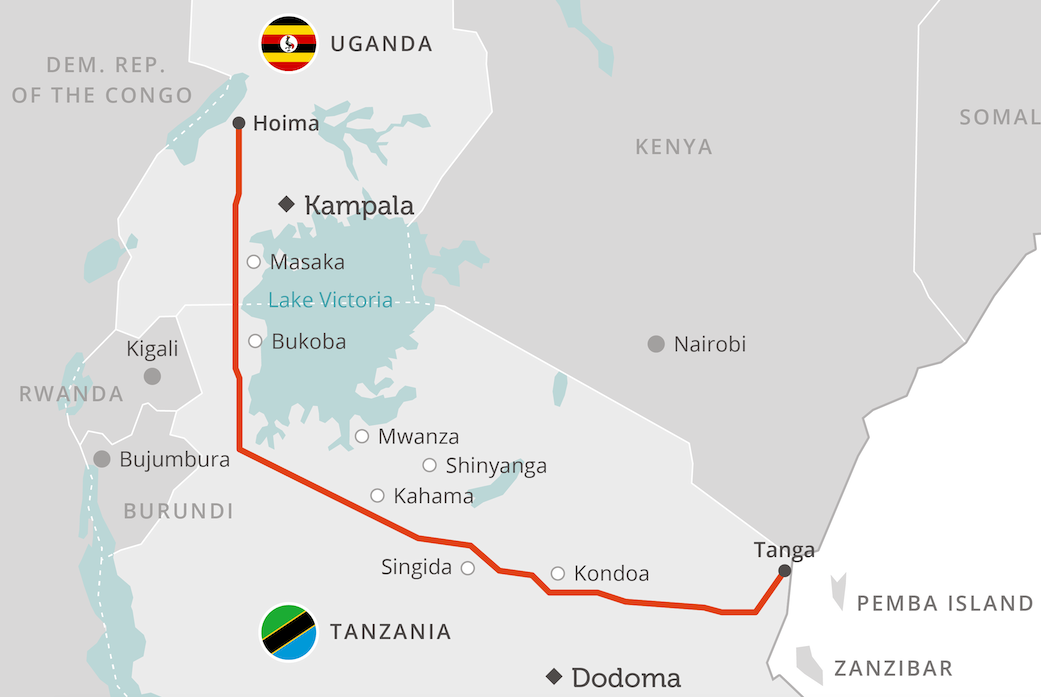
Among the most high profile projects linked to the company is the East African Crude Oil Pipeline, a 1443 km pipeline under construction to transport crude oil from Uganda’s Great Lakes region to the Port of Tanga in Tanzania. Developed by TotalEnergies and CNOOC, the project aims to begin exports in 2026. However, it has faced sustained environmental and human rights criticism, as well as delays following the withdrawal of support from dozens of global financial institutions.
Community representatives along the pipeline route say the impacts are already being felt through land acquisition, livelihood disruption and social tensions. They argue that the French court’s decision could carry implications far beyond Europe, particularly for communities hosting large scale fossil fuel infrastructure in Africa.
The hearing comes six years after the initial filing, following a series of procedural challenges by TotalEnergies. Parallel litigation is also under way in France, brought by Ugandan affected people and civil society organisations, likewise grounded in the duty of vigilance law.
Globally, climate litigation is entering a new phase. Courts are increasingly recognising climate change as a direct threat to fundamental rights, with advisory opinions and judgments from bodies such as the International Court of Justice and the European Court of Human Rights clarifying that both states and corporations have duties to prevent foreseeable climate harm.
For the first time in France, judges are being asked to determine whether an oil and gas multinational can be legally compelled not only to disclose climate risks or adopt voluntary targets, but to reduce fossil fuel production itself. A ruling in favour of the plaintiffs could mark a turning point in shifting climate litigation from a primary focus on governments to cases capable of reshaping the core business models of the world’s largest fossil fuel producers.
What the Paris court ultimately decides may set a precedent with implications for energy developers, financiers and regulators far beyond France, including across Africa’s rapidly evolving oil and gas landscape.
Author: Bryan Groenendaal