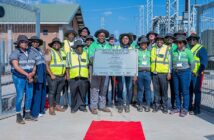
- The Infrastructure Fund, a blended finance platform created through a partnership between the Development Bank of Southern Africa (DBSA), National Treasury and Infrastructure South Africa, has secured a R550 million grant from Invest International to support the implementation of the City of Johannesburg’s Alternative Waste Treatment Technology (AWTT) Project.
Valued at approximately R5.7 billion, the AWTT Project marks a significant milestone in South Africa’s transition towards sustainable waste management and renewable energy. Implemented through a public-private partnership (PPP) between the Infrastructure Fund, the City of Johannesburg (CoJ) and the private sector, the project aims to divert at least 500 000 tonnes of municipal solid waste per annum – or 31 per cent of Johannesburg’s total annual waste – from landfill sites.
The project will comprise a dirty Materials Recovery Facility (dMRF) and a Waste-to-Energy (WtE) facility that will be designed, built, financed, operated and maintained by a private-sector partner over a 25-year concession period. Ownership of the facilities will ultimately revert to the CoJ at the end of the agreement.
Through the conversion of residual waste to energy, the project will generate approximately 28 megawatts (MW) of electricity — enough to power 60 000 households — while enabling the recovery and recycling of 175 000 tonnes of waste each year. This initiative will extend the lifespan of existing landfill sites, reduce methane emissions, and align the city’s operations with international environmental and emissions standards.
The R550 million grant will assist the City in fast-tracking project implementation, improving affordability through reduced gate fees, and advancing the initiative to the procurement phase to appoint a preferred bidder.
Lessons from the AWTT Project are expected to inform similar initiatives in other municipalities facing waste-management constraints. It serves as a model for leveraging concessional funding, private-sector participation and innovative finance to deliver critical infrastructure within fiscal limits.
Author: Bryan Groenendaal