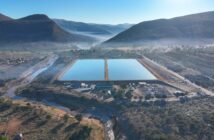
- Cape Town has marked two major milestones in its transition to cleaner, more reliable energy, unveiling a new gas-to-energy facility at the Coastal Park Landfill while announcing significant growth in small-scale embedded solar generation across the city.
Mayor Geordin Hill-Lewis and Urban Waste Management MMC Grant Twigg officially powered up the Coastal Park gas-to-energy plant in November. The R93-million project converts methane from landfill waste into enough electricity to supply approximately 4,300 households. According to Twigg, the facility will generate 1.3 million kilowatts of electricity each month, of which 1.2 million kilowatts will be fed directly into the municipal grid. The remainder will power operations at the landfill, cutting operational costs and improving efficiency.
This plant is part of a broader municipal strategy to harness landfill gas while reducing harmful emissions. To extract methane, the City has installed perforated wells across landfill sites, feeding the captured gas into generators that produce electricity. So far, the initiative has yielded R36 million in carbon credit revenue, and the City expects further expansion. An additional R82 million will be invested over the next three years to roll out similar gas-to-power systems at other landfill sites.
“We are just getting started with these win-win projects, which produce electricity, reduce emissions and generate carbon credit revenue to pump back into infrastructure and waste management,” Hill-Lewis said. “Capetonians are getting plenty of public value from these gas-to-power operations, which we will keep expanding over the coming years.”
Alongside the progress in landfill energy recovery, new data from GreenCape highlights the rapid rise of solar generation across Cape Town. Between 2014 and 2024, the City’s small-scale embedded generation (SSEG) solar PV programme helped unlock between 713 and 1,140 full-time equivalent jobs and facilitated R1.7 billion to R2.6 billion in investment. Over the same period, authorised grid-tied solar systems grew to more than 6,400 installations, delivering 140.6 MVA of capacity.
Recent figures show even more dramatic growth. By June 2025, the number of authorised grid-tied systems had surged to 13,398, with total installed capacity reaching 251.6 MVA—enough to power roughly 150,000 homes. The City, recognised as a national leader in diversifying energy supply, attributes this success to streamlining authorisation procedures, introducing online applications, launching cash-for-power incentives and adding a 25 c/kWh top-up to its feed-in tariff.
Alderman Xanthea Limberg, the Mayoral Committee Member for Energy, said the City had to “be a bastion of proactive energy planning” in a rapidly evolving yet heavily regulated sector. “Much of our SSEG development took place ahead of national regulations. We acted to boost energy security and empower residents and businesses to become energy prosumers,” she said.
Despite the progress, challenges remain. A significant number of customers still fail to complete the final authorisation step required for legal and safe grid-tied connections. The City says improving compliance will be a priority in 2026.
Together, the expansion of solar PV and landfill gas-to-energy projects form a key part of Cape Town’s strategy to reduce dependence on Eskom, cut emissions and shield residents from load-shedding. With millions already saved or generated through reduced bulk purchases and carbon credits, officials say the economic and environmental case for accelerating renewables has never been stronger.
Author: Bryan Groenendaal