- As South Africa prepares to host the G20 Summit this weekend, African climate activists and community organisations are calling on world leaders to commit to a swift, people-centred transition away from fossil fuels.
- The appeal comes amid COP30 negotiations underway in Belém, Brazil, and follows a major civil society gathering in Cape Town earlier this month.
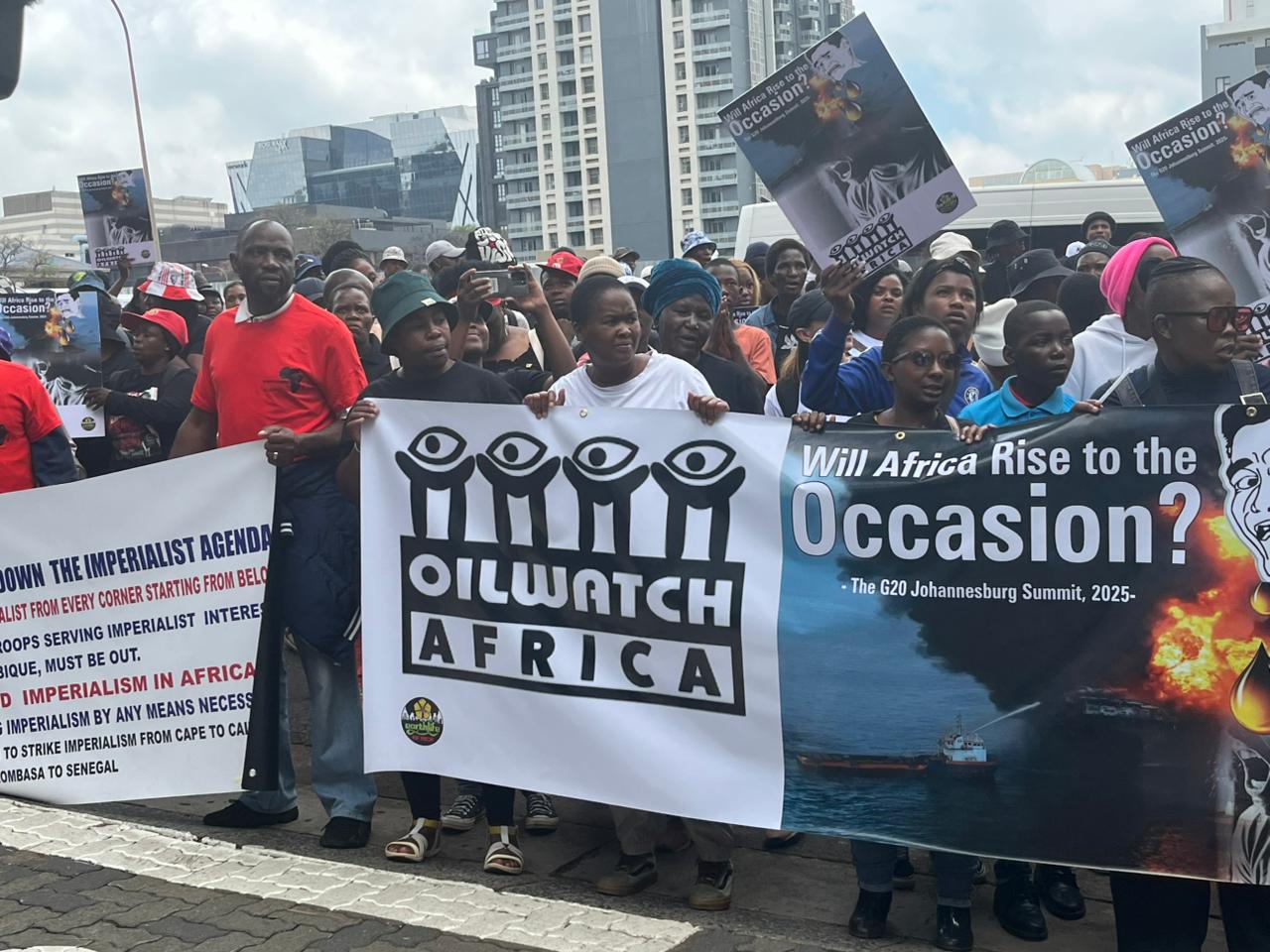
At The Green Connection’s G20 Civil Society Symposium on Climate Justice and the Green Economy, activists, community leaders, and policy specialists drafted the Cape Town Civil Society Charter — a document urging governments to adopt renewable energy systems that are locally owned, community-driven, and accessible to all. The eco-justice organisation and its partners also joined a mass march in Johannesburg on Friday, held as part of the “We, the 99% People’s Summit,” protesting what they describe as a century of environmental and social harm linked to TotalEnergies.
“The development of national and local adaptation plans must be participatory, transparent, and centred on those most affected — women, youth, informal workers, and rural and informal-settlement communities,” said Lisa Makaula, Advocacy Officer at The Green Connection. She argued that protecting livelihoods and securing water and food sovereignty requires ending fossil fuel subsidies, halting oil and gas expansion, and delivering grant-based climate finance to the Global South. Makaula also warned that the rising demand for critical transition minerals must not replicate past patterns of exploitation.
Activists stressed that global solidarity is essential as the world accelerates its shift to cleaner energy. They cautioned that Africa risks being drawn into another extractive cycle unless G20 governments prioritise community-guided energy development. According to civil society leaders, public funds should be redirected from oil and gas projects — which they argue could become stranded assets — toward renewable energy systems aligned with the 1.5°C climate target.
Makaula reiterated calls for predictable, accessible, grant-based climate finance to support adaptation and ease the debt burden on developing countries that contribute least to climate change but endure its harshest effects. She urged G20 leaders to meet climate finance commitments, including the target of mobilising USD 1.3 trillion annually by 2035, and said international financial institutions must be reformed so they no longer “penalise African economies.”
Beyond financial reforms, civil society groups emphasised the need to protect human rights, civic space, and democratic participation — particularly as demand for minerals such as lithium, cobalt, and rare earth elements grows. They argued that communities must have meaningful opportunities to influence decisions on land use, housing, energy policy, and environmental governance.
Neville van Rooy, Community Outreach Coordinator at The Green Connection, said Africa’s reserves of transition minerals must be ethically managed. “These minerals underpin global decarbonisation, but communities must not face exploitation. They should benefit through local value-addition, decent jobs, and community ownership,” he said, stressing that the injustices of the fossil fuel era must not be repeated.
Van Rooy added that a just transition must guarantee decent work, retraining where needed, strong social protection, and the safeguarding of existing sustainable livelihoods such as small-scale fishing and eco-tourism.
Liz McDaid, Strategic Lead at The Green Connection, said South Africa’s G20 presidency presents a “historic opportunity” to elevate African priorities. “With the world watching, we hope to see governments act for people and planet, not for industries driving the crisis,” she noted. “Meaningful progress requires ethical, transparent leadership — and climate finance and public funds must be managed with integrity.”
The G20 Summit is expected to draw significant global attention as African activists continue pressing leaders for a rapid, equitable shift to a fossil-free future.
Author: Bryan Groenendaal