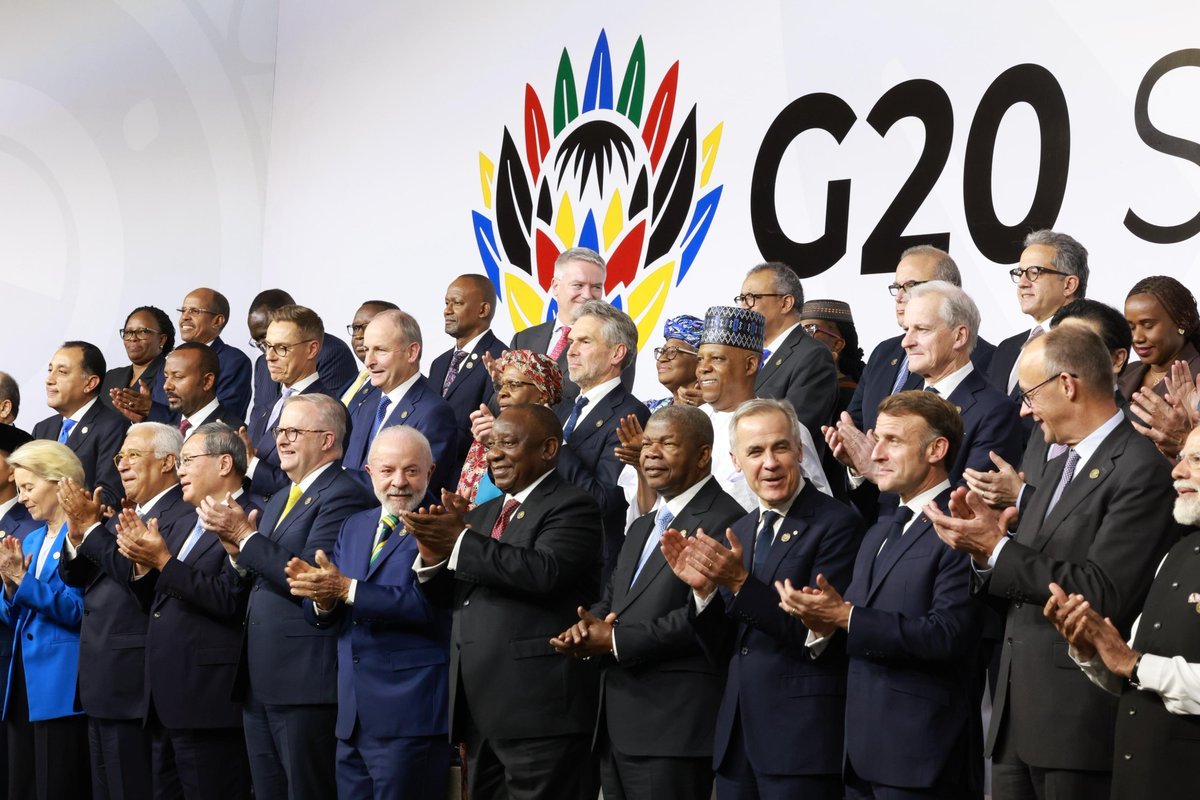
- As the G20 Leaders’ Summit opens today in Johannesburg, marking the first time the gathering is hosted on African soil, civil society groups across the continent are issuing an emphatic call: climate justice must come without the burden of debt.
Thirty-three organisations within the African Climate Network, including 350Africa.org, the Fair Finance Coalition of Southern Africa, the Climate Justice Coalition, the Botshabelo Unemployed Movement, Middelburg Environmental Justice Network, NuClimate Vision, Newcastle Environmental Justice, and the Marikana Youth Development Organisation, have released a joint open letter urging G20 governments to enact comprehensive debt relief and shift global climate finance from loans to grants.
Alia Kajee, Global Campaign Project Manager for 350.org, said the timing of the summit—coinciding with the final days of COP30 negotiations—is significant. “We call on the leaders currently at COP30 to take the momentum and passion from these negotiations directly to the G20, and ensure a binding commitment is made to deliver debt-free climate finance,” Kajee said. She warned that ongoing fossil fuel expansion is pushing the climate beyond livable limits and stressed that African countries cannot respond to escalating climate disasters while trapped under “suffocating levels of debt.”
Africa contributes just 4% of global greenhouse gas emissions but suffers some of the most severe consequences of climate change, including extreme droughts, deadly floods, heatwaves, cyclones and increasing food and energy insecurity. These compounding crises are driving countries deeper into debt as they borrow to rebuild and protect vulnerable communities.
According to the organisations, loan-heavy climate finance is exacerbating the continent’s vulnerability. Africa requires an estimated US$52–106 billion annually for adaptation, yet available support remains limited, slow, and dominated by loans—leaving an adaptation funding gap of roughly US$127.2 billion per year through 2030.
In their letter, the African Climate Network and partners call on G20 countries to adopt several measures, including:
- Immediate and comprehensive debt relief for African nations
- Grant-based climate finance as the primary funding model
- A fully grant-funded Loss and Damage facility with urgent accessibility
- A minimum 50% grant ratio for adaptation finance at Multilateral Development Banks
- Grant-funded support for a just energy transition, including community-owned renewables, worker protections, and local grid investment
Their appeal comes as global momentum toward a fossil fuel phaseout accelerates, with recent pledges such as President Lula da Silva’s push for a global transition plan and the Colombia Declaration backed by more than 80 countries. African advocates, however, warn that transition commitments will remain hollow without adequate grant-based climate finance.
“Finance is the real blockage,” said Tshepo Peele, Interim South Africa Team Lead for 350Africa.org. “We cannot phase out fossil fuels, scale renewable energy, or protect frontline communities without wealthy countries finally meeting their historic responsibility and fixing the global financial system. COP30 must deliver a funded, fair transition, and the G20 must show the political will to make that commitment a reality.”
As world leaders convene in Johannesburg, African civil society groups say the message is clear: a just and sustainable future depends on debt-free climate action.
Author: Bryan Groenendaal