- Preliminary feasibility study recommends reducing water losses before investing in new water treatment infrastructure.
- Utility says demand management can recover significant volumes of non revenue water more quickly and at lower cost.
- EXCO to consider final recommendations after completion of the feasibility study.
The uMngeni uThukela Water (UUW) has recommended that eThekwini Municipality prioritise water demand management and the reduction of water losses instead of investing in new package water treatment plants to address persistent water supply challenges.
The recommendation was presented to the municipality’s Executive Committee during a preliminary feasibility study commissioned to evaluate the viability of package water treatment plants in communities affected by prolonged water shortages.
According to UUW, improving the efficiency of the existing water distribution network would deliver faster, more sustainable and more cost effective results than developing new water supply infrastructure. The utility said water demand management measures could recover substantial volumes of non revenue water, increasing water available to consumers without requiring additional bulk water supply.
The municipality said these interventions could be implemented within a shorter timeframe and at significantly lower cost than constructing new water schemes.
While package treatment plants could provide temporary relief in some areas, UUW cautioned that they would require major capital investment and may not represent the best long term solution.
For the proposed Qadi water treatment plant in Umzinyathi, UUW estimated capital costs of about R1.2 billion for a 10 megalitre per day facility and approximately R3.5 billion for a 30 megalitre per day plant.
The utility estimated that water produced by the facility would cost about R53 per kilolitre over a 20 year period. Monthly capital charges were estimated at approximately R12.6 million for the 10 megalitre per day plant and R37 million for the larger facility, excluding bulk water tariffs.
UUW also warned that the Department of Water and Sanitation is unlikely to approve additional water abstraction beyond the existing licence for the proposed Qadi scheme. Any increase would need to be offset by reduced abstraction at the Wiggins and Durban Heights water treatment works.
The study noted that the long term viability of the Qadi project could also be affected by the planned commissioning of the uMkhomazi Upper Dam from 2034, which is expected to significantly increase bulk water availability across the municipality.
The feasibility assessment also examined proposed package treatment plants for Mfume, Craigieburn and Umbumbulu.
The estimated capital cost for the Mfume project is about R650 million.
For Craigieburn and Umbumbulu, UUW said construction would likely be completed only after major regional bulk water infrastructure becomes operational. The Lower uMkhomazi Dam is expected to begin supplying southern areas of eThekwini from 2029, while the uMkhomazi Upper Dam is scheduled to provide water to the entire municipality, including Umbumbulu, from 2034.
UUW also cautioned that a treatment plant at Umbumbulu would draw water from the same source as the Amanzimtoti Water Treatment Works, potentially reducing water availability for communities already supplied by that facility.
The utility added that its ability to undertake large capital projects is constrained by lower tariff increases, limited borrowing capacity and the reduced economic lifespan of projects that may eventually be replaced by larger regional water schemes.
The Executive Committee noted the preliminary findings and agreed that the feasibility study should be completed before any decisions are taken. UUW will return to present the final study together with its recommendations.
In a separate update, UUW reported significant progress in reducing levels of 2 Methylisoborneol, commonly known as 2 MIB, at the Wiggins Water Treatment Works.
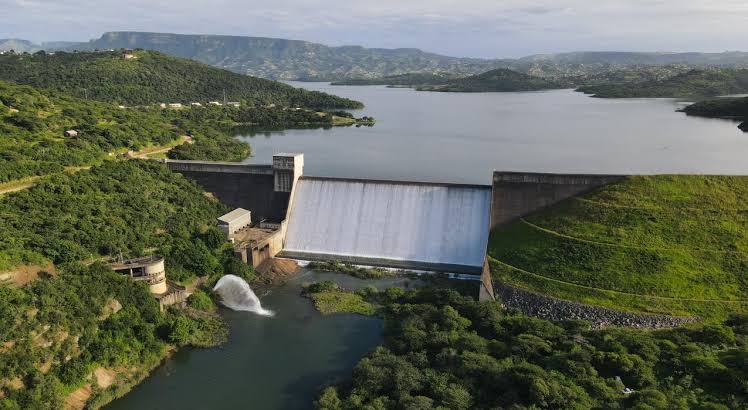
The naturally occurring compound, which causes an earthy taste and odour in drinking water, resulted from increased algal activity in Inanda Dam and affected water supplied to parts of eThekwini in recent months.
UUW said it has strengthened water quality monitoring from the catchment to consumers, introduced multi level water abstraction to source water from deeper sections of the dam where appropriate, and applied enhanced treatment processes to remove taste and odour compounds.
The utility confirmed that daily monitoring continues to show that treated water remains safe for human consumption and complies with the South African National Standard for Drinking Water.
Author: Bryan Groenendaal