- The International Finance Corporation (IFC), a member of the World Bank Group, with the support of the Government of Canada, has announced a $5 million investment in Husk Power Energy Systems Nigeria Limited (Husk Nigeria), a subsidiary of Husk Power Systems Inc., to expand access to reliable, renewable energy in underserved communities across Nigeria.
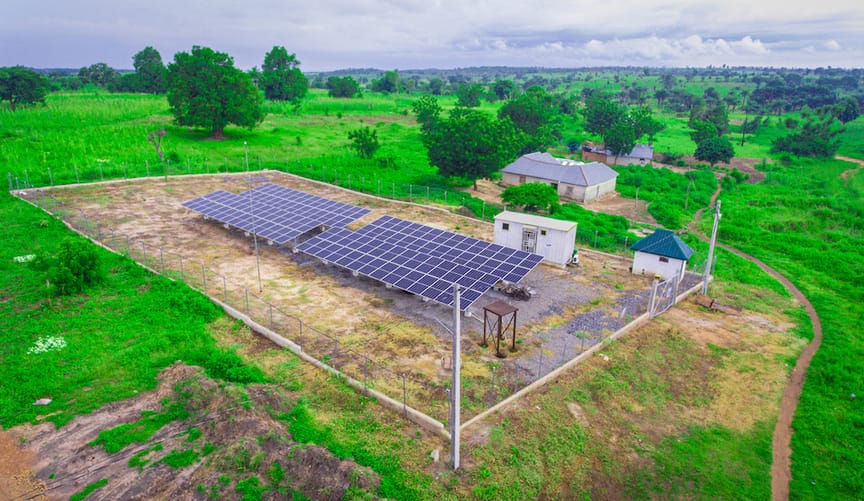
The financing will support the rollout of Husk’s portfolio of solar hybrid minigrids in Northern Nigeria, helping address one of the country’s most urgent development challenges: access to electricity. It marks the first investment under the IFC Distributed Access through Renewable Energy Scale-up (DARES) Platform, a $200 million debt facility approved in November 2024 to catalyze private sector solutions across West and Central Africa.
The DARES Platform complements the World Bank-financed Nigeria DARES Project, a $750 million initiative launched in December 2023 and implemented by Nigeria’s Rural Electrification Agency. Together, these efforts aim to provide over 17.5 million Nigerians with new or improved electricity access through decentralized renewable energy (DRE) systems.
IFC’s financing package will enable Husk to develop and operate up to 108 minigrid sites, resulting in approximately 28,750 new electricity connections and delivering clean, affordable energy to around 115,000 people and businesses. Husk’s solar hybrid minigrids offer a cost-effective alternative to diesel generators, providing users with at least 25% in cost savings while significantly reducing greenhouse gas emissions.
The total project cost is estimated at $25 million. IFC’s $5 million package includes a $2.5 million senior loan from its own account and a $2.5 million concessional subordinated loan from the Canada-IFC Renewable Energy Program for Africa. The facility is structured as a revolving loan, allowing Husk to repay and redraw funds multiple times during the project’s implementation.
The DARES Platform supports the World Bank Group and African Development Bank’s Mission 300, launched in April 2024, which aims to bring electricity access to 300 million people across Africa by 2030. The platform also promotes gender inclusion and productive energy use, with a focus on reaching female-headed households, supporting women-led MSMEs, and enabling job creation for women in the energy sector.
Author: Bryan Groenendaal