


The IEA is supporting several countries, including Mozambique, with policy advice geared towards the achievement of universal energy access and development goals while meeting national climate commitments. While Mozambique nearly doubled the number of connections to the grid between 2017 and 2022, more than half the population still lacks access to electricity. Access to clean cooking is also critically low, with just 7% of the population using modern solutions. Yet, the country has significant untapped energy resources – including hydropower, solar and natural gas, which could help spur industrial development and even position the country as a regional energy hub. The IEA’s first Energy Policy Review of Mozambique, prepared in partnership with the Government of Mozambique, assesses these energy challenges and provides recommendations to support efforts to achieve universal energy access while charting a path to sustainable economic development
Review summary
Mozambique is embarking on an ambitious transformation of its energy system, aiming to achieve universal electricity and clean cooking access by 2030 while positioning itself as a regional energy hub powered by renewables and natural gas.
Despite vast natural resources, Mozambique remains among the world’s lowest consumers of modern energy per capita. Nearly 95% of the population still relies on wood and charcoal for cooking, and only 48% had access to electricity as of 2022. The government’s Energy Transition Strategy (Estratégia de Transição Energética, ETE), approved in 2023, seeks to reverse these trends by leveraging hydropower, solar, wind, and gas resources to expand access and drive low-emissions industrialisation.
Expanding Access Amid Structural Challenges
The ETE sets a goal of universal energy access within the decade. While electricity connections have risen sharply—from 8.2 million in 2017 to 12.7 million in 2022—clean cooking solutions remain scarce, reaching just 7% of the population. The urban–rural divide remains wide: three-quarters of urban households have electricity, compared to only 15% in rural areas.
To bridge these gaps, the government plans to expand grid connections alongside off-grid solar systems and mini-grids. Cleaner cooking options such as liquefied petroleum gas (LPG), improved biomass stoves, and electric cookers are also being promoted. However, high costs, low household incomes, and dispersed rural populations pose major hurdles to scaling up access.
Harnessing Natural and Renewable Resources
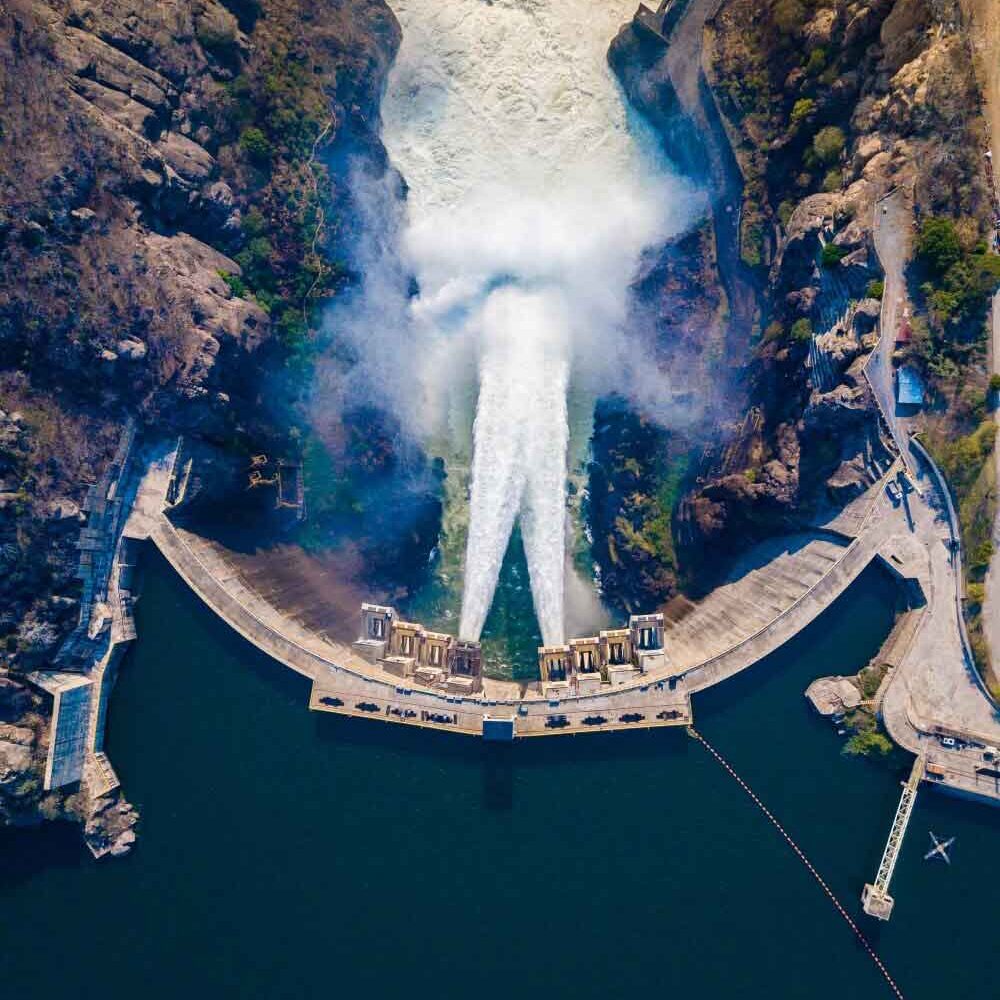
Mozambique’s electricity generation is currently dominated by hydropower, led by the Cahora Bassa dam, which supplies most of the country’s capacity but exports two-thirds of its output to South Africa. Natural gas accounts for 15% of generation, while new solar and wind projects are emerging under competitive auctions supported by development partners.
A key infrastructure initiative—the “Backbone” transmission project—aims to connect the northern, central, and southern grids, enabling power sharing between resource-rich regions and demand centers like Maputo. Its completion is expected to reshape both domestic supply and cross-border trade in electricity.
Gas Development for Domestic Use and Exports
With an estimated 3 766 billion cubic metres of recoverable gas reserves, Mozambique is one of Africa’s largest potential producers. Current output from the Pande and Temane fields is mostly exported to South Africa, but new developments—including the Temane gas power plant and the Coral South LNG project—promise to expand domestic supply and revenues.
The government has also established a Sovereign Wealth Fund to manage future gas income, expected to flow in earnest from the mid-2030s, and to safeguard benefits for future generations.
Coal, Minerals, and Energy Efficiency
Although coal remains Mozambique’s top export, it contributes little to domestic energy use and will play a limited role in future power generation. Instead, the ETE prioritises renewables and natural gas to meet energy needs while reducing emissions.
Energy efficiency is also a growing priority. Mozambique adopted its first national strategy in 2023, aiming to cut consumption across buildings, industry, and transport. Measures such as Minimum Energy Performance Standards could save more than 2 000 GWh annually by 2030.
Climate Commitments and Investment Gaps
Mozambique contributes just 0.2% of global greenhouse gas emissions but remains highly vulnerable to climate impacts. The government’s updated Nationally Determined Contribution (NDC) targets a reduction of 40 million tonnes of CO₂ equivalent by 2025, requiring an estimated USD 7.6 billion in investment.
Yet attracting finance remains difficult. Political instability, high debt levels, and regulatory uncertainty continue to deter investors. The energy sector still relies heavily on development finance institutions (DFIs), which have provided over USD 2 billion in the past decade but are showing signs of reduced commitments.
Unlocking Critical Mineral Opportunities
Mozambique’s rich deposits of graphite and bauxite could play a pivotal role in the global clean-energy transition. The country is already one of the world’s largest aluminium exporters, with raw aluminium ranking as its second-largest export after coal. The ETE identifies the potential to add local value through mineral processing and manufacturing, helping to diversify exports and strengthen the economy.
Link to the full Energy Policy Review of Mozambique HERE
Author: Bryan Groenendaal



1 Comment
Pingback: Newsletter 14 November | RePower, powering rural communities