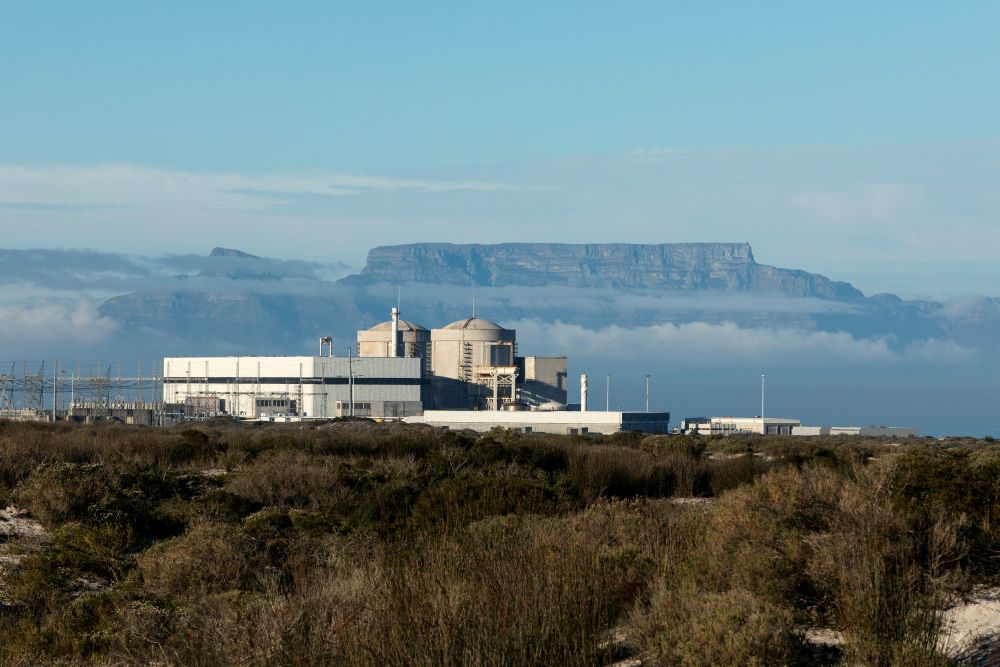
- The Southern African Faith Communities’ Environment Institute (SAFCEI) has condemned the National Nuclear Regulator’s (NNR) decision to grant a 20-year licence extension for Koeberg Nuclear Power Station’s Unit 2, calling it a “reckless gamble with public safety” and a “travesty of good governance.”
The faith-based environmental organisation said the decision was taken despite serious and repeated warnings about safety and compliance failures at South Africa’s only nuclear power plant. SAFCEI’s Executive Director, Francesca de Gasparis, said the approval exposed a “deep failure of regulatory oversight,” arguing that Koeberg’s long-term operation had been approved without the legally required proof of safety.
“Koeberg was behind on so many critical safety requirements – from incomplete containment structure tests and missing monitoring data, to the absence of an updated emergency plan for Cape Town,” de Gasparis said. “The NNR has approved continued operation without verified evidence that the reactor is safe for another 20 years. This is not oversight – it is regulatory failure.”
In submissions to the NNR, SAFCEI presented evidence that Eskom’s safety case for Unit 2 relied on assumptions rather than verified data. The organisation pointed out that the last Integrated Leak Rate Test – which confirms the containment’s ability to prevent radioactive releases – was completed in 2015, with the next one only due in 2026, long after the decision to extend the licence. Eskom’s own documents, SAFCEI noted, acknowledge that the containment monitoring system has been largely non-functional for years and that corrosion protection measures remain incomplete.
“By its own admission, Eskom does not have all the required, up-to-date data on Unit 2’s condition,” said SAFCEI’s Senior Energy and Climate Justice Coordinator. “It even substituted missing data from Unit 1 – a completely separate reactor. To make a 20-year decision based on such speculation is perilous.”
Community members living near Koeberg have voiced similar frustrations. Lydia Petersen from Mitchells Plain said the approval demonstrated “how broken our governance has become,” adding that “the decision came after deadlines slipped and key safety data was still missing.”
Atlantis resident Hilary Swartz said her community had never been briefed on evacuation procedures or seen an official safety plan. “Where are the muster points? Who will coordinate the evacuation of hundreds of residents – especially the elderly and those in care homes? We’ve never practised a single drill. Approving this extension without answering those basic questions is deeply irresponsible.”
Other residents, including Lettesa Bruintjies and Imelda Titus, echoed these concerns, saying that despite repeated requests, neither Eskom nor the NNR had presented an emergency plan to local communities. “We’re told a plan exists, but no one has ever shown it to us,” said Bruintjies. “If it’s meant to protect us, why can’t it be made public?”
Titus added that in her four decades living near the plant, no evacuation drill had ever taken place. “There is still no clear plan for managing traffic or helping vulnerable people if we have to evacuate,” she said. “Until we see a working, tested plan, I have no confidence that we’d be protected in a real emergency.”
Beyond safety concerns, SAFCEI also criticised the decision on economic and environmental grounds, arguing that funds spent on prolonging Koeberg’s life would be better directed toward renewable energy. “Every rand spent keeping this ageing nuclear plant alive is a rand taken away from wind, solar and community-based energy solutions that can deliver jobs and cleaner power,” said de Gasparis. “Nuclear is slow, costly and dangerous – the wrong choice for a just energy transition.”
SAFCEI said it is reviewing the NNR’s decision and considering an appeal under the NNR Act. “As people of faith, we are called to stewardship of life and creation, which means insisting on truth, transparency and accountability,” de Gasparis said. “Safety must be proven, not assumed. This decision endangers both people and the environment, and we will continue to challenge it through every legal and public avenue available.”
Author: Bryan Groenendaal