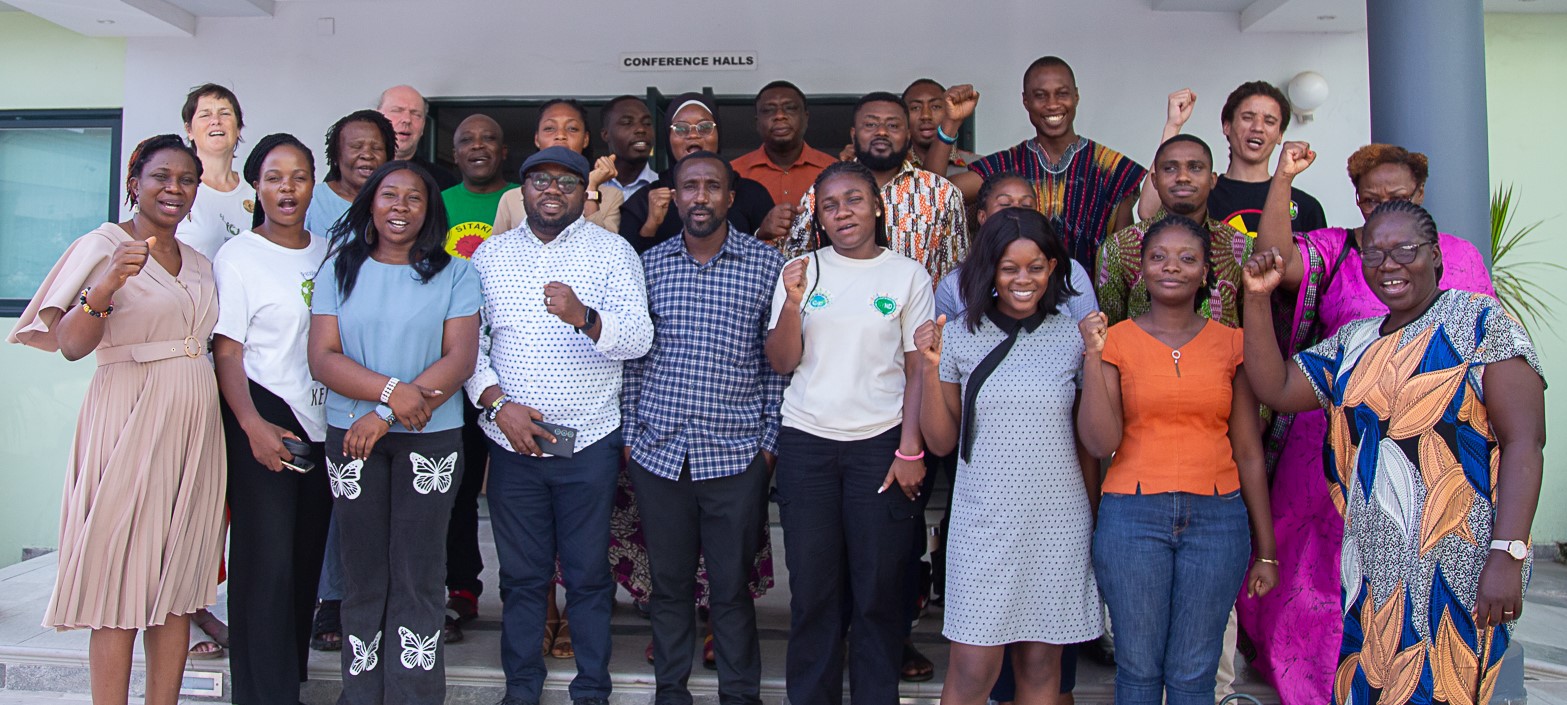
- Organisations from South Africa, Zambia, Russia, and Kenya, as well as others joining remotely, are in Ghana this week for a week-long solidarity engagement on the threats of nuclear energy proliferation in Africa.
- Africa does not need nuclear energy – it is neither safe, affordable, nor climate-smart.
- Communities and NGOs are taking a stand, equipping themselves with knowledge to debunk the myths surrounding nuclear power and to highlight its true risks and consequences.
During the last decade Ghana’ authorities were intensively discussing the construction of nuclear reactors with Russian Rosatom. In 2015 the memorandum of understanding was signed between Ghana and Russian state nuclear corporation. In 2023 Russia proposed to build a fleet of small nuclear reactors in Ghana.
Sessions focused on familiarisation and knowledge-sharing. Experiences from Ghana are being exchanged with other parts of the world, including Germany, Russia, South Africa, Kenya, and Zambia – emphasising access to information, the role of traditional and local authorities, and the strength of networks.
“We are here to shed light on the often-overlooked consequences of nuclear energy, especially with reference to nuclear waste. From environmental disasters to health risks and economic concerns, it’s time to reevaluate our reliance on nuclear power. The impacts on the environment include nuclear accidents, radioactive waste, and contamination. Health risks include cancer, genetic damage, kidney disease, and other related conditions caused by radiation exposure. Additionally, there are security threats, such as nuclear proliferation, terrorism, and cybersecurity risks.The gravamen of our case is that the devastating effects of nuclear accidents do not affect the present generation alone but also generations yet unborn. Alternatives and solutions for nuclear energy include renewable energy sources—solar, wind, hydro, and geothermal—which should be prioritised. Energy efficiency and conservation measures should be implemented, along with nuclear phase-out and decommissioning plans.There should be a call to action involving demands for policy changes, support for renewable energy investment and research, and finally, the intensification of public awareness and education campaigns,” said Alberta Kpeleku, Solomon Appiah, Bethel Okyere Baffour – 360 Human Rights.
Author: Bryan Groenendaal