- National Treasury introduces performance based grant to unlock R100 billion in urban infrastructure investment.
- R54 billion in incentives tied to improved delivery of water, electricity and waste services.
- Reform targets governance, financial sustainability and infrastructure recovery across eight major metros.
South Africa’s National Treasury has launched a wide ranging reform programme aimed at stabilising metropolitan municipalities and reversing declining service delivery, with a performance based incentive framework expected to unlock R100 billion in infrastructure investment.
The initiative, known as the Metro Trading Services Reform, will focus on improving delivery across critical municipal services including water, electricity, sanitation and waste management. These sectors have experienced sustained deterioration over the past decade, driven by infrastructure failures, weak financial management and declining operational capacity.
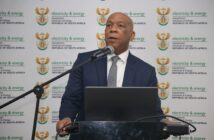
Speaking in Pretoria, National Treasury Director General Duncan Pieterse highlighted the urgency of intervention, noting that unreliable service delivery and financial instability have eroded public trust and constrained economic growth in key urban centres.
At the core of the reform is a plan to restructure municipal service operations into ringfenced business units with clear accountability. Revenue generated from water and electricity services will be retained and reinvested into maintenance and infrastructure upgrades, addressing longstanding concerns around diversion of funds into general municipal expenditure.
The programme also introduces stricter financial oversight, including enforcement of funded budgets and implementation of financial recovery plans. Where municipalities lack execution capacity, funding will be redirected to agencies such as the Development Bank of Southern Africa and the Municipal Infrastructure Support Agent to ensure continuity in infrastructure delivery.
Government has allocated R54 billion in performance linked incentives, with R27.7 billion earmarked over the medium term. Access to these funds will depend on metros achieving targets outlined in their Performance Improvement Action Plans, particularly in water, electricity and solid waste services.
The reform aligns with Operation Vulindlela, a national effort to remove structural constraints to economic growth and improve public sector efficiency.
Major concerns
Despite the scale of the intervention, concerns remain over governance failures and systemic mismanagement at municipal level. Data indicates that major metros such as Johannesburg and eThekwini are losing between 35% and 50% of water supply due to leaks and inadequate maintenance, undermining both service delivery and financial sustainability.
Officials in the Department of Water and Sanitation have warned of a “downward spiral” in municipal water services, with revenue that should fund maintenance often redirected elsewhere. This has left critical infrastructure underfunded and increasingly prone to failure.
The consequences are being felt across the economy. Manufacturing operations face production disruptions due to unreliable water supply, while the hospitality and retail sectors report growing operational risks linked to inconsistent municipal services. Declining infrastructure performance is also contributing to reduced property values and rising service costs for businesses.
According to the Auditor General of South Africa, only 41 out of 257 municipalities achieved clean audits in the 2023 to 24 financial year, underscoring the systemic nature of governance challenges in local government.
While the reform programme has been endorsed by Cabinet and positioned as a flagship intervention, participation by municipalities remains voluntary, with incentives designed to reward measurable improvements in operational and financial performance.
However, analysts caution that structural reforms alone may not be sufficient to address entrenched governance weaknesses. Election year dynamics may further complicate implementation, with risks that short term extraction of resources could take precedence over long term service delivery improvements.
Author: Bryan Groenendaal