- South Africa’s new wholesale electricity market is expected to reduce Mozambican gas plant margins by 21% to 27% through direct exposure to lower cost South African generation.
- Expiry of the Cahora Bassa power purchase agreement in 2030 could create a major export opportunity for Mozambique gas projects.
- Long term bilateral power purchase agreements, low-cost domestic gas and transmission upgrades will determine project bankability.
South Africa’s transition to a competitive wholesale electricity market is set to transform regional power trading dynamics and significantly reshape the commercial outlook for Mozambique’s gas to power sector.
A new market analysis titled ‘𝗦𝗔𝗪𝗘𝗠-𝗦𝗔𝗣𝗣 𝗜𝗻𝘁𝗲𝗴𝗿𝗮𝘁𝗶𝗼𝗻 𝗮𝗻𝗱 𝘁𝗵𝗲 𝗖𝗼𝗺𝗺𝗲𝗿𝗰𝗶𝗮𝗹 𝗩𝗶𝗮𝗯𝗶𝗹𝗶𝘁𝘆 𝗼𝗳 𝗠𝗼𝘇𝗮𝗺𝗯𝗶𝗾𝘂𝗲 𝗚𝘁𝗣𝗘𝘅𝗽𝗼𝗿𝘁𝘀,’ examines the integration between the South African Wholesale Electricity Market and the Southern African Power Pool in relation to Mozambique. The report finds that Mozambican gas fired generators will remain commercially viable, but only under specific conditions that include access to low-cost domestic gas, long term bilateral offtake agreements and expanded transmission infrastructure.
The South African Wholesale Electricity Market, known as SAWEM, is expected to launch in the third quarter of 2026 under South Africa’s Electricity Regulation Amendment Act. The market will replace Eskom’s traditional single buyer model with a competitive day ahead trading system based on hourly marginal pricing.
Under the new structure, SAWEM will couple directly with the Southern African Power Pool’s day-ahead market through a net export curve mechanism that allows electricity prices in South Africa and the regional market to converge more dynamically.
The report states that this integration will expose Mozambican gas projects to South Africa’s highly competitive generation mix for the first time.
South Africa’s coal fleet currently operates at a short run marginal cost of about US$30/MWh, while renewable energy projects from the country’s procurement programme are entering the market at prices as low as US$23/MWh. Koeberg nuclear power station operates at an even lower variable cost of about US$5.8/MWh.
By comparison, a typical Mozambican combined cycle gas turbine plant using export priced gas at US$4.70/GJ faces generation costs of around US$38/MWh before wheeling charges and transmission losses are added.
According to the modelling, this cost gap will compress spark spreads for Mozambican exporters by between 21% and 27% under normal market conditions.
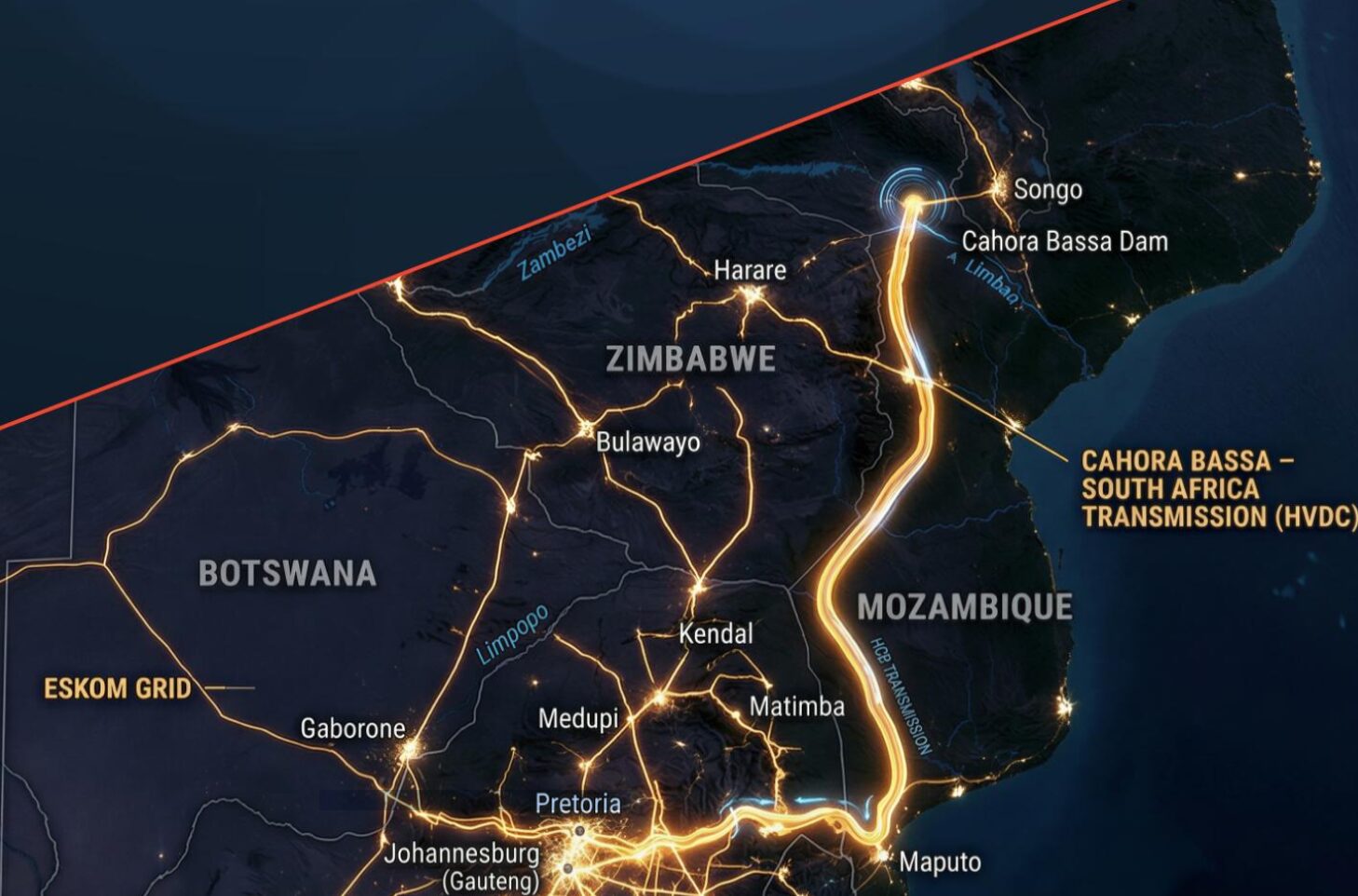
Despite the increased competition, the study concludes that Mozambique gas projects will not be pushed out of the regional market due to persistent electricity shortages across Southern Africa and the expected expiry of the Cahora Bassa hydropower agreement in 2030.
The post 2030 market is identified as the strongest window for Mozambican gas exports, particularly as South Africa faces rising demand and increasing flexibility requirements linked to renewable energy deployment.
Projects able to secure domestic gas priced between US$2/GJ and US$3/GJ are expected to remain profitable across all modelled scenarios. A 400 MW gas plant operating with low-cost domestic gas and secured bilateral agreements could achieve capacity factors of 69% to 81% and annual revenues of US$223 million to US$267 million.
However, projects reliant on LNG linked spot gas pricing face significantly weaker economics, with projected capacity factors below 50% and elevated downside risk.
Transmission infrastructure remains one of the largest structural constraints to regional electricity trade.
The Southern African Power Pool day-ahead market continues to suffer from severe congestion, with 72% of matched trade volumes in November 2025 reportedly unable to clear due to transmission bottlenecks.
Key constraints include the Botswana Zimbabwe Zambia corridor and limited export capacity on the Cahora Bassa HVDC line and the MOTRACO interconnector linking Mozambique and South Africa.
The report notes that even a single 400 MW gas plant operating at high utilisation would exceed the annual throughput of the current SAPP competitive market, highlighting the continued dominance of bilateral contracts in regional power trading.
As a result, the study argues that merchant exposure to the regional spot market alone is insufficient for project financing.
Instead, developers are advised to pursue a balanced structure combining bilateral power purchase agreements with selective participation in competitive market trading.
The report also identifies several emerging reforms that could strengthen the long-term outlook for Mozambique gas exports.
These include development of a regional over the counter electricity trading market, liberalisation of Mozambique’s domestic power market and the creation of regional balancing and ancillary services markets.
Gas fired combined cycle plants are expected to benefit from growing demand for flexible generation and reserve capacity as renewable penetration increases across Southern Africa.
The analysis concludes that future gas to power investments in the region must be designed for an increasingly liberalised electricity market rather than the bilateral trading framework that historically dominated cross border electricity sales.
According to the report, successful projects will depend not only on competitive fuel pricing and generation efficiency, but also on transmission expansion, market design reforms and the ability to monetise flexibility services in a rapidly evolving regional power system.
Download the full report HERE
Author: Bryan Groenendaal