- Rwanda plans to have nuclear energy operational by the early 2030s, with a target of more than 60% nuclear power in its energy mix by 2050.
- The IAEA delivered Rwanda’s Phase 1 Integrated Nuclear Infrastructure Review report and signed a new cooperation agreement on nuclear energy development.
- African countries account for around half of all newcomer nations working with the IAEA on nuclear power programmes.
The International Atomic Energy Agency has strengthened its cooperation with Rwanda as African nations accelerate efforts to integrate nuclear energy into long term economic development strategies.
During a visit to Rwanda this week, IAEA Director General Rafael Mariano Grossi participated in the Nuclear Energy Innovation Summit on Africa alongside Paul Kagame, Samia Suluhu Hassan and Faure Gnassingbé.
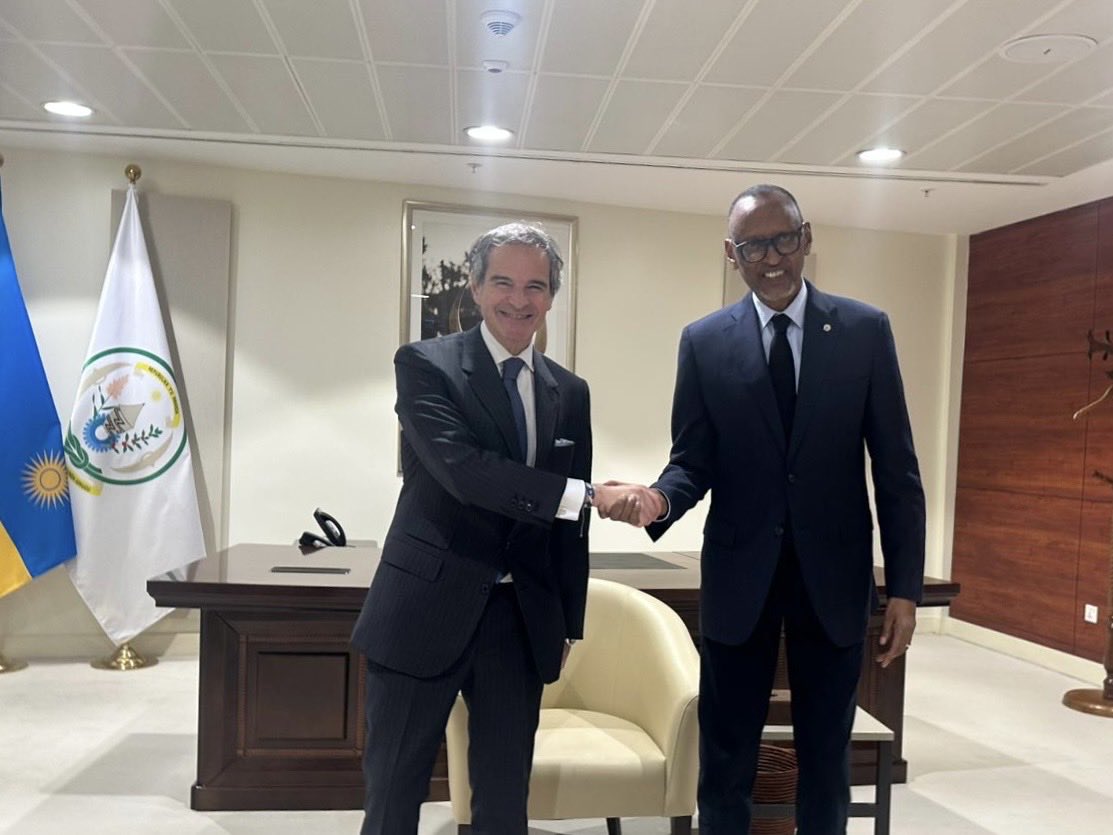
Grossi met with President Kagame to discuss Rwanda’s nuclear power ambitions and formally delivered the final report of the country’s Integrated Nuclear Infrastructure Review mission. He also signed an agreement with Rwanda’s Minister of Infrastructure, Jimmy Gasore, aimed at strengthening cooperation between the IAEA and Rwanda on nuclear energy development, including small modular reactors.
The INIR report marks a significant step in Rwanda’s efforts to establish a safe, secure and sustainable nuclear power programme.
President Kagame said Rwanda intends to have nuclear energy operational by the early 2030s and described the assessment as confirmation that the country remains on track to achieve its objectives.
He said energy security is central to Africa’s industrial growth and competitiveness, adding that Rwanda’s strategy positions nuclear energy as a core component of a diversified energy mix designed to reduce dependence on imported electricity and liquid fuels.
Rwanda aims to commission its first small modular reactor in the 2030s and has set a target for nuclear power to contribute more than 60% of its electricity mix by 2050.
Grossi also met with President Hassan to discuss expanding cooperation between the IAEA and Tanzania. Discussions included support for cancer care, food security initiatives under the IAEA’s Rays of Hope and Atoms4Food programmes, and Tanzania’s plans to strengthen its power infrastructure.
The Nuclear Energy Innovation Summit brought together governments, regulators, financiers, industry leaders and technology providers to examine how nuclear energy can support economic development across Africa.
According to the IAEA, African countries now account for around half of all newcomer nations engaging with the agency on nuclear power development, with 13 countries actively pursuing nuclear energy programmes.
The sector is also expected to benefit from increased financing opportunities following the agreement signed in 2025 between the International Atomic Energy Agency and the World Bank to collaborate on nuclear energy for development.
Grossi said Africa’s energy future would be shaped by African countries themselves, with the IAEA committed to supporting infrastructure development, capacity building and the deployment of emerging technologies such as SMRs.
President Hassan said Africa’s economic transformation depends on reliable, affordable and sustainable energy systems, particularly as demand rises from digital infrastructure, manufacturing and mining sectors requiring stable baseload power.
President Gnassingbé said small modular reactors and micro reactors are no longer a distant prospect for Africa, noting that international financial institutions and global climate forums are increasingly recognising nuclear energy as part of the clean energy transition.
Author: Bryan Groenendaal