- R2.4 billion Witberg Wind Farm faces mounting financial pressure after Sibanye Stillwater rejects force majeure claim by Red Rocket.
- Red Rocket warns of deepening debt risk following months of delays and zero revenue.
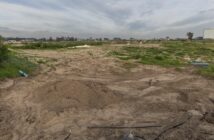
A contractual dispute between Sibanye-Stillwater and independent power producer Red Rocket has cast uncertainty over the future of the 108 MW Witberg Wind Farm.
The disagreement centres on Sibanye Stillwater’s rejection of a force majeure claim lodged by Red Rocket in relation to significant construction delays at the facility. The project, located near Touws River in the Western Cape, achieved financial close in December 2023 and was positioned as a flagship private power purchase agreement in the country’s rapidly evolving energy market.
Developed at an estimated cost of R3.4 billion, the wind farm secured a 15 year power purchase agreement with Sibanye Stillwater for 103 MW of its 108 MW nameplate capacity. The project is financed by Rand Merchant Bank and the Development Bank of Southern Africa, with commercial operation initially targeted for November 2025.
However, after months of delays and no revenue generation, the project is reportedly under severe financial strain. Red Rocket’s force majeure claim was formally rejected by Sibanye in February 2026, leaving the developer exposed to mounting debt obligations. Industry sources indicate that Red Rocket’s leadership has approached shareholders for emergency financial support as lenders intensify pressure.
Related news: Sibanye wins wayleave dispute with Eskom over 50MW solar project
In its most recent operation and financial report, Sibanye reports that it is a renewable energy leader in SA mining with R93.2m savings and 316,440 tCO₂ avoided emissions3. From 2028, the 765MW portfolio is expected to deliver in excess of R1bn annual cost savings and reduce emissions3 by 2.63m tCO₂e annually.
While Sibanye advances its broader decarbonisation strategy through diversified procurement, the unresolved Witberg dispute highlights the contractual and financial risks still present in South Africa’s evolving private power market. The outcome of the standoff will be closely watched by lenders, developers and corporate off-takers seeking to scale renewable energy deployment across the country’s energy intensive sectors.
Author: Bryan Groenendaal