- Climate action and economic growth can reinforce each other and drive long term prosperity.
- South Africa has attracted more than R110 billion in clean energy investment through a country led transition plan.
- Africa is positioned to become a major producer and exporter of clean energy.
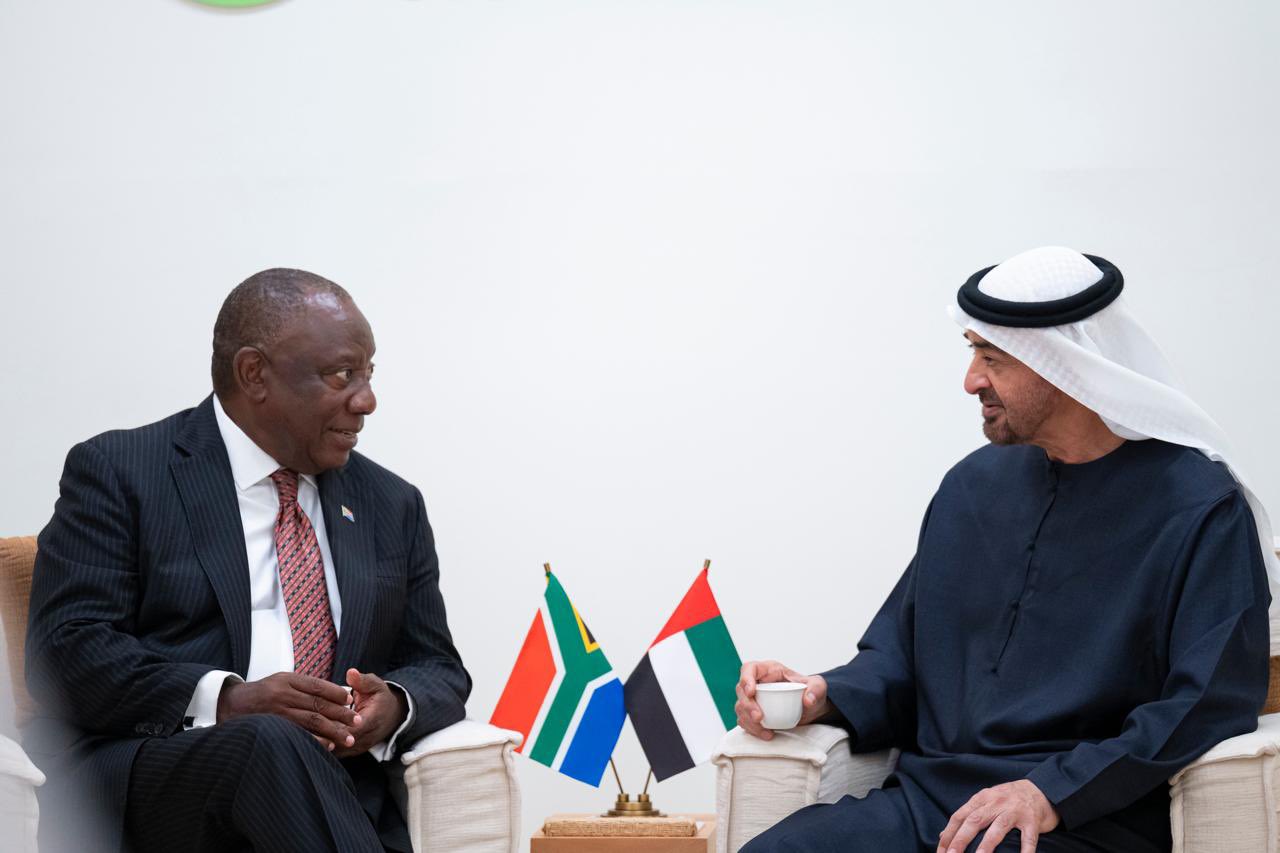
South African President Cyril Ramaphosa has reinforced the message that climate action and economic growth are not competing priorities but mutually reinforcing goals, speaking during a fireside chat at Abu Dhabi Sustainability Week 2026 in the United Arab Emirates.
Addressing business leaders and policymakers, the President said countries that pursue climate action strategies often unlock new avenues for economic expansion.
He noted that the shift towards clean energy encourages technological innovation, creates new industries and opens additional economic opportunities. As older sectors decline, new sub sectors emerge, supporting employment and long term growth.
According to the President, focusing on economic growth without climate action risks long term stagnation, while pursuing climate goals without supporting economic development can result in weak and uneven growth. A balanced approach that advances both objectives is essential to drive sustainable prosperity.
Reflecting on South Africa’s experience in mobilising funding for its Just Energy Transition, President Ramaphosa said the country benefitted from designing its own climate agenda rather than adopting externally imposed frameworks.
This approach enabled South Africa to attract blended finance that includes grants and concessional funding, resulting in what he described as an innovative financing architecture. He added that South Africa was among the first countries to move decisively in this space, setting an example now being followed by other nations in the global south.
The President highlighted that more than R110 billion in investment has been attracted, particularly in the Northern Cape, as a result of this collaborative financing model. He emphasised that cooperation between government and financiers has replaced past approaches that prioritised external interests over local development.
Looking ahead, President Ramaphosa pointed to Africa’s vast renewable energy potential, citing the continent’s abundant solar, wind and hydropower resources, as well as its mineral wealth.
With an estimated 600 million people across Africa still lacking access to electricity, he said this challenge should be viewed as an opportunity to develop local energy capacity and industrial value chains. Rather than exporting raw minerals, African countries can add value through local beneficiation linked to energy generation.
The President also highlighted Africa’s potential in green hydrogen production, supported by strong solar and wind resources. He said this positions the continent to become a major exporter of clean energy to global markets.
He concluded by inviting financiers and investors to participate in Africa’s growing energy and infrastructure sectors, stating that future growth on the continent will be driven by expanded energy generation supported by innovative financing models.
Author: Bryan Groenendaal