
- South Africa targets R450 billion transmission expansion as part of national energy reform.
- 600 million Africans still lack electricity despite vast solar, gas and critical mineral resources.
- Ten Year Africa Energy Infrastructure Investment Plan aims to unlock bankable projects at scale.
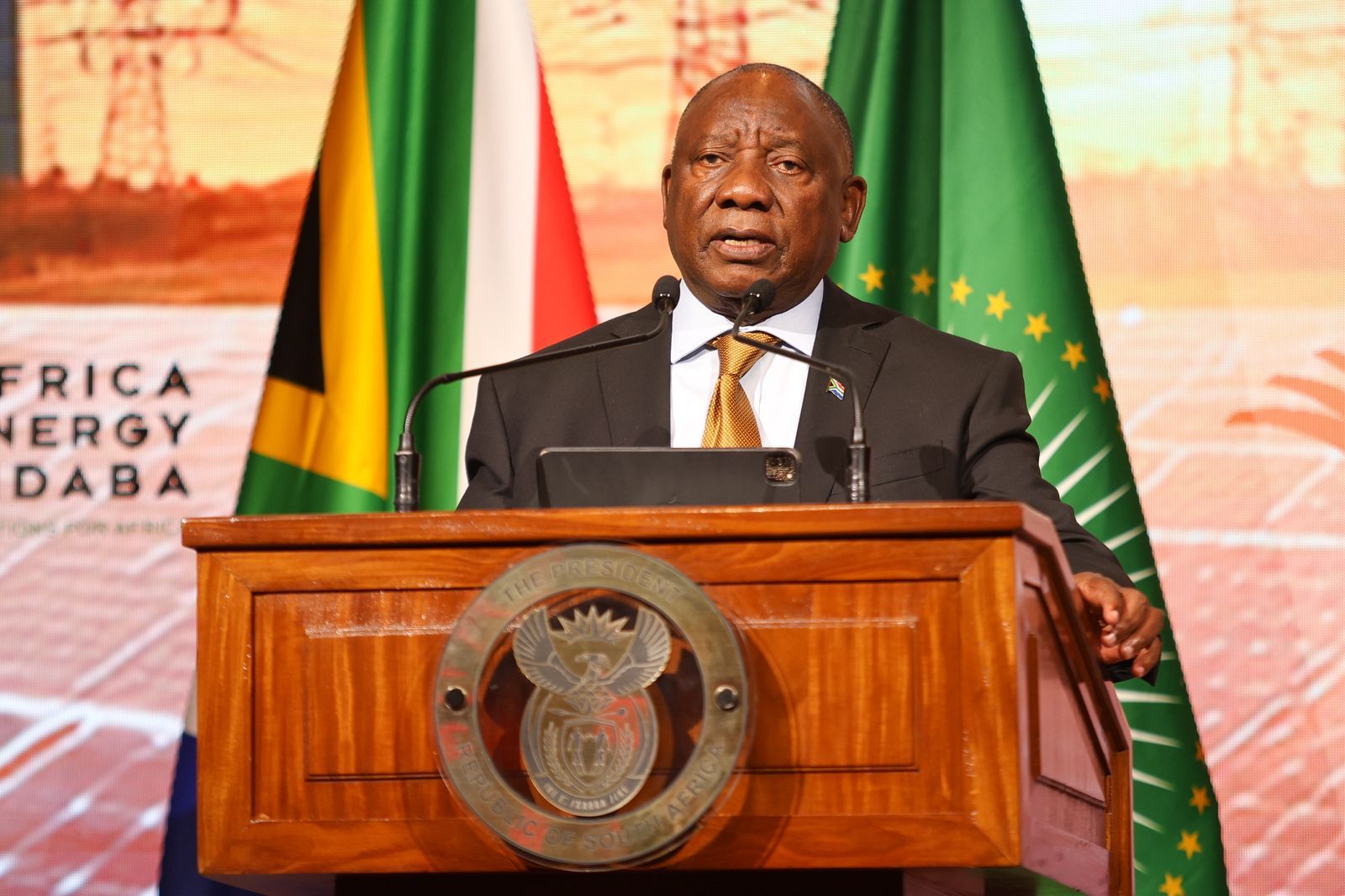
Cyril Ramaphosa has called for accelerated investment, deeper regional integration and expanded transmission infrastructure to unlock Africa’s industrial growth, warning that energy poverty remains one of the continent’s greatest constraints.
Delivering the keynote address at the 2026 Africa Energy Indaba at the Cape Town International Convention Centre, the President said South Africa alone faces a R450 billion challenge to expand its electricity transmission grid as part of ongoing sector reforms.
“The main focus in our country has been the energy landscape and its reform. Electricity is an absolute necessity in the lives of all South Africans,” he said, noting that 93% of South African households now have access to electricity.
While acknowledging national progress, Ramaphosa emphasised that the broader challenge remains continental. According to the International Energy Agency, more than 600 million Africans still do not have access to electricity, despite Africa holding 60% of global solar potential alongside significant oil, gas, hydro and critical mineral reserves.
He said the persistence of energy poverty continues to undermine industrialisation, investment and economic inclusion across Africa.
“Energy is not a luxury. It is a necessity. Without energy, the broader aspirations of development, integration and inclusion cannot be achieved,” he stated.
Ramaphosa linked Africa’s energy future directly to its industrial agenda, arguing that discussions around critical minerals must include beneficiation and value addition within producing countries. A just and inclusive energy transition, he said, must actively support industrial development and job creation.
“Africa’s energy agenda must be linked to an industrial agenda. When we speak about renewable resources, we must also speak about local manufacturing capacity, skills development and industrial clusters.”
Regional integration featured prominently in the address. The President highlighted the growing role of regional power pools and cross border interconnectors in enabling hydropower, solar, wind, gas and storage assets to complement one another across jurisdictions. An integrated continental grid, he said, would improve efficiency, strengthen competitiveness and spread risk.
He pointed to the Ten Year Africa Energy Infrastructure Investment Plan, launched under South Africa’s G20 Presidency, as a coordinated effort to move beyond fragmented initiatives toward a structured pipeline of bankable projects capable of mobilising investment at scale.
Energy infrastructure requires substantial upfront capital and long construction periods, supported by predictable regulatory frameworks and stable long term revenue streams. While public finance alone cannot meet Africa’s infrastructure needs, it can play a catalytic role through project preparation, credit enhancement and risk mitigation, he said. Private capital and international financial institutions remain essential partners.
Ramaphosa also addressed growing volatility in global energy markets, citing the impact of conflict in the Middle East and disruptions to key maritime routes such as the Strait of Hormuz. He warned that import dependent African economies remain vulnerable to geopolitical shocks, as demonstrated during the Russia Ukraine conflict and the COVID 19 pandemic.
“These vulnerabilities sharpen the case for regional and continental energy security and diversification,” he said.
Concluding his address, Ramaphosa urged African governments, financiers and industry leaders to shift from ambition to execution.
“Africa can no longer be left behind. The task now is to translate plans into projects, and projects into reliable power that supports industry, jobs and dignity.”
The Africa Energy Indaba, he said, provides a strategic platform to strengthen cooperation, accelerate investment and build energy systems capable of powering the continent’s long term prosperity.
Author: Bryan Groenendaal