- Industry participants question the repeated appointment of WSP Africa by the IPP Office despite criticism of earlier procurement programmes.
- Concerns raised over governance, procurement transparency and the credibility of key power sector tenders.
- Allegations linked to a separate Eskom assignment at Komati have triggered internal scrutiny.
South Africa’s renewable energy procurement framework is facing renewed scrutiny following the confirmation that WSP Africa will again serve in an advisory capacity to the country’s Independent Power Producer Office.
The IPP Office (IPPO), which manages the procurement of new generation capacity on behalf of state owned utility Eskom, has confirmed WSP Africa’s involvement as a technical advisor for an upcoming transmission request for proposals expected to launch later this year.
The appointment has raised questions among some market participants who point to WSP’s involvement in previous procurement rounds that were widely criticised by developers, lenders and equipment suppliers.
WSP previously held a similar advisory role on the Risk Mitigation Independent Power Producer Procurement Programme which proposed the procurement of gas power from Karpowership SA, a Turkish floating gas to power operator. The programme attracted significant criticism from industry stakeholders, many of whom argued that the programme structures were poorly designed. Several lenders and project developers involved in those rounds described the frameworks as commercially challenging and in some cases effectively unbankable. These outcomes contributed to weak participation and delays in projects reaching financial close. Ultimately, the Karpowership SA preferred bidder appointment failed amid much controversy. Read more
WSP also advised on the widely criticised Gas to Power Programme under the IPPO. The programme Request for Proposals as considered “technically unfeasible” by many. It is alleged that WSP is also engaged to offer services to several of the potential bidders.
Despite this track record, WSP continues to be awarded advisory contracts linked to major power procurement initiatives run by the IPP Office. Some observers believe the recurring appointments risk undermining confidence in South Africa’s procurement system at a time when the country is urgently seeking investment in new energy infrastructure.
The IPP Office has indicated that the appointment followed procurement procedures administered through the Development Bank of Southern Africa, which provides institutional support to the programme. However, industry stakeholders say the same advisory structures appear to be repeated across other procurement programmes
A reliable source within the sector who wishes to remain anonymous, points to longstanding professional relationships between senior figures within the consulting and utility landscape, noting that close networks between advisors and officials are common in the relatively small pool of specialised power sector expertise in South Africa. While such relationships are not unusual in complex infrastructure sectors, some observers believe stronger safeguards may be required to ensure perceived independence in advisory appointments.
Komati
Separately, individuals within WSP’s African power business are understood to be linked to an internal investigation at Eskom relating to a contract associated with the repurposing of the Komati power station. Eskom has confirmed that its Forensic and Anti-Corruption unit is examining aspects of WSP’s role as Owner’s Engineer on the Komati renewable energy repurposing project.
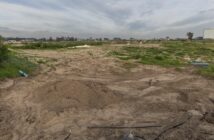
The multi-million rand assignment forms part of Eskom’s broader strategy to convert the former coal facility into a renewable energy hub that could include solar, wind and battery storage projects.
Allegations being examined reportedly include potential conflicts of interest linked to WSP’s earlier environmental consulting role on the project as well as questions regarding staffing and resource commitments made during the bidding stage. It is alleged that certain international specialists referenced in the original proposal may not have ultimately participated in the project’s execution, with alternative personnel deployed instead. Such practices, if confirmed, could raise concerns about compliance with contractual resource commitments and call into question the basis of the contract awarded.
The Komati project has already experienced delays, including disputes related to the battery energy storage procurement component. Industry observers note that the technical advisory function plays a critical role in structuring such tenders and ensuring that projects remain commercially viable and technically sound.
It should be noted that WSP is a large international engineering and consulting firm with a broad presence across multiple sectors and regions. Any alleged irregularities, if proven, would likely relate to specific individuals rather than the organisation as a whole.
For investors and developers active in South Africa’s power sector, the developments highlight broader concerns about governance and transparency as the country attempts to accelerate new energy capacity through both renewable and gas fired generation programmes.
Maintaining confidence in the procurement process remains critical as South Africa prepares to launch further bidding rounds aimed at strengthening the national grid, adding additional power generation capacity, and enabling a fair transition to renewable energy.
Author: Bryan Groenendaal