


- South Africa’s state-owned oil firm PetroSA has been plunged into a worsening financial crisis as the South African Revenue Service (SARS) seeks to recover R4.5 billion in unpaid taxes, a debt the company has admitted it cannot settle.
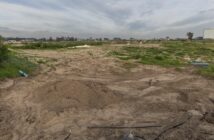
SARS officials have reportedly travelled to Mossel Bay to inspect assets at PetroSA’s flagship Mossgas plant, raising the prospect that state assets could soon be attached as part of the recovery process.
The scale of PetroSA’s financial distress was laid bare in recent testimony to Parliament’s Portfolio Committee on Mineral and Petroleum Resources. Executives told MPs that while the company holds assets worth an estimated R13 billion, its liabilities have ballooned to about R20 billion. The gulf continues to widen as the entity posts year-on-year losses.
Related news: Inside PetroSA’s shambolic diesel trading empire
Management conceded that PetroSA’s trading operations are no longer viable. Its damaged credit profile has left it struggling to compete with private-sector oil traders, further eroding its revenue base and threatening the future of a company once seen as central to South Africa’s energy security.
A potential lifeline, the revival of the Mossel Bay gas-to-liquids (GTL) refinery, PetroSA’s largest revenue generator, has repeatedly stalled. The plant remains idle, and efforts to secure private-sector partners have continually failed. Opposition parties and industry critics say political interference, poor governance and questionable deal-making have fuelled the company’s decline.
A series of collapsed partnerships has intensified scrutiny of PetroSA’s governance:
- TotalEnergies withdrawal: A proposed collaboration to develop the Brulpadda and Luiperd gas fields off the Mossel Bay coast fell apart, with the DA accusing PetroSA and government of mismanaging the opportunity.
- The Equator controversy: PetroSA awarded a contract to rehabilitate offshore gas assets to a company whose authenticity tender evaluators could not verify. The company later entered liquidation in an unrelated court matter, raising further concerns about oversight.
- Gazprombank breakdown: In 2023, PetroSA selected Gazprombank Africa — a subsidiary of Russia’s state-owned bank — as its preferred partner in a R3.7 billion plan to restart the GTL refinery. The bank failed to fund initial feasibility studies, leading to months of inaction and the eventual collapse of the deal. Read more
- PetroSA’s R11 billion ‘contaminated’ petrol deal. Read more
With liabilities rising, strategic facilities dormant and SARS now moving to recover billions in unpaid taxes, questions over PetroSA’s long-term viability are growing. Some observers have even speculated about whether a “convenient liquidation” could allow for significant debt write-offs.
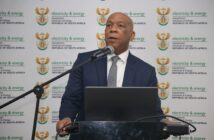
The crisis comes as Mineral and Petroleum Resources Minister Gwede Mantashe recently declared the newly formed South African National Petroleum Company (SANPC) “open for business”. The new state-owned enterprise merges PetroSA with iGas and the Strategic Fuel Fund, and is intended to strengthen energy security, reduce reliance on imported fuels and improve stewardship of national petroleum assets.
Related news: South Africa’s largest oil refinery sold back to the state for a few cents
Mantashe said the SANPC will need to navigate an increasingly “volatile, unpredictable and polarised” global energy landscape. While global trends show a shift towards cleaner energy, he maintained that demand for fossil fuels will continue to grow. Reviving South Africa’s refining capacity, including the PetroSA GTL plant and the recently reacquired SAPREF refinery, remains critical, he said.
He stressed that the SANPC’s success will depend on strong governance, stable leadership and a renewed organisational culture.
“To enable the entity to deliver on its mandate, we had to ensure good governance, and in so doing reduce both the operational and financial risks,” Mantashe said, noting that a board, interim CEO and non-executive directors were appointed last year. “For the entity to succeed, it must have strong leadership with vision… and transparent and honest communication.”
As SARS intensifies its recovery efforts and PetroSA fights for survival, the future of South Africa’s state-owned petroleum sector hangs in the balance.
Author: Bryan Groenendaal


1 Comment
Interesting material. There is a way out of the “gas cliff,” though. Our exploration company, KINPRO Holding GmbH, has made several proposals to SANPC and CEF SOC Ltd. We’ve received no response. However, we are prepared to present a new potential gas field on the border with South Africa. The gas resources are at least 29-30 TCF. Our email address is a.schur@kinpro.eu, post@kinpro.de Sincerely yours.