- An expert panel is expected to be convened to advise the South African government’s planned procurement of some 2 500MW of nuclear energy to the grid.
- The nuke-pro government of national unity (GNU) will pursue a new nuclear build that is led by scientific evidence.
- They confirm that there is global affirmation that nuclear energy has a part to play in responding to the question of climate change.
These were the main points trumpeted from a GNU Nuclear Seminar held in Gauteng yesterday.
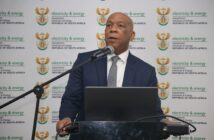
“We’re putting together an expert team that will advise me in relation to the pace and scale that we can afford. Once we answer that question then we will be able to articulate on the public consultation process, what the timelines are and then simultaneously we’ll begin to work out a procurement framework. It is the procurement framework that we will then take to Cabinet to seek an in principle approval of the framework. The actual execution of that procurement will be discharged through an avenue that we will announce,” said the country’s Minister of Energy and Electricity, Dr Kgosientsho Ramokgopa,
The Minister emphasised that as it takes care of its people, government has a right to choose which sources of energy it taps into.
“We are going to be evidence led in terms of our policy choices. The beauty about evidence and science is that it removes emotion. It’s important that those who can bring the political dimension, bring it to the fore [and]marry it with the science and we find solutions.
“We have a duty to ensure that as many people as possible or those who have an interest must understand what the science [of nuclear]is so that we are able to dispel these myths [about nuclear], we are able to undermine and push back against those who have no clue about the conversation we are having today,” he said.
Ramokgopa insisted that the withdrawal of the ministerial determination for government’s planned procurement of at least 2 500MW was to protect the process from legal challenges.
“We made the point that we have nothing to hide. So if there are complexities or the process of the 2 500MW build programme is compromised…we have a duty to pull it back, to clean it so that you don’t conflate the science and the process,” said Ramokgopa.
The Minister noted that the global move towards the use of nuclear energy is a “return to realism”.

Eskom’s Group Chief Executive, Mr Dan Marokane (second from right), joined the Minister of Energy and Electricity, Dr Kgosientsho Ramokgopa (centre), and Deputy Minister of Energy and Electricity, Ms Samantha Graham-Mare (second from left), as they addressed members of the media. Image credit: https://twitter.com/Kgosientsho_R
Deputy Minister of Energy and Electricity Samantha Graham-Maré chimed in. “There is global acceptance of nuclear energy as an integral part of the solution to mitigate the impact of climate change. We therefore need to work together to ensure that nuclear energy becomes an important part of the Just Energy Transition. It is clear that nuclear is a critical component of South Africa’s energy mix – offering a low carbon, reliable source of energy that can contribute significantly to the country’s energy security and climate goals,” she said.
Graham-Maré said South Africa remains committed to fulfilling the objectives of the Integrated Resource Plan (IRP) 2019, while refining the IRP 2023.
“[The IRP] sets out a requirement of 2 500MW of nuclear power to ensure the stability of South Africa’s power grid. In turn, driving the reindustrialisation of our economy and the promise of economic growth that leads to job creation,” she said.
She added that the negative perceptions around nuclear energy must be changed.
“Nuclear still carries somewhat of a stigma. Much of this is ignorance perpetuated by [a view of]government shrouded in secrecy manned by scientists in hazmat suits and the fear generated through the cold war era of the destruction of the planet as a result of a nuclear war. It is up to all of us to change these perceptions. This summit is the first leg of that process. Given South Africa’s expertise and commitment to nuclear energy over the years, this summit is a key engagement with the nuclear industry in SA that we hope will become a regular feature of our agenda,” she said.
“Nucelar is part of the energy mix…it’s part of the future. It’s indispensable to the resolution of an attainment of energy sovereignty in this country. We will answer the question of at what scale, what pace that will not undermine the issues of affordability and not compromise the fiscus. I am more than confident that nuclear has got a place, has a got a role,” Ramokgopa concluded.
Author: Bryan Groenendaal