- Nearly 24 GW of new renewable energy projects seek grid connection in South Africa over the next five years.
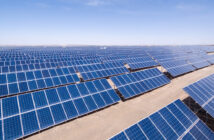
- Solar PV dominates the pipeline, with the Free State emerging as the leading province by capacity.
- Industry concerns grow that Eskom unbundling changes could slow transmission investment and renewable rollout.
South Africa’s National Transmission Company South Africa has published a new Generation Customer Connection Data Dashboard that offers an unprecedented view into the country’s future electricity supply pipeline. The online dashboard provides a high level overview of generation and storage projects seeking connection to the national grid, based on data submitted by distributors and end use customers across Eskom supply areas.
According to the dashboard, a total of 332 generation and storage projects with a combined nameplate capacity of 31.7 GW have either received budget quotes for grid connection or have applications pending for connection before 2030. Of this total, nearly 24 GW is accounted for by 204 advanced projects that are expected to seek grid connection within the next five years. Most of these projects are variable renewable energy developments.
The figures point to a potentially transformative shift in South Africa’s power system. If realised, the new capacity could enable the retirement of around 5 GW of coal fired generation. Importantly, the projects reflected on the dashboard are not speculative. They either have grid allocation, are in the budget quote process, or are already under construction, but are not yet operational.
The dashboard was produced by NTCSA and first became publicly available in December. It will be updated periodically, with the current version reflecting the status of projects as of 18 November 2025. While individual projects are not named, the platform provides a breakdown by technology and geography.
Solar PV is the dominant technology seeking grid connection, accounting for 15.2 GW of capacity across all project categories. This includes 3 GW of operational solar capacity and excludes an estimated 7 GW of rooftop or behind the metre solar already installed in the country. Other technologies represented include wind, concentrated solar power, landfill gas, hydro, gas, biomass and hybrid projects. Battery storage and nuclear capacity also feature among projects in execution or with issued budget quotes, with the nuclear capacity linked to the Koeberg life extension programme.
Geographically, the Free State leads the pipeline, with 4.2 GW of capacity spread across 31 projects. Other provinces also show significant volumes, highlighting the growing demand for transmission capacity across multiple regions.
View the number of projects plus capacity by region HERE
The dashboard categorises projects into four groups. These include operational projects with approved budget quotes, totalling 128 projects and 7.6 GW; projects in execution, comprising 67 projects and 5.7 GW; projects with budget quotes issued but not yet in construction, representing 23 projects and 2.8 GW; and projects that have formally applied for budget quotes, amounting to 114 projects and 15.4 GW. Combined, projects that are operational, in execution or have budget quotes issued represent 16.2 GW across 218 projects.
NTCSA has deliberately limited the dashboard to projects with approved or pending budget quotes. The utility notes that such projects are either already operational or considered shovel ready, as developers typically only apply for grid connection quotes once detailed engineering designs are complete and key approvals are in place.
While NTCSA stresses that the dashboard is published for general information purposes only and may change without notice, it is expected to become a valuable tool for developers, investors and power system analysts. By showing what capacity is formally committed through the budget quote process, the platform offers insights into likely grid congestion points and emerging transmission capacity gaps when viewed alongside NTCSA’s Generation Connection Capacity Assessment.
Inconsistent institutional framework governing power system
At the same time, concerns persist around the broader institutional framework governing the power system. The revised plan to unbundle Eskom, announced in December, retains NTCSA as a wholly owned subsidiary of Eskom Holdings and leaves ownership of transmission assets within the group. A separate Transmission System Operator will be established outside Eskom to manage system and market operations, but without owning the grid infrastructure itself. Industry stakeholders have warned that this structure could delay critical transmission investment and threaten the pace of renewable energy deployment.
These concerns intersect with another major reform now taking shape: the introduction of the South African Wholesale Electricity Market, or SAWEM. The launch of SAWEM represents a structural break with the past. For the first time, South Africa will operate a multi buyer, multi seller wholesale electricity market, allowing generators, traders and large consumers to transact on a transparent, market based platform. This marks a decisive shift away from a monopolised single buyer system dominated by Eskom, towards a more diverse and competitive market intended to strengthen investor confidence.
In its initial phase, SAWEM will focus on bilateral trading between generators and large customers. Over time, it is expected to evolve towards full market operations, including real time trading, similar to models used in mature electricity markets in Europe and North America. Energy Minister Dr Kgosientsho Ramokgopa has described the reform as one of the most significant structural changes to the electricity sector since 1994, aimed at unlocking investment, deepening competition and accelerating the clean energy transition.
For solar PV developers in particular, SAWEM offers long awaited opportunities for price discovery, portfolio diversification and improved risk management. Electricity will increasingly be valued by time, location and system need, rather than through fixed tariffs or long term contracts. In principle, this should favour low marginal cost technologies such as solar PV, especially when paired with battery energy storage.
However, the new market also introduces uncertainty. Key elements such as market rules, settlement systems, Eskom’s ongoing participation and the independence of the market operator are still under development. The ultimate value of liberalisation will depend on whether the final institutional design ensures fair access, credible competition and investor trust.
Eskom’s evolving role remains one of the most complex issues. The utility is simultaneously the owner of most transmission and distribution infrastructure, a participant in renewable generation and electricity trading, and the entity responsible for managing coal plant decommissioning and tariff adjustments. For private solar investors, Eskom is therefore a partner, a competitor and the gatekeeper to grid access.
This dual role creates an inherent conflict of interest. Without clear institutional separation and strong governance, private developers could face both subtle and structural barriers to market participation. The success of SAWEM, and of South Africa’s wider energy transition, will ultimately depend not only on policy reform but on transparency, accountability and confidence that the system operator is neutral and independent in practice.
Author: Bryan Groenendaal