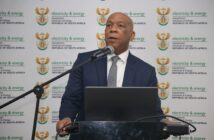
- Addressing Parliament’s Portfolio Committee on Energy and Electricity last week in Cape Town, the leadership at Eskom revealed that municipal debt has ballooned to R92 billion from R70 billion in December 2023 and stands to hamstring the state-owned energy utilities ability to sustain critical operations.
Eskom Group Executive for Distribution, Monde Bala, explained that metro’s have now joined municipalities in a culture of short paying or not paying Eskom at all after collecting money from the end user. A staggering 75 municipalities are in debt to Eskom.
Eskom Group chief executive officer Dan Marokane explained that the intention is not to make them (municipalities) ashamed, the intention is to show the scale of the challenge that we are dealing with. It consumes resources from management time, and it does place fundamental risk insofar as the financial sustainability of the business is concerned.”
“By the end of March it (the debt) may be over R120-billion or so,” he added
Related news: Tax payers money is already nearing R495 billion in Eskom bailouts
“Fundamentally, something’s not working in the way the municipal financing structures are set up, and it requires solutions beyond us. We don’t have the leeway of typical credit management tactics that we can use here. We cannot switch off the whole country because there’s no payment coming, but at some point, we will have to switch off ourselves because there’s no money coming in from the municipalities,” said Marokane.
Municipal debt relief programme failure
The South African government under Deputy President, Paul Mashatile, introduced a R56.8 billion debt relief programme last year to assist ailing municipalities who are struggling to pay their electricity bills.
“The debt-relief arrangement for Eskom outlined in the 2023 Budget noted that a large proportion of outstanding municipal debt is owed to Eskom. National government has introduced support to relieve municipalities of debt to Eskom. The debt…will be written off over a three-year period, in equal annual tranches. This is provided the municipality complies with set conditions. These conditions include enforcing strict credit controls, enhanced revenue collection [and]up-to-date payment of Eskom monthly current account,” said South Africa’s Finance Minister Enoch Godongwana at the time.
South Africa’s National Treasury has warned that municipalities’ slow compliance with conditions of the debt relief programme on arrears to Eskom risk delaying debt write-offs.
At the end of October only 70 of the municipalities that had applied for debt relief have been approved (South Africa has eight metros, 205 local and 44 district municipalities).
Cosmetic solutions and false promises
Last month, a high-level engagement convened by the Minister of Electricity and Energy, Dr Kgosientsho Ramokgopa, and City of Johannesburg Mayor Dada Morero with Eskom executives and City Power over R4.9 billion outstanding to Eskom. The urgent engagement followed announcing that Eskom had served the city and City Power with a notice of intention to interrupt power supply at certain pre-determined times of the day due to non-payment of debt. According to Eskom, the City of Johannesburg and City Power owe nearly R5 billion in unpaid bulk electricity supply, plus a further R1.4 billion, which Eskom said is due at the end of each month.
In response, the City of Johannesburg subsequently called the move by Eskom “unjust, counterproductive, and potentially harmful to… residents and businesses”. The two parties came to a settlement, but City Power has subsequently breached the deal with another short payment. Read more
Similarly, the City of Tshwane Metro recently has signed a payment arrangement plan to settle its R6,7 billion debt owed to the power utility. In terms of the payment arrangement plan, the City of Tshwane has committed to make the initial payment of R400 million in December 2024, with the last payment scheduled for March 2029. However, this is unlikely to happen because the metro is technically bankrupt with R11 billion in debt. Read more
Author: Bryan Groenendaal