- US$5.3 trillion required for Middle East to achieve net zero by 2060.
- Solar manufacturing capacity set to reach 44 GW by 2028 as installed solar climbs to 97 GW by 2030.
- Oil and gas exporters continue upstream expansion despite 2050 and 2060 climate pledges.
The Middle East’s energy transition is advancing at uneven speed, with ambitious 2050 and 2060 climate commitments increasingly misaligned with current investment and policy trajectories, according to the latest Energy Transition Outlook from Wood Mackenzie.
The report finds that while the region is positioning itself as a global solar manufacturing hub, achieving net zero by 2060 would require cumulative investment of US$5.3 trillion. Under Wood Mackenzie’s base case scenario, the Middle East is instead tracking towards 2.6°C of warming, falling short of the 1.5°C pathway aligned with net zero targets adopted by many countries.
Oil and gas remain central to regional economies. The Middle East supplied 40% of global energy exports in 2025, underlining the structural dependence on hydrocarbon revenues even as renewable capacity scales up.
Resource endowment is shaping divergent national strategies. Countries with limited remaining reserves are accelerating diversification, while producers with large, low cost resources are reinforcing their position in global oil and gas markets.
Oman, with around 20 years of oil and gas reserves at current production levels, is pursuing one of the region’s most aggressive decarbonisation strategies. The country is on track to exceed its 30% renewables target by 2030 and could reach 89% by 2050. Facing more complex geology and higher production costs than regional peers, Oman is positioning clean energy and industrial diversification as economic imperatives.
Qatar, by contrast, holds more than 2,000 trillion cubic feet of gas reserves, equivalent to over a century of supply at current production. The country is expanding LNG export capacity from 77 million tonnes per annum to 142 million tonnes per annum by 2032, reflecting confidence in sustained global gas demand across climate scenarios.
Saudi Arabia, with approximately 50 years of oil reserves at current output levels, is pursuing a dual track strategy. The kingdom is scaling renewable energy to displace domestic crude burn and free up volumes for export, while continuing upstream expansion. Although Saudi Arabia is targeting 50% clean power by 2030, Wood Mackenzie’s base case projects progress closer to 20%.
The United Arab Emirates is simultaneously expanding fossil fuel production and clean energy infrastructure. The country is expected to exceed its 30% clean power target by 2030 but could fall short of its 47% emissions reduction goal by 2035.
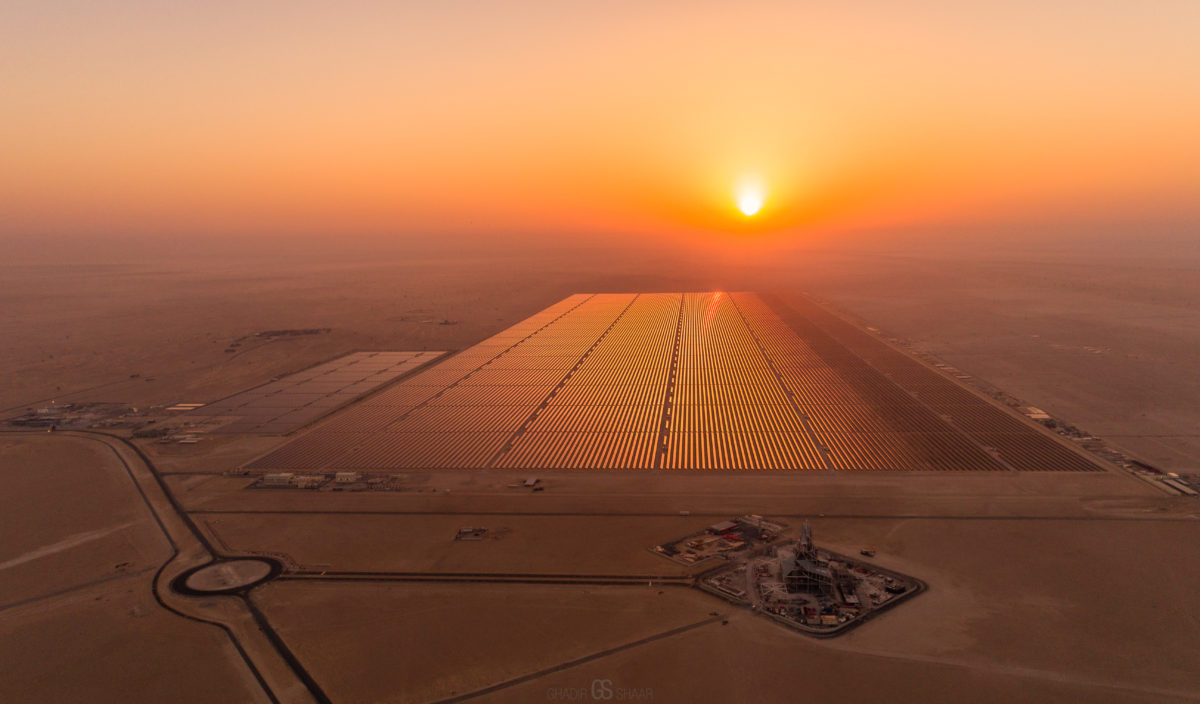
The most visible progress is in the power sector. Installed solar capacity is projected to rise from 30 GW in 2025 to 97 GW by 2030, reaching 580 GW by 2050. Solar and wind are expected to meet the majority of incremental power demand, with their combined share of regional generation increasing from 14% in 2025 to around 67% by 2050.
This surge in domestic deployment is catalysing industrial investment. Solar manufacturing capacity is forecast to reach 44 GW by 2028, positioning the Middle East as a competitive global supply chain hub alongside established Asian manufacturing centres. Competitive energy prices, domestic content requirements and tariff advantages in key export markets are driving localisation.
Battery storage is increasingly deployed alongside renewables to manage peak demand, particularly as electricity consumption rises due to higher incomes, population growth, extreme heat, desalination and industrial expansion. Regional power demand is projected to increase from approximately 1,450 TWh in 2025 to 1,650 TWh by 2030, a 12% rise, and almost 2,400 TWh by 2060.
Despite climate pledges, oil and gas investment is rising. National oil companies are expanding upstream capacity and LNG infrastructure, positioning Middle Eastern producers to maintain or grow global market share through 2050. Gas fired generation continues to play a balancing role in power systems, providing flexible capacity to support variable renewable output.
The report concludes that while climate targets remain ambitious, delivery gaps persist. Economic prioritisation of hydrocarbon revenues, infrastructure lock in from existing fossil fuel assets and limited demand for premium priced low carbon products are constraining deeper decarbonisation.
The Middle East is making tangible progress in renewable power and solar manufacturing. However, economy wide decarbonisation will depend on sustained policy implementation, technological breakthroughs in hard to abate sectors and stronger demand signals from international trade partners.
Author: Bryan Groenendaal