- Three recent contamination events at Unit 2 contained on site with no environmental release.
- Series of outages, equipment failures and containment concerns over the last two years highlight ageing plant risks.
- Civil society groups warn that Koeberg’s 20-year life extension could lock South Africa into higher nuclear safety and cost exposure.
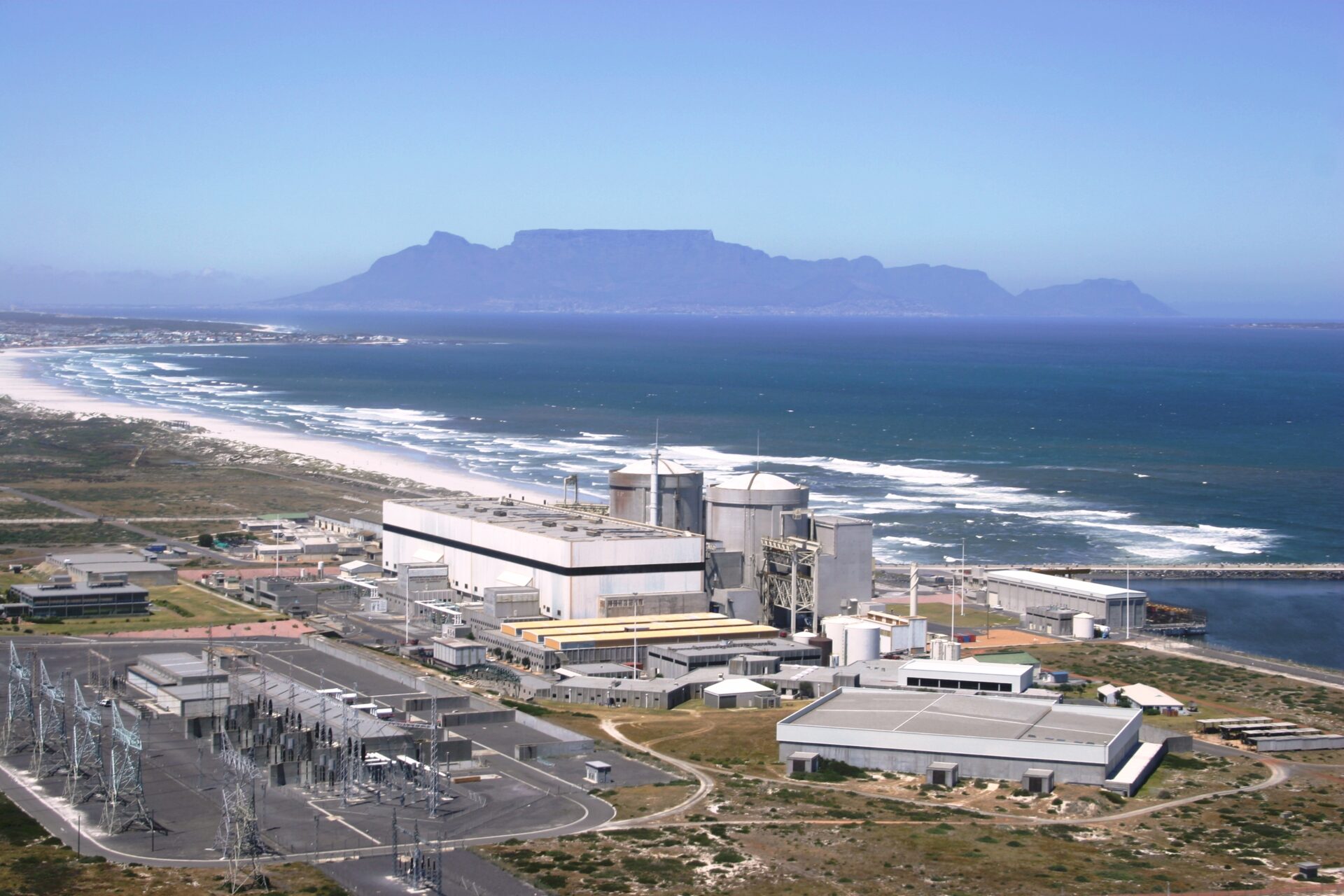
South Africa’s National Nuclear Regulator has confirmed that three airborne contamination events at Koeberg Nuclear Power Station’s Unit 2 were fully contained inside controlled maintenance areas, with no radioactive material released into the environment and no off-site radiological impact. The events on 30 June, 2 July and 7 July 2026 were triggered by a temporary loss of power to ventilation units serving maintenance tents, leading to elevated airborne radioactive contamination strictly limited to the interior of the reactor building. Workers who may have been exposed were screened, with recorded doses below those associated with a standard dental X ray, and the regulator stated the incidents do not meet the criteria for a nuclear emergency.
These incidents come on top of a series of operational and safety related events at Koeberg over the past two years that have raised questions over Eskom’s nuclear life extension programme. The utility has been granted regulatory approval to operate the two pressurised water reactors for 20 years beyond their original 40-year design life. While Eskom argues that the programme is essential to support long term grid reliability and plans to deploy around 5.2 GW of new nuclear capacity, critics point to recurring equipment failures, ageing containment structures and high-cost disputes as warning signals.
Related news: Koeberg’s R20 billion life extension programme fatally flawed
In March 2025, Unit 2 tripped and was shut down following a turbine incident linked to human error during maintenance work on Unit 1, underscoring procedural and oversight weaknesses at the site. The station subsequently suffered a forced shutdown of Unit 1 after isolation and block valves failed three months after commissioning following a major steam generator replacement project, requiring an extended repair outage before the unit could be synchronised back to the grid. During this period, Eskom also sought regulatory approval to construct additional spent fuel cask storage on site, further heightening concerns over long term waste management and containment integrity at an already ageing facility.
Related news: Eskom ordered to pay Framatome close to R1 billion in over Koeberg steam generator contract dispute
Civil society organisations and faith-based group SAFCEI have formally objected to the proposed licence extension for Unit 2, citing unresolved safety issues around containment building degradation and the broader risks of long term operation of a coastal nuclear plant exposed to corrosion and extreme weather. Independent assessments have flagged cracking and corrosion in containment structures, along with deficiencies in monitoring systems, prompting international missions by the International Atomic Energy Agency to review Eskom’s ageing management and long-term operation plans and recommend additional safety improvements. While Eskom and the regulator insist that identified shortcomings have been addressed and that Koeberg’s containment has passed an integrated leak rate test, campaigners argue that repeated incidents and structural concerns show the plant is being pushed beyond its safe operating envelope.
Related news: Eskom assures that safety structural steps have not been skipped at Koeberg
Koeberg, situated about 27 km north of Cape Town on the West Coast, remains Africa’s only commercial nuclear power station and supplies around 5% of South Africa’s electricity through two units with a combined capacity of 1 934 MW. The station is central to Eskom’s strategy to stabilise the grid, with maintenance outages staggered every 16 to 18 months to avoid both units being offline simultaneously. Recent performance data show Unit 2 operating at close to 100% year to date energy availability, and Eskom’s leadership continues to describe Koeberg as a cornerstone of South Africa’s energy mix, highlighting what it calls strong technical capabilities and adherence to international nuclear safety standards. However, the latest contamination events, combined with earlier trips, valve failures, lifetime extension disputes and containment degradation findings, are likely to intensify scrutiny from regulators, local communities and the broader South African public over the prudence and cost of extending Koeberg’s operation well into the 2040s.
Author: Bryan Groenendaal